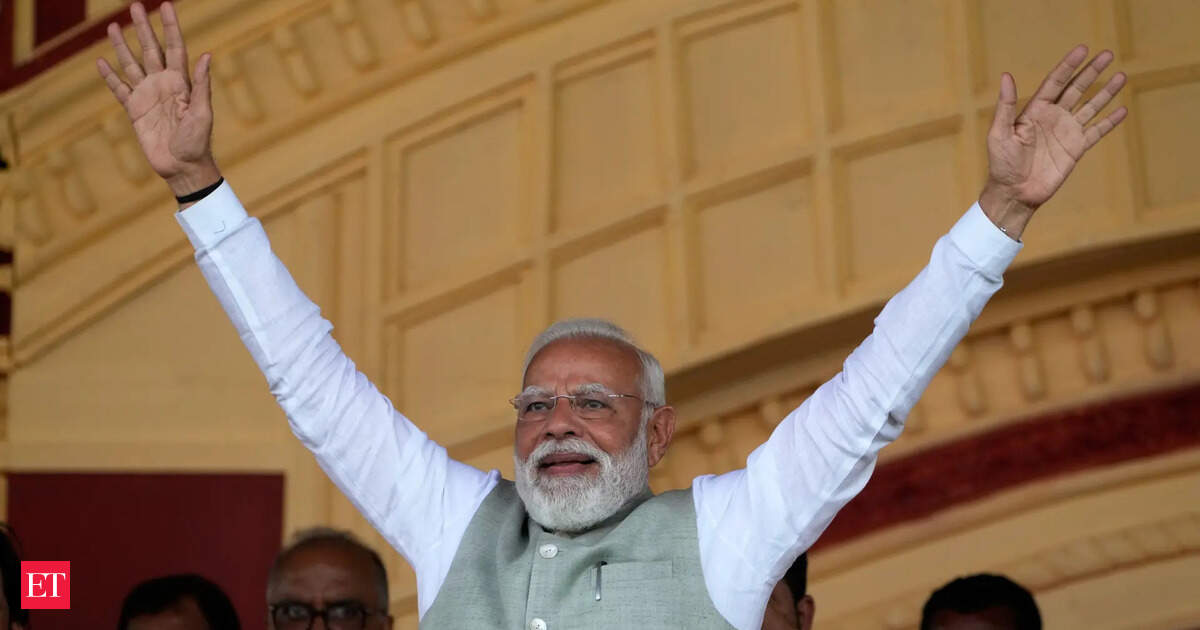
Prime Minister Narendra Modi will visit Norway next week, the first trip by an Indian prime minister to Oslo in 43 years. The agenda includes long-term energy partnerships, with a specific focus on a long-term liquefied petroleum gas (LPG) supply agreement. The visit resets a bilateral energy dialogue that had been dormant at the head-of-government level for decades.
For traders, the immediate question is which Indian sectors and stocks stand to gain if a binding LPG import deal materializes. The simple read is that closer India-Norway ties are broadly positive for Indian energy security. The better read is that a long-term LPG contract would directly alter the cost structure and earnings visibility for India’s state-run oil marketing companies and gas distributors.
The LPG Supply Chain Read-Through
India is the world’s second-largest LPG consumer, driven by the government’s push to replace biomass cooking fuels with clean-burning LPG. Domestic production covers only a fraction of demand; the country imports roughly 55% of its LPG needs, primarily from the Middle East. Norway, as a major gas exporter with growing LPG output from its continental shelf, offers a new supply source that could diversify India’s import basket.
The most direct beneficiaries of a long-term Norway LPG deal would be the state-run entities that handle the bulk of India’s LPG imports and distribution: Indian Oil Corporation (IOC), Bharat Petroleum Corporation (BPCL), and Hindustan Petroleum Corporation (HPCL). These companies operate the import terminals, storage, and bottling infrastructure. A multi-year supply agreement with Norway would reduce their reliance on spot cargoes and short-term tenders, where prices can spike during winter demand or geopolitical disruptions.
GAIL (India) and Petronet LNG, while more associated with natural gas, also have exposure. GAIL imports and trades LPG, and Petronet’s import terminals can handle multiple products. Shipping companies such as Shipping Corporation of India and Great Eastern Shipping would likely see increased long-haul contract volumes if a new Norway-India LPG route opens.
Why Long-Term Contracts Change Margin Math
The market often treats LPG importers as pure price-takers. The structure of supply agreements matters. Spot LPG prices, typically linked to Saudi Aramco’s contract price, can swing 20-30% within a quarter. A long-term contract with Norway, likely indexed to a different benchmark or fixed at a discount to spot, would give Indian importers a predictable input cost. That predictability flows through to the government’s LPG subsidy calculations and the marketing margins of state-run oil companies.
The subsidy mechanism is key. The Indian government compensates oil marketing companies for under-recoveries on domestic LPG cylinders when international prices rise. Stable, contracted supply reduces the frequency and size of those compensation claims, improving cash flow certainty for IOC, BPCL, and HPCL. For GAIL, a long-term LPG deal could anchor its trading book and support margins in its petrochemical feedstock business.
The shipping read-through is equally structural. A dedicated Norway-India LPG route would require very large gas carriers (VLGCs) on time charters, providing multi-year revenue visibility for Indian shipping firms that currently depend on spot voyages. This is the kind of contract that can re-rate a shipping stock from a cyclical to a steady-earnings multiple.
The Next Decision Point
The visit itself is a catalyst. The concrete trigger for re-rating these stocks will be the announcement of a memorandum of understanding or a heads of agreement with specified volumes, tenure, and pricing formula. Without those details, the market will treat the trip as a diplomatic positive with no immediate earnings impact. The Norwegian side has an interest in securing a large, stable buyer for its LPG as European demand shifts. India wants supply diversification. The alignment is real. Execution risk remains high until a deal is signed.
Traders should watch for joint statements from the Indian Ministry of Petroleum and Natural Gas and Norway’s Ministry of Petroleum and Energy. The presence of executives from IOC, BPCL, or GAIL in the delegation would signal that commercial terms are advanced. The next concrete marker is whether the visit produces a term sheet or just a broad cooperation framework.