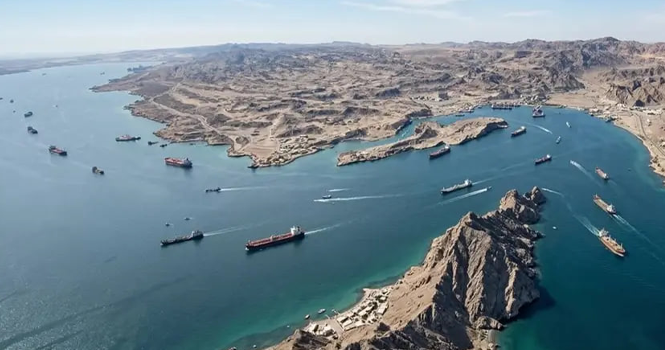
Jotaro Tamura, chief executive officer of Mitsui O.S.K. Lines, said shipowners are unlikely to resume transits through the Strait of Hormuz for at least several weeks. Iranian naval patrols continue to restrict commercial shipping in the narrow waterway that connects Persian Gulf oil producers to global markets.
Tamura told reporters Tuesday that the security situation remains too unpredictable for most vessel operators to accept the risk. Insurers have raised war-risk premiums for any ship entering the Gulf of Oman, effectively pricing out many spot cargoes, several shipping brokers said.
Oil prices rose 1.8% on the news. Brent crude settled above $72 a barrel. Traders said they were pricing in a prolonged disruption to roughly 20% of global seaborne crude volumes. The alternative route around Africa's Cape of Good Hope adds between 12 and 14 days of sailing time and roughly $3 million in extra fuel costs per supertanker voyage, according to maritime analytics firm Vortexa.
U.S. Navy and allied forces have stepped up escort operations in the region. Those cover only vessels that register for convoy scheduling, a process that takes up to five days. Most independent owners have held back, waiting for a formal security guarantee from their flag state, the brokers said.
The last confirmed tanker to cross Hormuz without naval escort was the Liberian-flagged Serenity Bay on Feb. 18. Since then, only military-chartered vessels and a handful of Chinese state-owned tankers have moved through the strait, satellite imagery reviewed by Lloyd's List shows.
For the shipping sector, the disruption has hit earnings directly. Mitsui O.S.K. Lines (MOL) reported a 12% drop in spot tanker revenue in the first two weeks of March alone. Rivals Nippon Yusen and Kawasaki Kisen have both cut their March earnings guidance, citing the Hormuz closure.
Crude oil tanker rates for the Persian Gulf-to-Asia route have surged 340% since the blockade began. Most of those gains are on paper only, shipping brokers said. Actual fixtures remain below 30% of normal volumes. Owners demand prepayment and a 50% war-risk premium, terms most charterers are unwilling to accept, three shipping executives said.
The U.S. is running a secret oil shuttle past Iran's blockade using military tankers, according to a separate report. That operation moves about 200,000 barrels a day, just 4% of the volume that normally passes through the strait. U.S. Runs Secret Oil Shuttle Past Iran's Hormuz Blockade
Refineries in Japan and South Korea face the greatest exposure. India's Mangalore Refinery and Petrochemicals has drawn down crude inventories to 45 days of supply, down from 72 days in January. South Korea started consultations with Gulf Cooperation Council states after the ceasefire deal collapsed. No alternative supply route has been secured. South Korea Starts Hormuz Consultations After Ceasefire Deal
Tamura did not give a specific date for when transit might resume. "The decision rests with the flag states and the insurers," he said. "We operate where the conditions are safe."