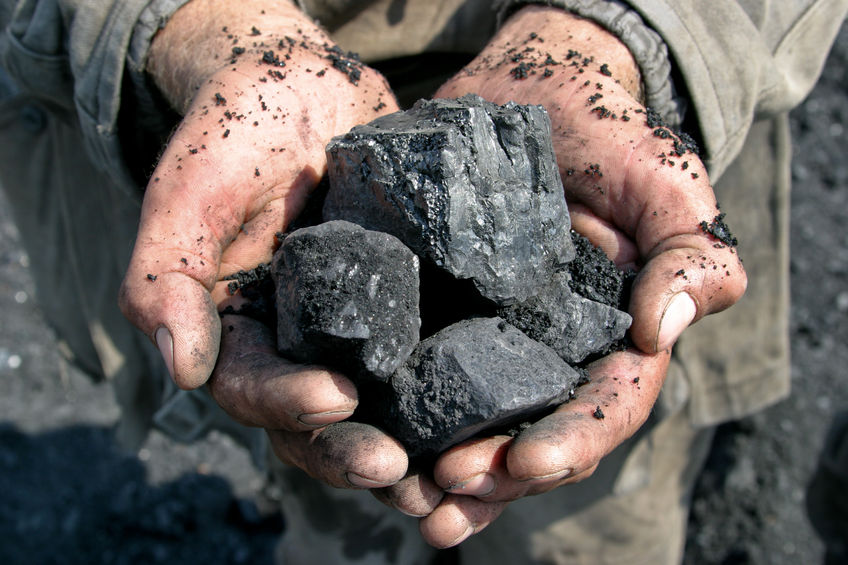
Ramaco Resources (NASDAQ: METC) carries a dual thesis rare in the basic materials sector: a low-cost metallurgical coal business funding the development of one of the first new rare earth mines in the U.S. in decades. The stock has already rallied 44% since October 2024, when a bullish thesis first highlighted the coal-REE combination. The question now is whether the next leg comes from the met coal cash flow or from the Brook Mine rare earth optionality – and at what valuation the market will price each piece.
The source of the current bullish take is Piggo's Trading Desk Substack. It builds on an earlier thesis from Unemployed Value Degen, shifting emphasis from the "lottery ticket" rare earth upside to a structured sum-of-the-parts re-rating. With a trailing P/E of 9.47 and forward P/E of 5.49 (as of May 27, stock at $15.54), the market is still pricing METC largely as a coal miner. The REE potential is treated as distressed optionality. A pre-feasibility study expected in 2026 is the next concrete catalyst that could force the market to re-assess.
How the Brook Mine Changes the Valuation Calculus
The Brook Mine in Wyoming is the centrepiece of the re-rating story. It contains significant concentrations of neodymium, praseodymium, dysprosium and terbium – critical inputs for defense systems, EVs, semiconductors and advanced technologies. The deposit is one of the first new rare earth developments in the United States in decades, a fact that carries a geopolitical premium given China's dominance of the global REE supply chain.
Why Processing Flowsheets Matter More Than Tonnage
A resource is worthless without a viable processing route. Ramaco has engaged Fluor Corporation to validate its processing flowsheet. That validation gives the project a technical credibility that many early-stage REE developers lack. Ramaco also holds proprietary patent-pending extraction technology and has active DOE engagement.
Key insight: The Fluor validation does not guarantee economic extraction at scale. It shifts the risk from "can it be processed at all" to "at what cost". That is a material step for a market that usually discounts REE developers heavily until pilot data exists.
The company is advancing toward pilot production and the pre-feasibility study in 2026. If those milestones confirm economic viability, the market may start pricing the REE assets separately from the coal business, unlocking a conglomerate discount reversal.
The Met Coal Engine: Cash Flow That Funds Optionality
Ramaco produced about 3.8 million tons of metallurgical coal in 2025, generating revenue of roughly $537 million at competitive cash costs near $98 per ton. The resulting operating margins are strong. The cash flow from coal is funding the Brook Mine development without requiring equity dilution or heavy debt – the company carries minimal net debt.
The Margin Sensitivity That Most Investors Miss
Met coal prices are volatile. The current cash cost of $98/ton is low by industry standards, the margin depends on the spread to global met coal indices. In a downturn, the coal business can still generate cash. The free cash flow available for REE investment would shrink. The thesis assumes stable or improving coal margins through 2026. Any sustained drop in met coal pricing would slow the Brook Mine timeline or force external financing.
Practical rule: Track the High-Vol A FOB met coal price weekly. A sustained move below $150/ton would pressure the cash flow base. Above $200/ton accelerates the REE funding runway.
Sum-of-the-Parts Valuation: The Mechanism Behind a Potential Double
The source thesis argues that METC could double from current levels as the market begins to properly value its rare earth optionality. The mechanism is straightforward. It requires understanding how sum-of-the-parts discounts work in public markets.
How the Discount Currently Exists
Today the market assigns a single earnings multiple to METC based on its coal EBITDA. The REE assets are not in the earnings yet. A sum-of-the-parts analysis would assign a separate multiple to the coal business (say 5-6x on stable met coal cash flow) and a development-stage valuation to the Brook Mine (using comparable REE developers or a DCF on projected production). If the Brook Mine valuation were even a fraction of what comparable projects fetch, the combined value could exceed the current $15.54 price.
The table shows the asymmetry: the coal earnings are already being discounted, while the REE upside is free optionality. If the pre-feasibility study validates the project, the market may re-rate the coal multiple upward as well. A successful REE project reduces the overall risk profile.
Insider Alignment as a Signal
Ramaco has strong insider ownership, according to the thesis. Insider alignment is relevant because it reduces the risk of dilutive share issuance or poor capital allocation. With 26 hedge fund portfolios holding METC at the end of Q1 (down from 31 in Q4), institutional interest softened slightly. That may reflect profit-taking after the 44% rally or skepticism about the REE timeline. A sustained increase in fund positions after the pre-feasibility study would be a confirming signal.
What Confirms or Weakens the REE Thesis
The Brook Mine story has specific milestones that will either validate or break the thesis. A timeline-based checklist helps frame the decision points.
Confirmatory Signals
- Pilot production results are publicly released and show recoveries above 80% for key magnets (NdPr).
- Pre-feasibility study is delivered in 2026 with an NPV positive at conservative REE prices.
- DOE funding is announced (grant or loan guarantee) for the processing facility.
- Offtake agreements are signed with defense or EV supply chain partners.
- Insider buying increases after the pre-feasibility study.
Weakening Signals
- Met coal prices drop below $140/ton and stay there for two quarters, reducing free cash flow.
- The Fluor validation is delayed or produces negative results on scale-up.
- Pre-feasibility study is pushed beyond 2027.
- A competing REE project in the U.S. (e.g. MP Materials expansion, or a new project) proves lower cost and overshadows Brook Mine.
- Hedge fund holdings drop below 20 funds in Q4 2025 filings.
Risk to watch: Execution risk in rare earth processing is high. Several U.S. REE developers have failed to scale past pilot phase. Ramaco's patent-pending technology has not been tested at commercial production rates.
The Next Decision Point: Pre-Feasibility Study and Pilot Production
The nearest concrete catalyst is the pre-feasibility study in 2026. Between now and then, the stock is likely to trade on met coal sentiment and general REE news flow. Investors who want exposure to the thesis need to decide whether to buy before the study (when valuation is cheap uncertainty is high) or after the results (when some upside may already be priced).
How the Trade Reads for Different Time Horizons
- For a 6-12 month watch: The risk/reward depends on met coal prices. If the global steel cycle holds up, the coal earnings will carry the stock. The REE optionality is a free call option. If met coal prices fall, the stock could retest $10-$11 levels. Use a stop on a weekly close below $13.50 to protect against that scenario.
- For a 18-24 month watch: The pre-feasibility study is the key. If it confirms economic viability, the sum-of-the-parts re-rating could push the stock toward the $30 area that the thesis suggests. The main risk is that the study delivers a "technically viable uneconomic" conclusion. That would kill the premium and leave the stock trading purely on coal.
AlphaScala data shows METC is currently Unscored in the system, with a sector classification of Basic Materials (see the METC stock page). That means no quantitative rating is available. Readers relying on fundamentals will need to build their own model using the coal cash flow and REE milestones.
For broader context on how multi-metal stocks perform after a rally, see Why Multi-Metal Stocks Are Stalling After the 2025 Rally. Commodity investors weighing METC against other plays can explore the commodities analysis page for comparative supply-demand drivers.
Why the Coal-REE Combo Is Unusually Hard to Price
Most public mining companies have either a pure commodity exposure or a diversified base metals portfolio. Ramaco's structure – a mature met coal producer with a single-shot REE project – creates a valuation problem that standard DCF or comp-based models struggle to handle. The coal business is sensitive to steel demand in China and India. The REE project is sensitive to U.S. defence spending and Chinese export controls. Those two sets of drivers are not correlated. The sum-of-the-parts approach is the most practical. It requires assigning a probability to the REE success. In the current market, that probability appears low, judging by the single-digit forward P/E. If the probability rises, the multiple expansion will be the primary return driver.
Bottom line for traders: METC is a bet on the pre-feasibility study clearing a threshold that forces the market to drop its coal-only framing. The 44% rally since October 2024 suggests the market is already aware of the optionality. The next 44% will require proof.