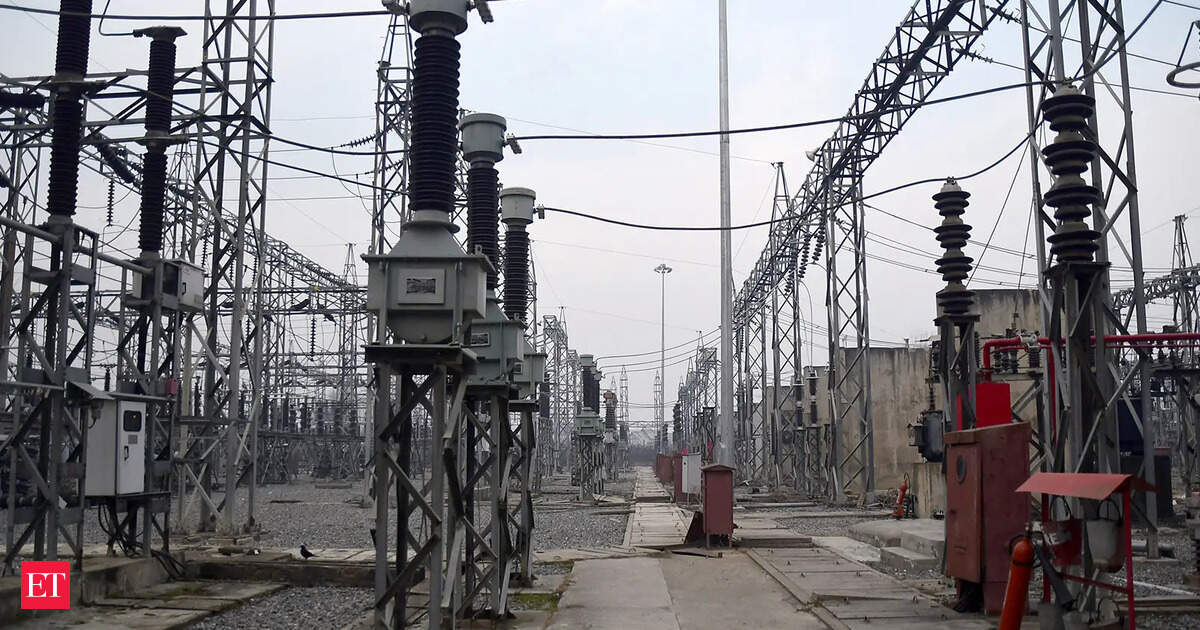
A McKinsey report projects India's electrical equipment industry could reach $235 billion by 2035, up from a current base in the tens of billions. The naive interpretation is a bullish secular growth story for the sector. The better read is that the projection embeds assumptions about policy execution, capital allocation in manufacturing, and the pace of import substitution. For a trader, the distinction matters because the growth will not be uniform. It will concentrate in segments tied to the renewable energy build-out, grid modernization, and industrial automation.
The Shift from Import Dependence to Local Production
The report explicitly ties the $235 billion target to a sharp reduction in import dependence. India currently imports a significant portion of high-value electrical equipment, including certain transformer grades and switchgear components. The government's production-linked incentive (PLI) schemes and the phased manufacturing program aim to close that gap. The read-through is that companies with domestic manufacturing capacity in these sub-segments will see order growth and margin expansion. The counter-read is that any delay in policy implementation or a reversal of tariff protection could push the target further out.
High-Growth Segments and the Renewable Link
The McKinsey analysis mentions rapid expansion in high-growth segments without naming them. Based on policy direction, the likely areas are transmission and distribution equipment (transformers, switchgears, cables), renewable energy components (solar inverters, cables for wind farms), and industrial automation gear. The power grid upgrade cycle under the Revamped Distribution Sector Scheme is a direct demand driver. Renewable energy capacity targets of 500 GW by 2030 imply massive demand for inverters, battery storage and transmission lines. Manufacturers that can supply these items domestically will benefit from both volume growth and pricing power from reduced import competition.
Confirmation Signals to Watch
The $235 billion number will materialize only if three conditions hold: sustained capex from state-owned utilities, consistent policy support through PLI extensions, and a real reduction in the import bill. The first confirmation comes from order book disclosures by listed electrical equipment manufacturers. A string of rising order inflows from Power Grid Corporation or state electricity boards would validate the demand story. The second is the union budget allocation for the power ministry. The third is quarterly trade data for electrical machinery imports. A widening import gap would weaken the thesis and imply that local capacity is not ramping fast enough.
The Next Catalyst Point
The immediate catalyst is the upcoming union budget, which will set the capex trajectory for the power sector. Traders should watch for an increase in allocation to the Revamped Distribution Sector Scheme or the Pradhan Mantri Sahaj Bijli Har Ghar Yojana. Beyond that, any tariff announcement on imported electrical equipment would accelerate the import substitution play. The second half of 2025 will be the first real test of the growth narrative as companies begin reporting annual results and order backlogs. Until then, the McKinsey number sits as a long-range anchor, not a near-term trading signal.