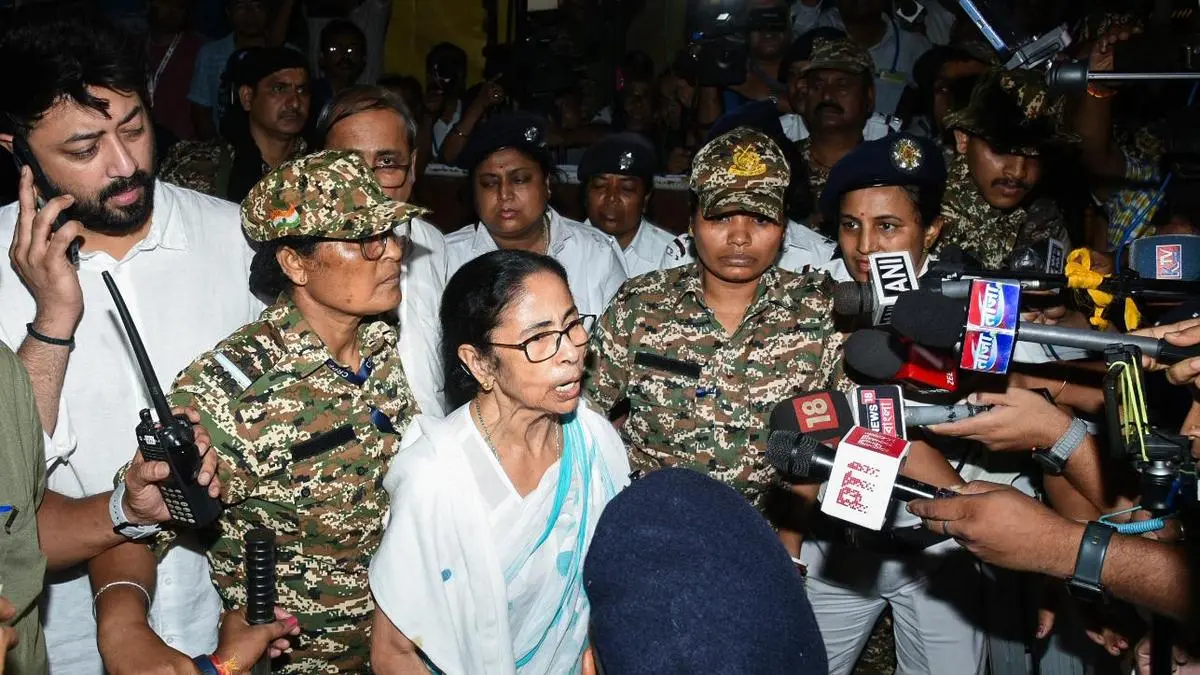
Mamata Banerjee lost her Bhabanipur seat by 6,226 votes as the BJP secured 207 seats in West Bengal. The result ends the TMC's 15-year rule amid rising volatility.
The political landscape of West Bengal underwent a seismic shift on May 4, 2026, as Trinamool Congress (TMC) supremo Mamata Banerjee conceded the state assembly elections to the Bharatiya Janata Party (BJP). The defeat marks the end of a 15-year tenure for the TMC, which had dominated the state since ending the 34-year rule of the Left Front in 2011. The result is not merely a change in administration but a fundamental realignment of power in South Bengal and Kolkata, regions previously considered impenetrable strongholds for the incumbent party.
The most symbolic blow to the outgoing Chief Minister occurred in her own constituency of Bhabanipur. After 17 rounds of counting, Mamata Banerjee trailed BJP candidate Suvendu Adhikari by 6,226 votes, securing 54,728 votes against Adhikari’s 60,954. This loss is particularly significant given that Bhabanipur served as the political anchor for Banerjee after her previous defeat in Nandigram during the 2021 assembly elections. In that 2021 contest, Adhikari—a former close aide to Banerjee—bested her by a narrow margin of 1,956 votes. While Banerjee successfully re-entered the assembly via a by-election in Bhabanipur with a 58,000-vote margin following that loss, the current reversal suggests a rapid erosion of her local support base.
The electoral outcome reflects a broader trend of anti-incumbency that began to manifest during the 2024 Lok Sabha elections. During that cycle, the TMC’s lead in the Bhabanipur assembly segment had already shrunk to a modest 8,291 votes. The current election cycle saw that narrow lead evaporate entirely, driven by persistent allegations of corruption and a growing public appetite for change. The BJP’s strategy of leveraging these vulnerabilities allowed it to breach the TMC’s heartland, effectively reversing the political momentum that had defined the state for over a decade.
The scale of the TMC’s defeat is reflected in the stark shift in vote shares and seat counts. As of the latest reporting, the BJP has secured a 45.76 percent vote share and is projected to win 207 of the 293 seats contested. In contrast, the TMC has fallen to 80 seats with a vote share of 40.81 percent. This represents a significant decline from the 45.8 percent vote share the TMC garnered during the 2024 Lok Sabha elections. The following table illustrates the dramatic reversal of fortunes for the two primary political entities in the state:
| Metric | TMC (Current) | BJP (Current) |
|---|---|---|
| Projected Seats | 80 | 207 |
| Vote Share (%) | 40.81% | 45.76% |
| Bhabanipur Margin | -6,226 | +6,226 |
For market observers and those tracking regional stability, the transition of power in West Bengal introduces a new variable in state-level policy execution. The BJP’s ability to capture 207 seats provides a clear mandate, contrasting sharply with its performance in the 2021 assembly elections, where it secured 77 seats. The shift in control over Kolkata and South Bengal suggests that the political risk profile for the region is undergoing a reset. Investors monitoring stock market analysis should note that such significant political transitions often precede shifts in industrial policy, land acquisition frameworks, and state-level infrastructure spending priorities.
The defiant stance taken by Mamata Banerjee during the counting process, where she urged party agents to remain at centers despite early setbacks, highlighted the high-stakes nature of the contest. However, the finality of the 6,226-vote deficit in Bhabanipur leaves little room for ambiguity regarding the electorate's intent. The transition from a 15-year TMC regime to a BJP-led government will likely involve a period of administrative recalibration. Market participants should look for early signals regarding the new government's approach to existing state-level contracts and the continuity of ongoing development projects. The speed at which the new administration moves to consolidate its influence in the state assembly will be the primary indicator of its ability to implement its platform effectively. As the state moves into this new chapter, the focus shifts to how the incoming leadership manages the expectations of a population that has clearly signaled a desire for a different governing direction. The erosion of the TMC's vote share from 45.8 percent in 2024 to 40.81 percent today serves as a warning on the volatility of political capital when corruption allegations and anti-incumbency sentiment converge.
AI-drafted from named sources and checked against AlphaScala publishing rules before release. Direct quotes must match source text, low-information tables are removed, and thinner or higher-risk stories can be held for manual review.