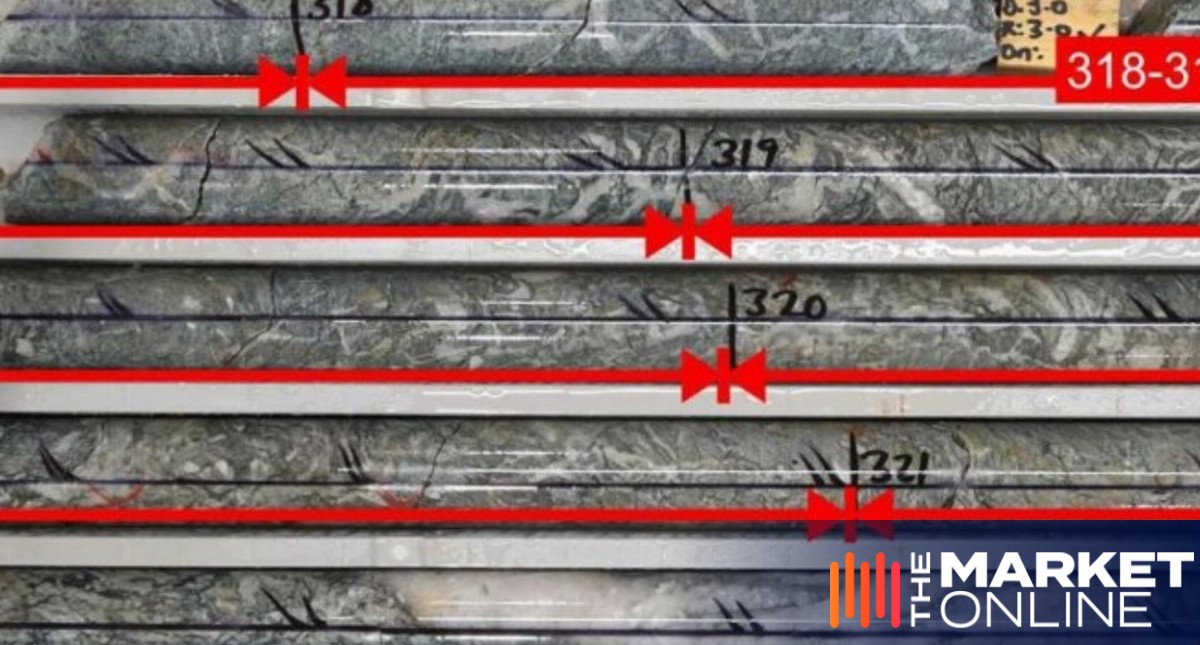
Magnetic Resources (ASX:MAU) has confirmed a series of high-grade gold intersections at its Lady Julie North 4 (LJN4) deposit in Western Australia, reinforcing the site's potential as a cornerstone of its broader Laverton project. The latest diamond drilling campaign, which spans a 750-metre strike length, has identified four distinct styles of mineralization. This discovery comes as the company navigates a proposed acquisition by Genesis Minerals (ASX:GMD), a deal that has set the current floor for investor expectations.
Drilling Results and Geological Complexity
The recent program targeted three specific zones: the high-grade core 3 (HGC3), the newly defined HGC4, and the southern silica-pyrite breccia zone (HGC1). Among the most significant results, diamond hole MLJDD109 returned 15 metres at 3.86 grams per tonne (g/t) starting from 200 metres, including a higher-grade interval of 10 metres at 5.48 g/t from 205 metres. This intersection is located 100 metres up-dip from hole MLJDD088, which previously yielded 17 metres at 1.67 g/t and 14 metres at 2.02 g/t.
Beyond the HGC4 infill success, the company noted the emergence of carbonate-hosted mineralization at depth in hole MLJDD033. Management suggests this style may become a primary driver of value in the deeper, underexplored sections of the LJN4 system. The company is now planning follow-up drilling up-dip from MLJDD109 to further delineate the HGC4 zone, where gram-metre numbers have consistently ranged between 22 and 57.
Strategic Value in the Laverton Hub
The LJN4 deposit is part of a larger cluster that includes Lady Julie Central, HN9, Mt Jumbo, and Homeward Bound South. In January, Magnetic announced a combined indicated and inferred mineral resource estimate (MRE) exceeding 2.24 million ounces for the Lady Julie area. The proximity of these deposits—LJN4 is 2.5 kilometres north of Lady Julie Central, which is 2.5 kilometres north-east of HN9—supports the company's thesis for a centralized, large-scale open-cut operation.
These deposits are characterized by low strip ratios, with Lady Julie Central and HN9 starting from the surface and LJN4 beginning at a depth of 30 metres. Managing Director George Sakalidis emphasized that the current Australian gold price, hovering near record levels of $6,395 per ounce, enhances the economic viability of these shallow resources. Furthermore, the company is positioning the main lode at LJN4 as a candidate for deep underground mining, with potential extensions identified from 400 metres down to 1,000 metres.
Market Positioning and Acquisition Context
For investors, the technical success at LJN4 must be viewed through the lens of the mid-February agreement with Genesis Minerals. With a market capitalization of $565.7 million and shares trading at $1.92, the stock is currently tethered to the terms of the proposed 100% acquisition. While the drilling results confirm the geological quality of the asset, the primary driver for price action remains the progress of the Genesis Minerals deal rather than independent exploration upside.
Market participants should monitor the integration of these new intersections into the existing resource model. Any deviation from the current MRE or a shift in the acquisition timeline could trigger volatility. While the technical data supports the long-term viability of the Laverton project, the immediate risk is execution-related, specifically regarding the regulatory and shareholder approval processes for the takeover. For those interested in broader sector trends, comparing this asset's development to other regional gold plays provides a useful framework for valuation. Investors should remain cautious of the premium or discount relative to the Genesis offer price, as this will likely dictate the stock's performance until the deal concludes.