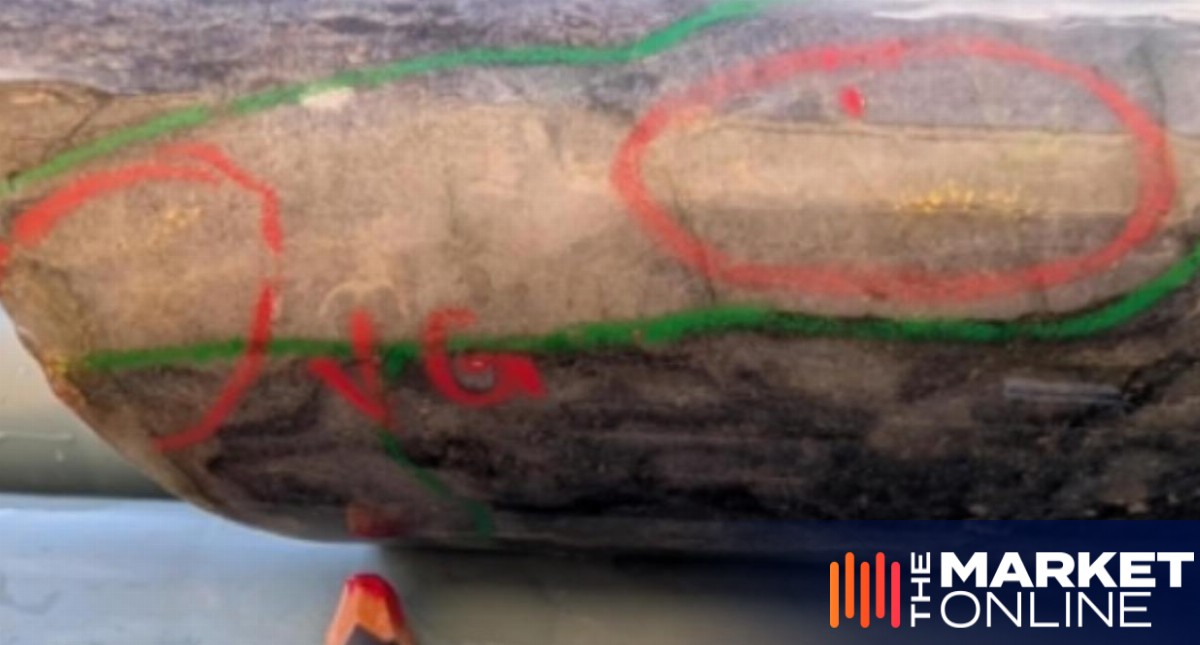
Maritana Minerals (ASX:MRT) has reported high-grade gold intercepts at its Burbanks project near Coolgardie, Western Australian Goldfields, with assay results reaching up to 126.93 grams per tonne (g/t). These findings, which include a 1.37-metre intercept at that peak grade from 290.84 metres, represent a significant data point for the company as it attempts to integrate the Burbanks underground asset into its broader production strategy.
Geological Confidence and Resource Upgrades
The primary objective of this phase one drilling program was to convert geological confidence from inferred to indicated status. By targeting the Burbanks North open pit and the deeper underground zones, Maritana aims to solidify its life-of-mine (LOM) planning. While the Burbanks North open pit is already accounted for in the current LOM, the underground component remains outside of it. The successful identification of high-grade mineralisation at depth provides the necessary technical justification to potentially bring these ounces into the formal reserve base.
All assay results from the Burbanks North campaign are now in hand. This allows the company to proceed with an updated mineral resource estimate (MRE) scheduled for the June CY26 quarter. Following the MRE, Maritana intends to initiate ore reserve studies. For investors, the transition from resource to reserve is the critical mechanism for de-risking the project, as it moves the asset from a geological prospect toward a bankable production source.
Feed Strategy for Black Swan Hub
The strategic value of Burbanks is tied directly to the Black Swan processing hub, which is 100% owned by Maritana. The company is positioning Burbanks as a reliable, high-grade feed source for this facility. By maintaining consistent grade profiles, Maritana aims to optimize the throughput and recovery rates at Black Swan. Managing the supply chain between the Burbanks site and the processing hub is a key operational focus for CEO Grant Haywood, who noted that the ongoing success of the drilling program is essential to de-risking the project's long-term viability.
Historical Context and Market Positioning
Burbanks is a historic asset with a significant production pedigree, having historically yielded 324,000 ounces of gold at an average grade of 22.7 g/t. This historical context is vital when evaluating the current JORC (2012) resource, which stands at 6.1 million tonnes grading 2.4 g/t for 466,000 ounces. The recent drilling results, such as the 4.2-metre intercept at 42.43 g/t from 289.63 metres, suggest that the project retains the high-grade characteristics that defined its historical output.
Market participants should distinguish between the headline-grabbing high-grade intercepts and the broader resource grade. While the 126.93 g/t result is notable, the economic viability of the project hinges on the continuity of these grades across a mineable width. The upcoming MRE will be the primary indicator of whether these high-grade pockets translate into a meaningful increase in the total reserve tonnage.
Operational Metrics and Next Steps
Maritana is currently capitalized at $277.03 million, with shares trading at 75.5¢, reflecting a modest gain of +0.67% following the announcement. The company's ability to execute on its June CY26 timeline for the MRE will be the next concrete marker for the stock. Investors should monitor the conversion rate of inferred resources to indicated status in the upcoming report, as this will determine the feasibility of incorporating the underground zones into the LOM plan.
As the company continues to explore the southern project area for shallow gold mineralisation, the focus remains on balancing exploration upside with the operational necessity of feeding the Black Swan hub. For those tracking the broader commodities analysis, the Burbanks project serves as a case study in how junior miners attempt to leverage historical high-grade assets to sustain processing infrastructure. The success of this strategy depends on the company's ability to maintain the grade consistency observed in the recent drilling phase as they move toward formal reserve classification.