Van Attack and Stabbings Kill 8 in Central London
A vehicular attack followed by a knife rampage on London Bridge and the surrounding Borough Market area killed eight people and injured dozens more on June 3, 2017, according to official reports at the time. Three attackers drove a white van into pedestrians on the bridge, then exited the vehicle and stabbed people at nearby bars and restaurants before police fatally shot them.
The Islamic State claimed responsibility for the coordinated assault, which unfolded over roughly eight minutes before armed officers neutralized the suspects. The attack was the third Islamist-related terrorist incident in the United Kingdom in 2017, following the Westminster Bridge attack in March and the Manchester Arena bombing in May.
Timeline of the Attack
The incident began just before 10 PM BST when the rented van mounted the pavement on London Bridge, striking multiple pedestrians. The three assailants then abandoned the vehicle and ran toward Borough Market, a popular nightlife district filled with restaurants and pubs. Witnesses described the attackers using 12-inch knives and what appeared to be replica suicide vests.
Armed police responded within minutes. Officers confronted the suspects outside the Wheatsheaf pub on Stoney Street, firing a total of 50 rounds. All three attackers were killed at the scene. The inquest later confirmed that the men were wearing fake explosive devices, which allowed witnesses and initial responders to mistake them for genuine suicide belts.
Casualties and Victims
Eight people died at the scene or shortly after at nearby hospitals. The victims included three British nationals, two Australians, one French citizen, one Canadian, and one Spanish citizen. A Canadian national was among the deceased. In total, 48 people were treated for injuries, 21 of whom were placed in critical care.
Among the dead was Chrissy Archibald, a 30-year-old Canadian who was in London with her boyfriend. French national Alexandre Pigeard, a 26-year-old restaurant manager, was also killed in the Borough Market area. The Metropolitan Police released the names of all eight victims over the following week, coordinating with multiple foreign embassies.
Police and Security Response
The Metropolitan Police declared the incident a terrorist attack within hours. The UK government raised the national threat level from "severe" to "critical," its highest rating, for the first time since April 2017. That designation indicated an attack was believed to be imminent, and it triggered the deployment of military personnel to augment armed police on public streets.
Security forces mounted a coordinated response involving the Metropolitan Police Counter Terrorism Command, MI5, and Scotland Yard. Officers conducted a series of raids in Barking, East London, where one of the attackers lived. A 24-hour period of heightened patrols followed, with soldiers deployed at key transport hubs and tourist sites.
Investigation and Aftermath
Investigators determined that the three attackers were known to British intelligence services. Two of the men had been previously reported to the counter-radicalization program Prevent, though neither had been the subject of active surveillance at the time of the attack. Police seized computers, phones, and documentation during the Barking raids.
The subsequent inquest examined whether intelligence failures allowed the attack to proceed. MI5 and counterterrorism police faced criticism for not intercepting the attackers despite prior contact. The coroner concluded that the attack could not have been reasonably prevented given available resources and intelligence, though the families of some victims challenged that finding.
Public and Political Reaction
Prime Minister Theresa May addressed the nation on June 4, calling the attack "evil" and emphasizing that the country would not be divided by terrorism. She pledged to review counter-extremism policies, including prison sentences for terrorism-related offenses. The Labour Party leader Jeremy Corbyn also condemned the attack, calling for a full inquiry.
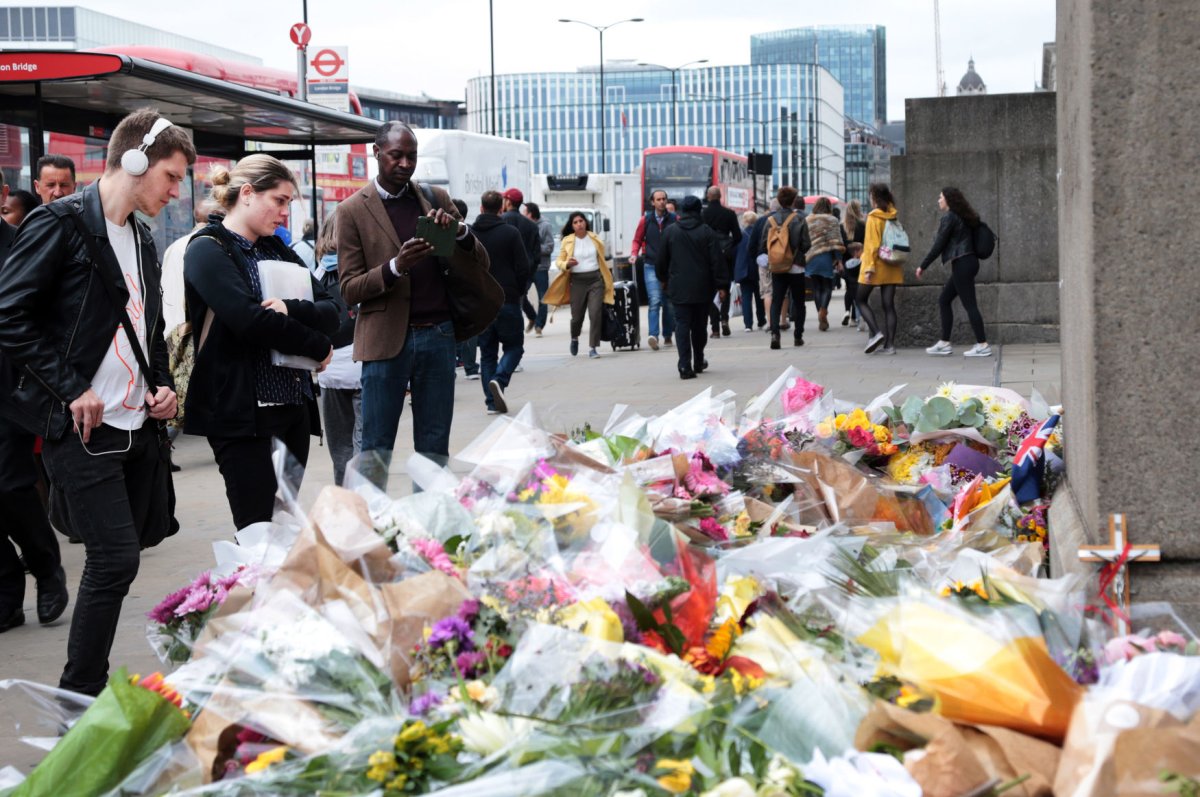
The Mayor of London Sadiq Khan described the incident as a deliberate attack on innocent Londoners and visitors and urged the public to remain vigilant but united. A vigil was held on London Bridge the following evening, drawing thousands of attendees. Memorial plaques now mark the locations of the attack.
Broader Implications
The London Bridge attack intensified discussions in the UK and across Europe about vehicle-as-weapon protection measures. Concrete barriers and steel bollards became standard installations at major public gathering spaces following the incident. The attack also contributed to a wider debate about the Prevent program's effectiveness in identifying and intervening with potential radicalized individuals.
For the security sector globally, the attack reinforced a shift in threat assessments toward low-tech, lone-actor or small-cell operations that are harder for intelligence agencies to detect than larger, plot-based attacks. The use of a rented vehicle and readily available knives compressed the warning timeline for security forces, a pattern that continues to inform counterterrorism resource allocation.
Conclusion
The June 3, 2017, London Bridge attack killed eight people and wounded dozens more in a coordinated vehicular and knife assault that lasted under 10 minutes. The Islamic State claimed responsibility. Police reform, physical security upgrades, and intelligence procedures all changed materially in the aftermath, making the attack a reference point for counterterrorism planning in the UK and allied countries.