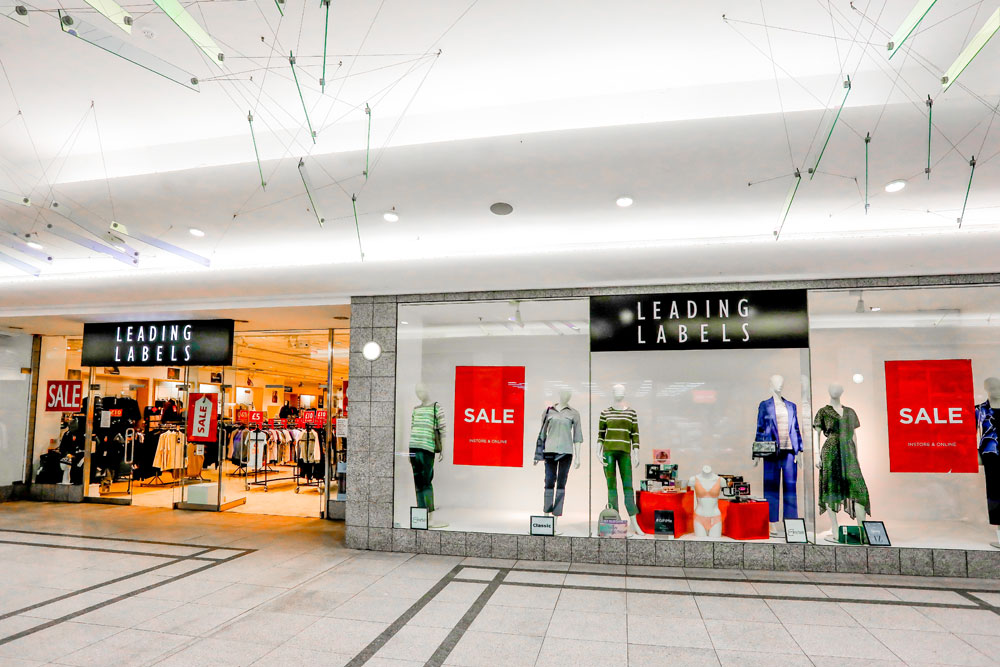
Fashion outlet chain Leading Labels is closing all 15 stores after entering liquidation. The retailer, which sells discounted clothing from brands including Calvin Klein, Wrangler, Elle and Joules, appointed Jeremy Bleazard of XL Business Solutions Limited as liquidator on 26 May. Clearance sales have now launched across the estate, with “Everything Must Go” pricing in effect.
The closure of a 15-store chain is small in absolute terms. The liquidation carries a read-through for the UK discount fashion segment and the brand owners that rely on outlet channels to clear excess inventory. A simple reading dismisses this as an isolated failure of a minor player. A more practical view is that Leading Labels occupied a vulnerable part of the retail spectrum – deep discount, limited margins, high rent exposure – where any squeeze on consumer discretionary spending hits first.
The Liquidation: Cost Pressure and Margin Collapse
Leading Labels operated a pure off-price model, buying end-of-line and overstock merchandise from premium brands and selling at a sharp markdown. That model works only when the sourcing pipeline is cheap and consistent and when foot traffic justifies store-level rent. Rising business rates, minimum wage increases and a cost-of-living-driven shift away from discretionary apparel have compressed those margins to the point where a single season of weak sell-through can tip a discounter into insolvency.
The appointment of a liquidator rather than an administrator suggests the directors concluded there was no viable rescue or sale. Clearance sales are a last-in, first-out process intended to convert inventory into cash for creditors. For the brands that supplied the stock – Calvin Klein, Wrangler, Elle and Joules – this means a sudden loss of a distribution channel and a likely flood of deeply discounted product onto secondary markets. That can undermine full-price sell-through elsewhere.
Sector Read-Through: UK Discount Apparel Under Structural Pressure
The liquidation is a data point, not a sector-wide signal. It confirms what earlier UK retail failures have already flagged: the mid-tier discount apparel space is under structural pressure. Chains that lack scale, e-commerce integration or a captive supply chain are the most exposed. Leading Labels had no online operation of note; its entire business depended on physical footfall in locations that may already have been losing traffic to larger off-price players and online marketplaces.
Brand owners with significant wholesale exposure to the UK discount channel should watch for further discount retailer distress. Calvin Klein is owned by PVH Corp, Wrangler by VF Corporation, and Joules is a listed UK brand. The liquidation means those labels now have a small but real reduction in their clearance outlet network. In isolation the volume is immaterial. If other discounters follow, the cumulative effect could be a channel shift that forces brands to either accept lower recovery rates on excess stock or invest in direct-to-consumer outlet models.
The read-through is strongest for any retailer that operates a similar model – buying overstock from premium brands and selling at a steep discount in secondary locations. Rent covenants, inventory turn and working capital lines are the three metrics to watch in the next set of filings from this segment.
Next Decision Point: Creditor Returns and Brand Allocation
For creditors, the next concrete marker is the liquidator’s progress report, due within weeks of appointment. It will detail estimated returns to unsecured creditors. Given the clearance-driven nature of the closure, recoveries are likely to be low for trade creditors and landlords.
For the brand side, the key decision is whether to reallocate clearance inventory to other discount partners, open a temporary outlet, or simply write down the stock. PVH and VF Corp each have large off-price programs with national chains; the loss of 15 stores is unlikely to move earnings. For Joules, a smaller UK brand that relied more heavily on independent discounters, the gap is proportionally larger.
A similar case – Saddleback's Administration: 42 Axed, UK Bike Distribution Risk – showed how a small liquidation can ripple through supply chains when brands lack alternative distribution. The pattern repeats here: a discounter collapses, inventory floods the grey market, and brand owners absorb the margin hit.
For anyone building a watchlist on UK retail or the off-price sector, this is a reminder to screen for low-margin, high-rent, single-channel operators. The liquidation of Leading Labels is not a sector crisis. It is a textbook example of how the mechanics of a fragile model break when consumer conditions tighten.