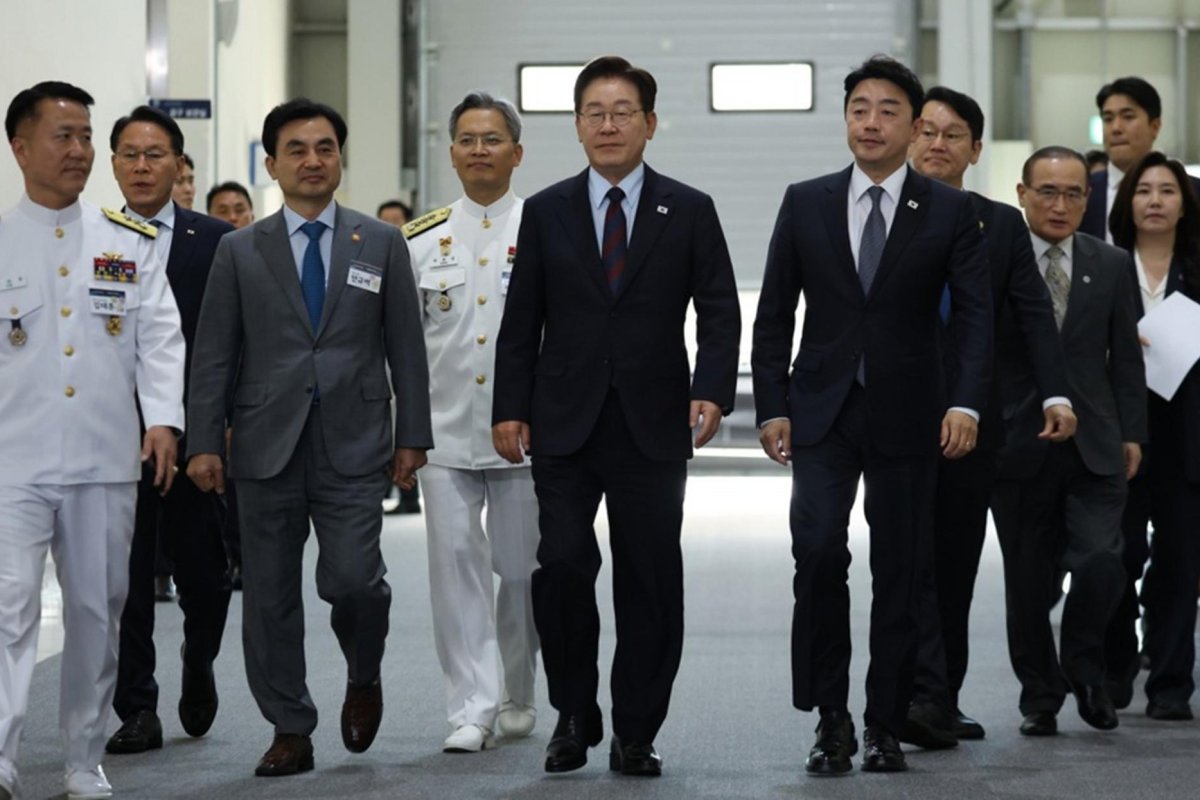
President Lee Jae-myung marks his first year in office with a 64% approval rating, a Kospi that has surged nearly 90% year-to-date, and a reform agenda that has narrowed the Korea discount. The risk event for the second year is the June 3 local elections – the first electoral test since the December martial law crisis. A weak showing for Lee's Democratic Party could slow the legislative momentum that investors have priced into Korean equities.
The simple read is that high approval and a large ruling party majority guarantee continued reform. The better market read is that the Kospi's rally already embeds expectations for sustained governance improvements. Any signal that Lee's political capital is eroding would force a reassessment of how much of the Korea discount can realistically close in his term.
Local Elections as a Policy Barometer
Lee took office June 4 last year after months of political turmoil. His administration moved quickly on special counsel probes, prosecution reform, and revisions to the Commercial Act aimed at strengthening shareholder rights and improving corporate governance. The Gallup Korea poll from May 22 showed his job approval at 64%, up 3 percentage points from the previous week and well above his 49.42% vote share in the presidential election. The ruling party's approval stood at 45%, while the main opposition People Power Party fell to 22%.
The June 3 local elections will test whether that approval translates into electoral strength. A decisive win for the Democratic Party would reinforce Lee's mandate to push further reforms. A narrow victory or losses in key races, especially the Seoul mayor race, would signal that public patience with the administration's pace is thinning.
What the market is pricing
The Kospi closed at 2,770.84 on Lee's inauguration day and has since surged past 8,000. The rally has been fueled by semiconductor strength, artificial intelligence demand, and expectations for market reform. The National Pension Service plans to raise its target for domestic stock holdings to 20.8% by the end of 2026, adding a structural demand driver.
The rally's political component is harder to isolate. Lee has made stock market reform a central economic agenda, pledging to address the Korea discount – the persistent valuation gap between Korean and global peers due to weak shareholder protections and opaque governance. Korean media reported in March that Lee proposed additional reforms, including limits on duplicate listings by holding companies and subsidiaries, a practice often blamed for diluting shareholder value.
Exposure: Who Benefits from the Korea Discount Narrowing
The Korea discount thesis benefits the entire Kospi. The largest exposure sits in sectors where governance improvements can unlock the most value.
Affected assets and sectors
- Kospi large caps – Companies like Samsung Electronics and SK Hynix are the index heavyweights. Their valuations already reflect some governance premium. Further reforms could lift price-to-book ratios closer to global peers.
- Mid-cap and small-cap value stocks – Firms with complex holding company structures or poor shareholder returns stand to gain most from limits on duplicate listings and stronger dividend mandates.
- Financials – Banks and insurers benefit from improved capital allocation and the National Pension Service's increased domestic allocation.
The structural demand tailwind
The National Pension Service's plan to raise domestic stock holdings to 20.8% by 2026 represents a multi-year buying program. That provides a floor under the market. It also means that any political disruption could create a gap between the pension fund's buying and private investor sentiment.
Timeline: From Local Elections to Policy Implementation
The next 90 days will determine whether the reform narrative stays intact or fractures.
Key dates and catalysts
- June 3 – Local elections. Outcome will set the political tone for the rest of the year.
- Second half 2025 – Housing policy response. Analysts point to housing prices as a key risk. High liquidity and supply shortages in the Seoul metropolitan area could erode public support if prices accelerate.
- Ongoing – US tariff negotiations and nuclear-powered submarine discussions. Lee has emphasized pragmatic diplomacy. Progress on trade with Washington supports the export-driven economy.
- Mid-2030s – Nuclear-powered submarine deployment target. While distant, the defense industrial base benefits from the procurement cycle.
What would reduce the risk
- The Democratic Party wins a clear majority in local races, especially the Seoul mayor contest.
- Housing supply measures are announced or price growth moderates.
- US tariff negotiations produce a concrete deal, supporting export earnings.
What would make it worse
- The opposition People Power Party gains ground, signaling that Lee's reform mandate is weakening.
- Housing prices spike in the Seoul area, triggering public backlash.
- The Middle East conflict disrupts energy costs or global trade flows, hurting Korea's export-dependent economy.
The Mechanism: How Political Momentum Drives Valuation
The link between Lee's approval and the Kospi is not direct. The rally has multiple drivers: the global semiconductor cycle, AI demand, and the pension fund's allocation shift. The Korea discount narrowing is a domestic policy bet that depends on legislative execution.
The governance premium
Lee's proposed reforms – the Commercial Act revisions, limits on duplicate listings, and stronger shareholder rights – are designed to raise corporate accountability. If implemented, they could lift Korean equity valuations by reducing the discount that foreign investors apply to Korean stocks. The MSCI Korea index has historically traded at a price-to-book discount of 30-40% versus the MSCI World. Closing even half of that gap would represent a significant rerating.
The execution risk
Reforms require legislative approval. Lee's Democratic Party holds a large majority. Political capital is finite. If local elections reveal that the public is more concerned about housing costs than corporate governance, the administration may shift focus away from market reforms. That would delay the governance improvements that investors are counting on.
What Confirms or Weakens the Setup
Traders watching the Korea discount narrowing thesis should track three variables: election results, housing data, and reform bill progress.
Confirmation signals
- The Democratic Party wins at least 55% of contested local seats.
- Housing price growth in Seoul stays below 5% annualized through Q3.
- The Commercial Act revisions pass the National Assembly by September.
Weakening signals
- The People Power Party wins the Seoul mayor race or gains more than 30% of local seats.
- Housing prices accelerate above 10% annualized, forcing the administration to prioritize cooling measures over market reforms.
- US tariff negotiations stall, reducing export earnings and fiscal flexibility.
For context on how trade negotiations affect Asian market reform narratives, see our analysis of US-India Trade Talks Enter Final 1% Stretch This Week.
The Second-Year Challenge
Lee's first year delivered high approval, a surging stock market, and a clear policy direction. The second year will test whether that momentum can survive the inevitable friction of governance. Housing prices, geopolitical risks from the Middle East, and national unity are the headwinds. The June 3 local elections are the first concrete data point. A strong result keeps the Korea discount narrowing thesis on track. A weak result forces investors to ask how much of the 90% rally was politics and how much was the semiconductor cycle.
That distinction matters because the semiconductor cycle will eventually turn. When it does, the governance premium will be the only support for Korean valuations. If the political will to deliver reforms is already fading, the Kospi's next leg will depend entirely on global demand – a much thinner foundation than the one Lee built in year one.