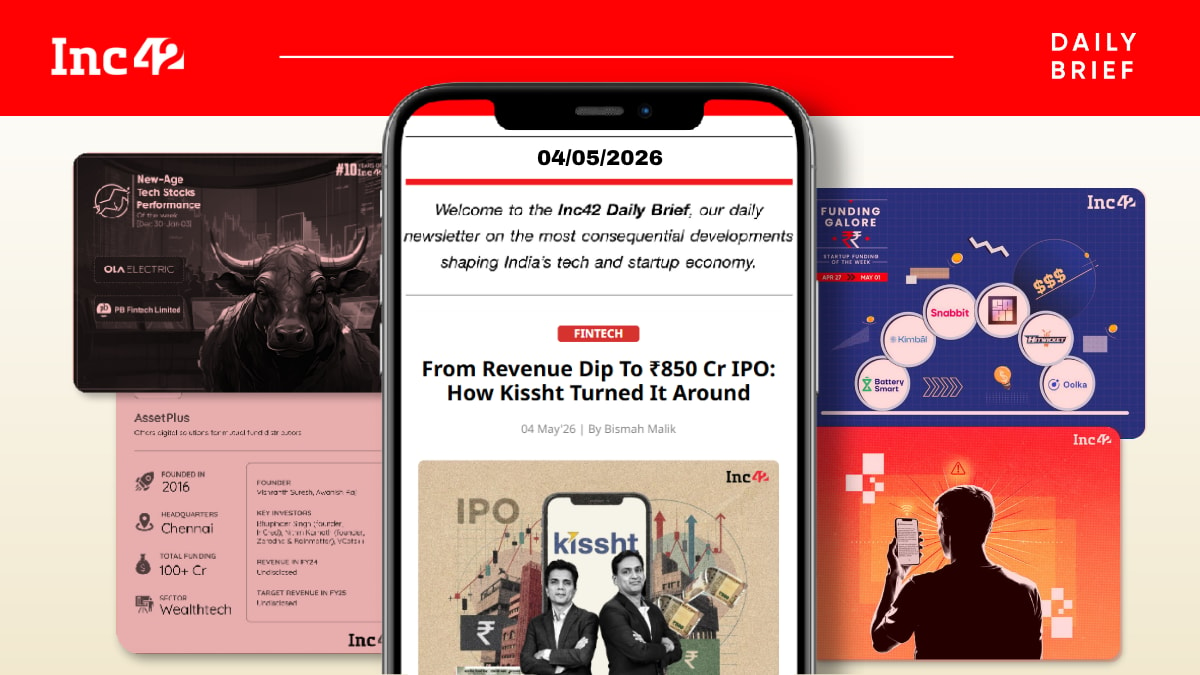
The public market debut of lending technology firm Kissht arrives during a period of heightened market volatility and geopolitical uncertainty in West Asia. Rather than delaying its entry, the company is positioning its IPO around a pivot toward high-quality growth and a reinforced bottom line. This shift follows a challenging fiscal year 2025, during which the Reserve Bank of India implemented a stricter regulatory framework for unsecured lending, forcing the startup to curtail disbursements and re-evaluate its risk appetite.
The Pivot to Profitability and Asset Quality
The core of the investment case rests on the company's ability to navigate regulatory headwinds by prioritizing margin preservation over raw volume. After revenue and profit declines in the previous fiscal cycle, the firm successfully recalibrated its credit engine to focus on lower-risk borrowers. This operational discipline yielded a profit after tax of ₹199.3 Cr for the nine-month period ending in fiscal year 2026. By slowing loan growth to ensure underwriting integrity, the firm has attempted to insulate itself from the credit quality issues that often plague high-growth fintechs during economic contractions.
AUM Expansion and Structural Control
A critical component of the firm's valuation pitch is the 2.2X growth in assets under management, which reached ₹5,956 Cr between March 2024 and December 2025. This expansion is underpinned by the company's in-house Non-Banking Financial Company (NBFC) structure. By maintaining internal control over the entire credit lifecycle—from initial underwriting and loan pricing to final collections—the firm has reduced its reliance on third-party partners. This vertical integration is intended to provide a more consistent data feedback loop for its credit models, which is essential for maintaining lower default rates in a volatile interest rate environment.
Risk Hedging and Product Diversification
To mitigate the inherent risks of its core unsecured lending business, the company is actively diversifying its portfolio into secured assets. The loans-against-property vertical currently accounts for 5% of total revenue, providing a more stable, long-term asset base that is less sensitive to short-term consumer spending fluctuations. Furthermore, the firm is leveraging its existing base of 11.17 Mn registered customers to cross-sell ancillary products, such as health insurance. This strategy is designed to increase the lifetime value of each customer while reducing the cost of acquisition, a common hurdle for firms operating in the competitive stock market analysis landscape.
IPO Structure and Promoter Alignment
Recognizing the skepticism of institutional investors toward aggressive IPO valuations, the company implemented a significant restructuring of its offering. The fresh issue component was reduced by 15% to ₹850 Cr compared to the original Draft Red Herring Prospectus, and the Offer for Sale (OFS) was nearly halved. Perhaps most importantly for potential shareholders, the two co-founders demonstrated alignment by purchasing shares worth ₹40 Cr at a premium price of ₹201 apiece. This purchase price sits well above the final IPO range of ₹162-171, signaling internal confidence in the firm's long-term trajectory.
Market Reception and Execution Risk
The immediate market response saw the public issue subscribed 24% on the first day, with anchor investors committing ₹278 Cr. While this initial interest suggests a degree of institutional support, the sustainability of this momentum remains contingent on the firm's ability to maintain its current PAT trajectory in the face of broader macroeconomic pressures. Investors should monitor whether the shift toward secured lending can scale rapidly enough to offset potential volatility in the unsecured segment. The firm's ability to manage its cost of funds and maintain its credit engine efficiency will be the primary determinants of its performance in the coming quarters. For those evaluating the broader sector, the firm's performance serves as a test case for how fintechs can successfully transition from rapid, volume-driven growth to a more sustainable, margin-focused model. As the company moves forward, the focus will shift to its ability to retain its customer base while navigating the evolving regulatory environment that initially forced its strategic retreat in fiscal year 2025.