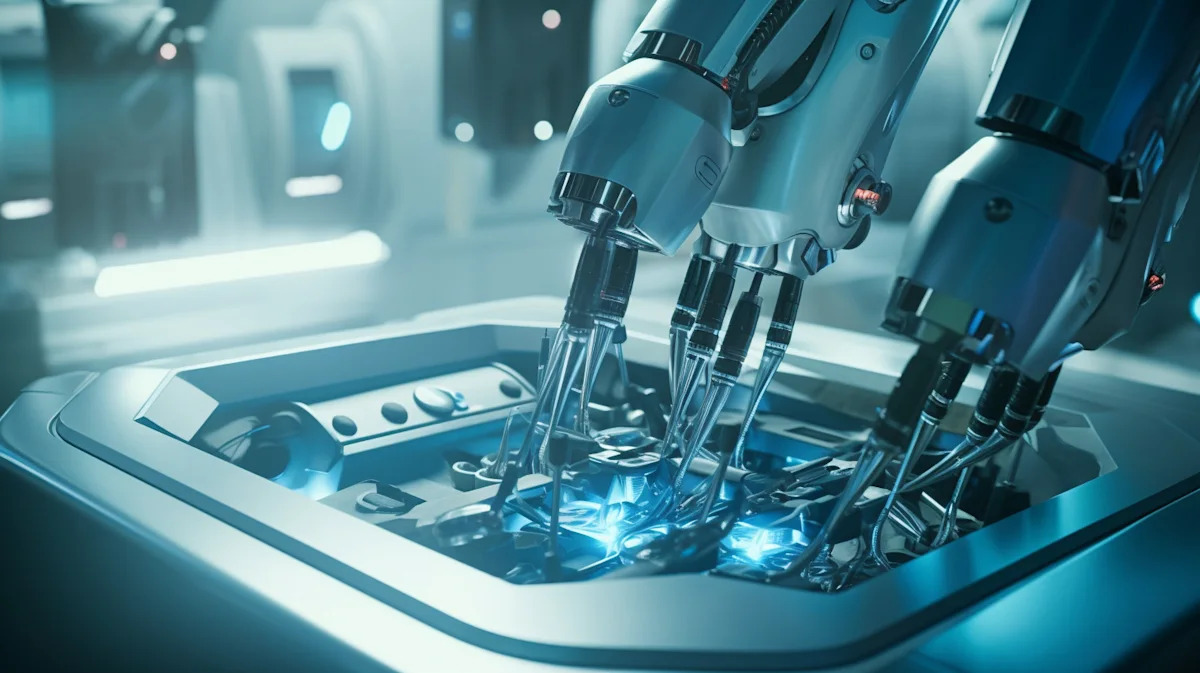
Johnson & Johnson received U.S. Food and Drug Administration authorization for its Ottava surgical robot, putting the company in the soft-tissue surgery market that Intuitive Surgical has led for years. The De Novo clearance covers upper-abdominal general surgery procedures, including gastric bypass, gastrectomy, cholecystectomy, gastric sleeve surgery, appendectomy and hiatal hernia repair.
Ottava's arms mount into the operating table, J&J said, letting the system take up 30% to 50% less floor space than boom- or cart-mounted robots. The company said the design can make robotic surgery possible in operating rooms that could not fit a larger platform. J&J will start with select U.S. customers, a rollout the company said is intended to focus on early customer success and build surgeon training before wider expansion.
J&J is also running a U.S. trial for inguinal hernia repair and plans to seek approval in other jurisdictions and additional indications gradually. The company already sells wound-closure products and stapling systems, plus other operating-room technologies. Its MedTech unit posted $8.93 billion in second-quarter 2026 revenue, up 4.5% on a reported basis and 3.6% on an adjusted operational basis. Ottava will not move those near-term numbers during a limited launch.
Intuitive Surgical, the incumbent, ended the quarter with 11,710 da Vinci systems installed, up 12% year over year. Placements reached 468, including 246 da Vinci 5 systems; a year earlier the totals were 395 and 180. Instruments and accessories revenue increased 18% to $1.73 billion, with da Vinci procedure volume up about 15%.
Intuitive's total second-quarter revenue rose 19% to $2.89 billion. Systems revenue came to $685 million, supported by higher placements and a larger lease base. Worldwide da Vinci and Ion procedure volume grew about 16%.
Ottava's smaller footprint is its clearest differentiator. J&J will need to demonstrate that the space savings change hospital purchasing decisions. It has not disclosed how many systems it will place in the initial U.S. group.
AlphaScala's proprietary score puts JNJ at 58 out of 100, labeled Moderate, and ISRG at 40, labeled Mixed.
It plans to expand Ottava into additional jurisdictions and indications, with the inguinal hernia trial running in the U.S. Urology and other specialties would require follow-on submissions. J&J said the initial rollout will stay small to keep attention on customer success.