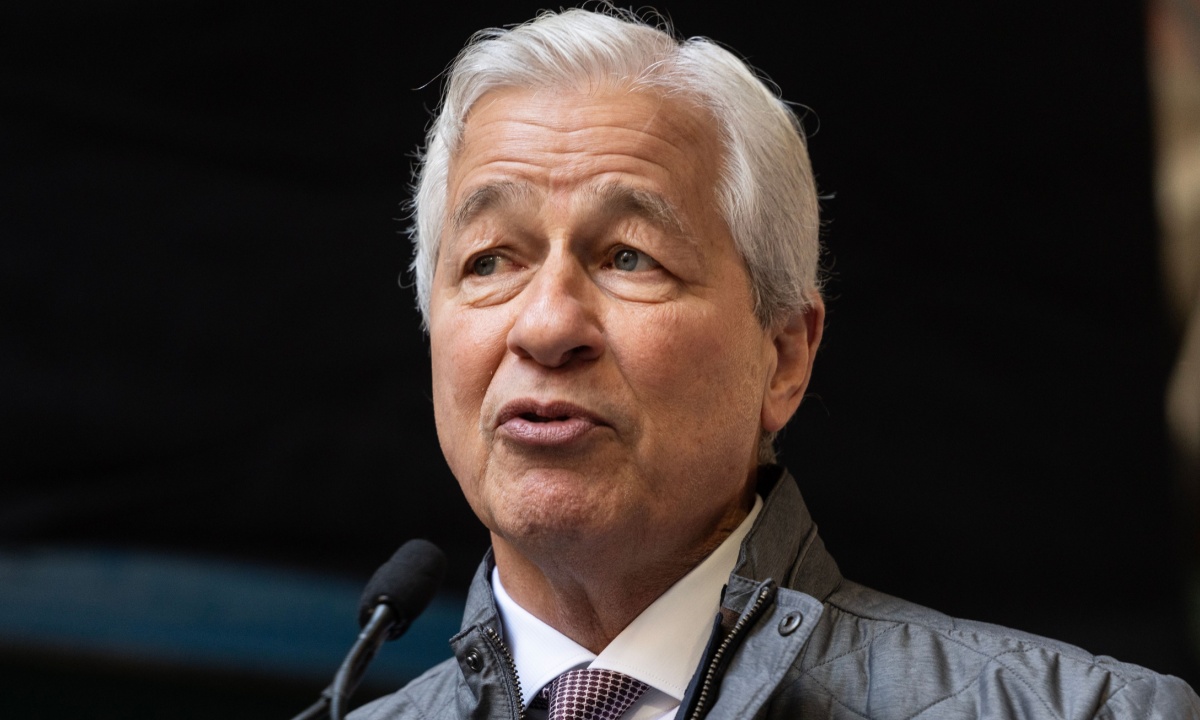
JPMorgan Chase CEO Jamie Dimon said Wednesday (May 27) that the largest U.S. bank could allocate $10 billion to $20 billion toward acquisitions over the next two years. The statement, made during a virtual investor conference, is the clearest public signal yet that JPMorgan is preparing to deploy its excess capital on dealmaking rather than further buybacks or dividends alone.
The figure itself is the headline: a $10B–$20B M&A budget at a bank that already holds more than $200 billion in common equity Tier 1 capital. Dimon did not specify targets, industries, or timing. The range alone shifts the risk-reward calculus for anyone holding JPM stock or tracking the U.S. bank M&A cycle.
Dimon's M&A Budget: A Strategic Shift
Until Wednesday, JPMorgan had been cautious about large acquisitions, preferring organic growth and bolt-on deals in payments and fintech. The $10B–$20B range changes that. It implies JPMorgan could pursue a transaction of that scale or a string of smaller deals that collectively hit the upper bound. Dimon's own track record – he led the rescue purchases of Bear Stearns and Washington Mutual during the 2008 crisis – means the market will take this signal seriously.
The catalyst is not an actual deal. It is a strategic posture shift. When the CEO of the most profitable U.S. bank openly discusses a $20 billion acquisition budget, it tells the market that JPMorgan sees more value in acquiring than in purely returning capital. That changes the opportunity set for JPM stock and for potential targets.
Implications for Bank M&A and JPM Stock
JPMorgan's capital position is already a constraint on competitors. Adding an explicit M&A mandate puts additional pressure on regional banks, specialty lenders, and fintech platforms that could become targets. The simple read is that JPMorgan is going shopping. The better market read is more nuanced: Dimon is preempting regulatory and shareholder scrutiny by framing the budget publicly. He is also telegraphing that deal economics must compete with a cost of equity that is among the lowest in banking.
Three immediate implications flow from this:
- Valuation floors rise for any bank or payments company that fits JPMorgan's strategic map. The mere possibility of a JPM bid compresses spreads for other potential acquirers.
- Regulatory risk increases because a deal of $10B–$20B would push JPMorgan closer to the systemic concentration limits that regulators monitor. Any transaction would face a long review process. The bank's asset cap from the 2020 risk-management consent order still constrains growth in certain areas.
- Buyback uncertainty emerges. If JPMorgan shifts cash from buybacks to M&A, the per-share earnings trajectory changes. Dimon's statement does not specify how much of the capital return program will be redirected. The implied subtraction is material.
The primary affected asset is JPMorgan Chase (JPM) itself. The stock trades at roughly 1.5x tangible book value, a premium that already embeds assumptions about excess capital returns. An active M&A strategy can either justify that premium – if the deals create earnings accretion and strategic moats – or erode it, if the bank overpays or integrates poorly.
Investors now face a two-part question. First: will JPMorgan actually execute a deal in the $10B–$20B range, or is Dimon managing expectations? Second: if a deal happens, will it be a fintech acquisition that bolsters growth or a traditional bank deal that adds scale but dilutes returns on tangible equity? The market will price these probabilities immediately.
The Next Catalyst: Target Identification
The next catalyst is not the deal itself. It is the identification of a target. Watch for JPMorgan's investor day presentations, regulatory filings that disclose changes in risk appetite, and any informal outreach to midsize lenders in wealth management or payments.
Until a specific transaction emerges, the $10B–$20B figure serves as a floor under JPM stock rather than a trigger. The stock's reaction to Dimon's statement – a modest uptick on the day – suggests the market is pricing in optionality more than imminent action. That could change quickly if Dimon or CFO Jeremy Barnum provide more detail on the capital reallocation at the next earnings call.
For now, the key question is whether JPMorgan's M&A budget will be spent on growth assets that can sustain its 17% return on tangible equity or on scale assets that lower the bar. The answer determines whether the $10B–$20B signal is a long-term value creator or a capital allocation risk.
Broader market context: the U.S. banking sector is emerging from a period of tight regulation and high capital requirements. Dimon's statement may open the door for other large banks to signal similar appetites. The next six months will test whether this is a JPM-specific call or the start of a broader M&A cycle.
For AlphaScala subscribers tracking stock market analysis, the JPMorgan story is now less about net interest income and more about capital deployment. See the JPMorgan Chase (JPM) profile for the latest financial data and risk metrics.