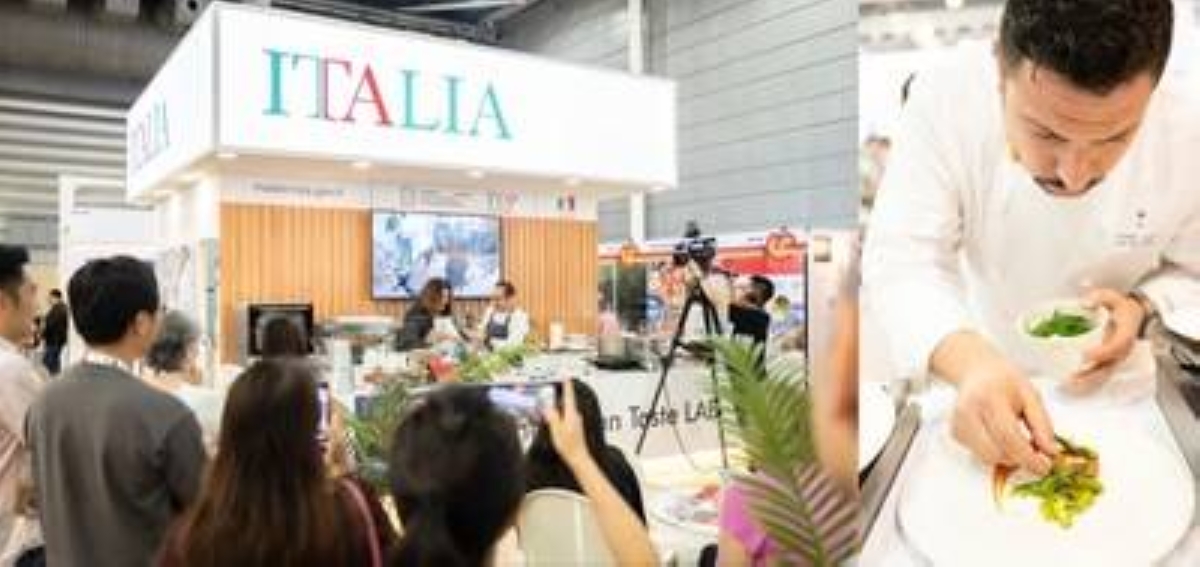
Italian Trade Agency Expands Export Footprint at FHA 2026

The Italian Trade Agency has launched its largest-ever delegation at the Food & Hospitality Asia trade event, signaling a strategic push to deepen the penetration of Italian food brands in Southeast Asia.
Alpha Score of 55 reflects moderate overall profile with moderate momentum, moderate value, moderate quality. Based on 3 of 4 signals — score is capped at 90 until remaining data ingests.
Alpha Score of 45 reflects weak overall profile with strong momentum, poor value, poor quality, weak sentiment.
Alpha Score of 47 reflects weak overall profile with moderate momentum, poor value, moderate quality. Based on 3 of 4 signals — score is capped at 90 until remaining data ingests.
Alpha Score of 53 reflects moderate overall profile with poor momentum, strong value, strong quality, moderate sentiment.
The Italian Trade Agency (ITA) has launched its largest-ever delegation at the Food & Hospitality Asia (FHA) trade event in Singapore, signaling a strategic push to deepen the penetration of Italian food and beverage brands within the Southeast Asian market. With over 100 brands participating, Italy now holds the largest European footprint at the exhibition. This expansion reflects a broader effort to leverage culinary diplomacy as a primary driver for trade growth in a region increasingly focused on premium food imports.
Scaling Culinary Diplomacy
The centerpiece of the Italian presence is the Italian Taste Lab, a dedicated platform designed to bridge the gap between Italian producers and regional distributors. By utilizing live demonstrations led by industry professionals, the ITA is attempting to move beyond traditional trade show booths to create an experiential showcase for buyers. The inclusion of eight local chefs working directly with seven specific Italian brands suggests a targeted strategy to demonstrate product versatility and quality to high-end hospitality and retail decision-makers.
This approach is critical for European food exporters attempting to maintain market share against rising competition from local and regional food producers. By focusing on the premium segment, the ITA is betting that the brand equity of authentic Italian ingredients will continue to command a price premium despite shifts in global consumer spending. The scale of this delegation suggests that the agency is prioritizing volume and brand visibility to secure long-term distribution contracts across the Asian hospitality sector.
Sector Read-through and Regional Integration
The presence of such a large contingent at FHA 2026 provides a clear read-through for the broader European export sector. As trade dynamics shift, the ability to secure shelf space and menu placement in high-growth Asian markets has become a key performance indicator for food and beverage conglomerates. The success of this initiative will likely be measured by the volume of new distribution agreements signed during the four-day event, rather than immediate consumer sales.
For investors monitoring the stock market analysis of global food and hospitality firms, the ITA’s aggressive posture at FHA serves as a proxy for the intensity of competition in the sector. Companies that fail to adapt their distribution strategies to these high-touch, experiential trade environments may find themselves losing ground to more agile, marketing-heavy competitors. The focus on professional culinary education as a sales tool highlights a shift toward high-margin, B2B-focused growth strategies.
AlphaScala data currently tracks various industrial and healthcare entities, such as BE stock page and A stock page, which operate under different cyclical pressures than the consumer-facing food sector. However, the underlying theme of market expansion remains a common thread for firms looking to secure revenue streams outside of domestic markets. The next concrete marker for this narrative will be the post-event trade data and the subsequent expansion of these brands into regional retail chains, which will confirm whether this marketing push successfully translates into sustained export volume.
AI-drafted from named sources and checked against AlphaScala publishing rules before release. Direct quotes must match source text, low-information tables are removed, and thinner or higher-risk stories can be held for manual review.