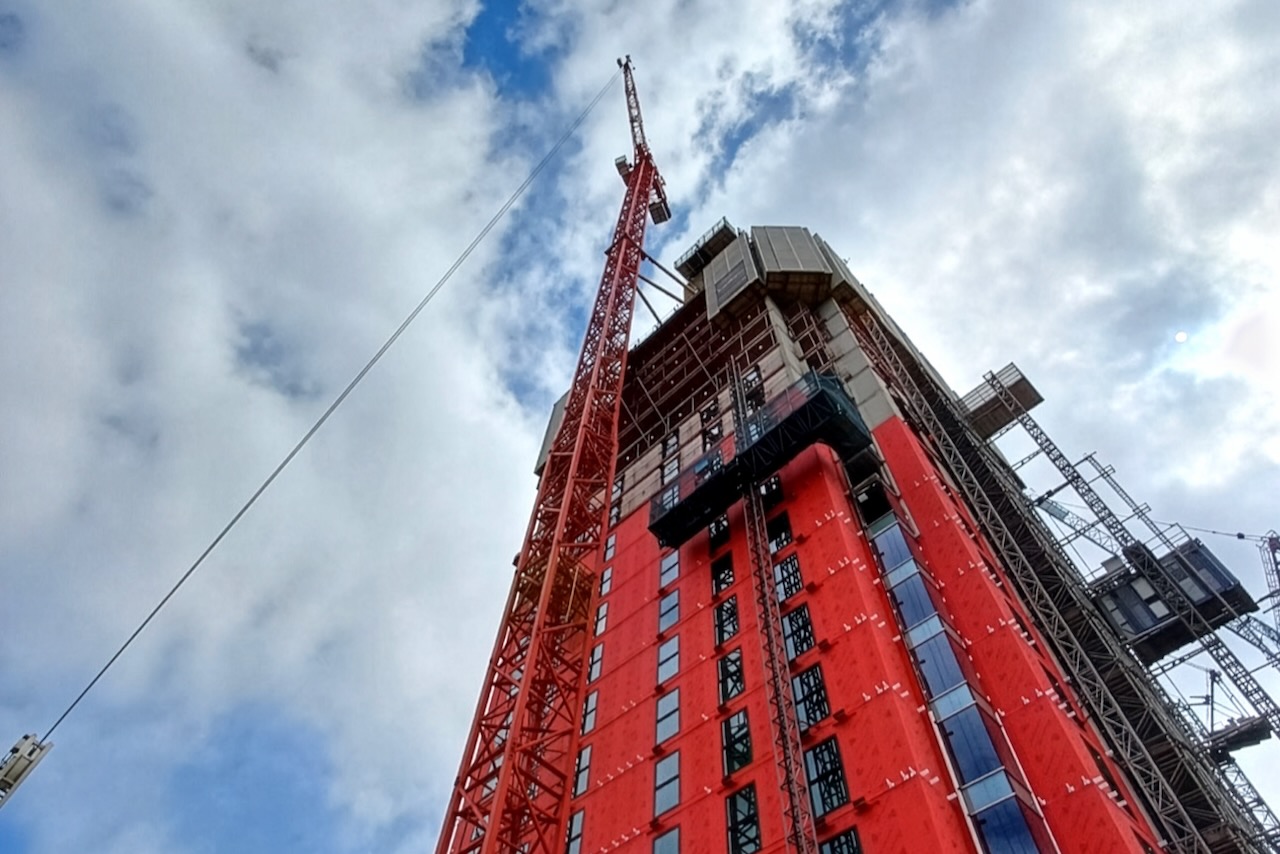
The adoption of prefabricated drainage and water supply systems at the Leeds Sky Gardens apartment block marks a shift in how large-scale residential projects manage site-level efficiency. By integrating off-site manufacturing into the construction workflow, the project team has successfully reduced installation durations for critical plumbing infrastructure. This transition from traditional on-site assembly to modular components addresses the logistical constraints inherent in high-density urban developments.
Efficiency Gains in High-Density Residential Construction
Briggs Forrester Living, the firm managing the 284-apartment project, utilized Polypipe Building Services to supply the prefabricated units. The development occupies a 40,500 square foot brownfield site that includes a Grade II-listed former mill. Integrating modern plumbing technology into a site with historical preservation requirements presents specific challenges, particularly regarding space constraints and the need for rapid installation to maintain project momentum. The use of pre-assembled systems minimizes the labor hours required within the confined spaces of the historic structure and the new build sections.
This approach highlights a broader trend in the construction sector where developers prioritize modularity to mitigate the risks of labor shortages and site-based delays. By shifting the assembly phase to a controlled factory environment, the developer ensures higher consistency in plumbing standards while compressing the overall construction schedule. For investors monitoring the sector, the ability to accelerate project completion through prefabrication serves as a critical lever for improving capital turnover on brownfield developments.
Sector Read-Through and Operational Impact
While the construction industry often faces volatility due to material costs and labor availability, the move toward prefabricated solutions provides a buffer against site-specific disruptions. The Leeds Sky Gardens project demonstrates that even complex sites involving heritage assets can benefit from standardized, off-site manufacturing. This methodology reduces the reliance on specialized on-site trades for extended periods, which is a common bottleneck in large-scale residential builds.
For those tracking the intersection of industrial manufacturing and real estate development, the success of this installation serves as a benchmark for future projects. The focus now shifts to whether these efficiency gains translate into improved margins for developers or if they are primarily utilized to meet aggressive delivery targets in competitive housing markets. As firms continue to navigate the complexities of urban regeneration, the reliance on modular components is likely to remain a core strategy for managing project timelines.
AlphaScala data currently tracks various sectors, including technology and healthcare, where operational efficiency remains a primary driver of valuation. For instance, companies like SQ stock page maintain a Moderate Alpha Score of 63/100, while ON stock page holds a Mixed score of 45/100 and A stock page sits at 55/100. These metrics reflect the broader importance of operational agility across diverse stock market analysis categories.
The next concrete marker for this project will be the final handover of the residential units and the subsequent assessment of total cost savings achieved through the reduced installation window. Future filings from the involved contractors will likely clarify the extent to which these modular techniques are being scaled across their broader project pipelines.