Stocks● Neutral
Iran Strikes Civilian Tanker Near Strait of Hormuz, Escalating Maritime Risk
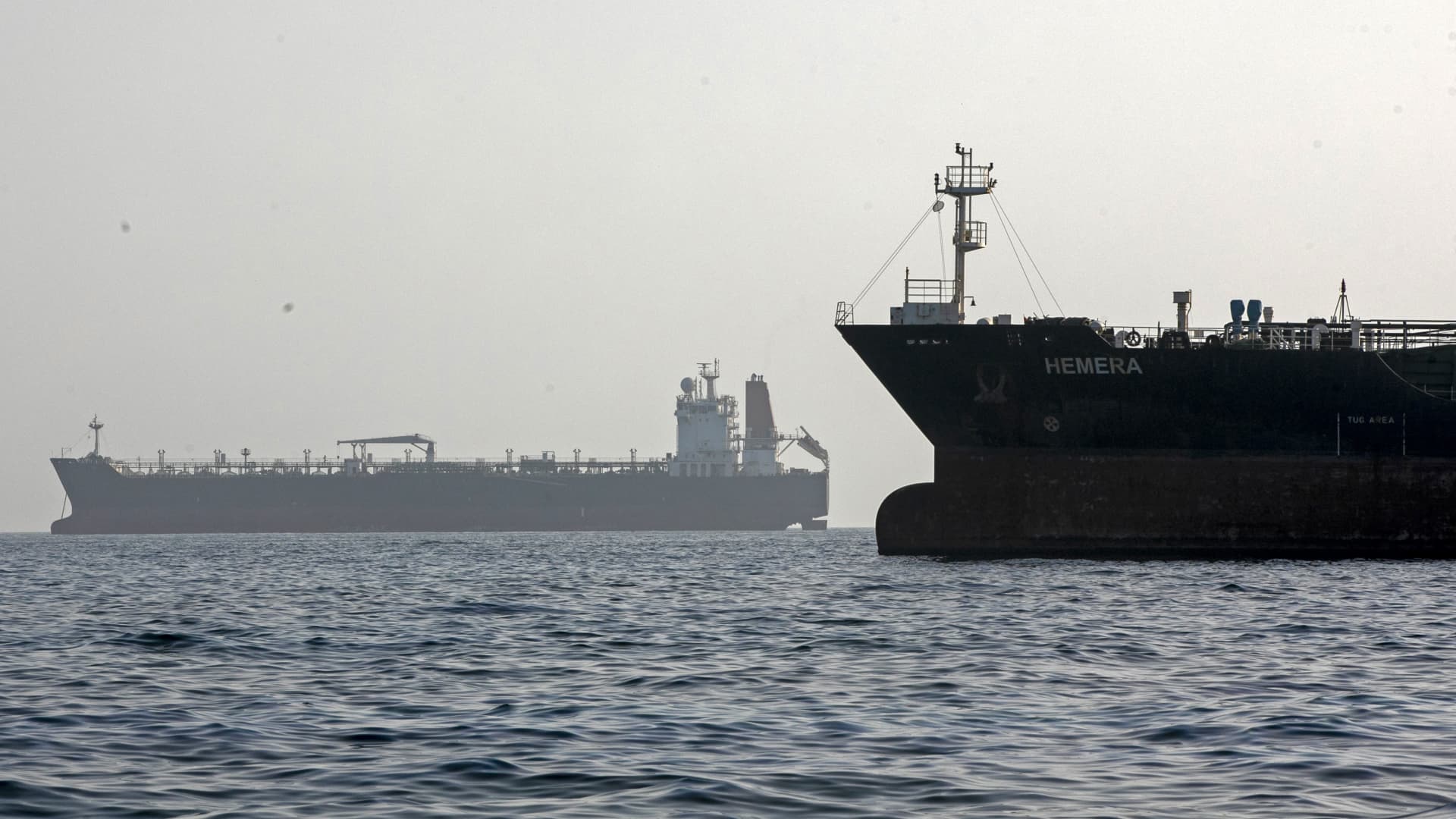
Iran attacks civilian tanker near Strait of Hormuz. U.S. intercepts missiles over Kuwait and Bahrain. Ceasefire frays with no peace deal in sight.
Continue with
Iran launched ballistic missiles and drones at regional neighbors over the past 48 hours, and the U.S. military shot down most of them while conducting defensive strikes on Iranian positions. The exchange marks the most intense confrontation in the three-month-old conflict. More important for markets: the Islamic Revolutionary Guard Corps (IRGC) fired missiles at a civilian tanker near the Strait of Hormuz, a chokepoint for about 20% of global oil transit.
U.S. Central Command said Tuesday that it had defeated multiple Iranian ballistic missiles and drones and launched defensive strikes in response to "attempted attacks" by Iran. Two Iranian missiles aimed at Kuwait fell short or broke apart en route. Three missiles launched at Bahrain were immediately intercepted by U.S. and Bahrain air defense forces. American forces also shot down three one-way attack drones directed at civilian mariners transiting regional waters, according to a CENTCOM statement.
American forces conducted self-defense strikes on an Iranian military ground control station on Qeshm Island.
The Strait of Hormuz Incident Changes the Risk Calculus
The IRGC navy targeted a vessel it identified as Panaya with missiles. Reuters reported the action, citing Iranian media, as a response to what Iran described as a U.S. attack on an Iranian tanker near the Strait of Hormuz that damaged the engine room. The U.S. has not confirmed that attack.
Why a Civilian Tanker Strike Matters for Oil
The simple interpretation: this is a retaliatory incident with no effect on supply. The better market read: it shifts the risk calculus for tanker insurers, ship owners, and crude buyers. A missile strike on a commercial vessel, regardless of attribution, raises the probability of war risk premiums and rerouting decisions. The U.S. drones shot down near civilian mariners confirm that both sides are operating in the same maritime corridor with live ordnance.
Key insight: The channel does not need a blockade to affect prices. A series of incidents that force insurers to exclude parts of the Gulf, or cause ship owners to add days of transit, can tighten physical supply by 200,000-300,000 barrels per day. That magnitude of disruption has historically added $3-$5 to Brent without a single cargo being halted.
The IRGC's Targeting Escalation Signals a New Phase
The attack on the U.S. Fifth Fleet headquarters and the airstrike on Qeshm Island represent a direct exchange between Iranian forces and U.S. military assets on land. Earlier rounds in the conflict focused on missile interceptions and drone kills in open airspace. The new phase includes strikes on fixed installations and commercial shipping. The IRGC explicitly linked the Panaya attack to a U.S. strike on an Iranian tanker, establishing a tit-for-tat pattern that is difficult to break without a diplomatic off-ramp.
The Ceasefire's Failure to Deliver a Peace Deal
Three months of negotiations have not produced a lasting agreement. Iran is reviewing a Trump administration proposal to pause the war. Iranian media reported Tuesday that Tehran has not communicated with Washington for several days. President Donald Trump said negotiations are ongoing. The gap between those two statements defines the uncertainty range for markets.
The Gap Between Washington and Tehran
Iran's silence on the proposal matters more than its eventual answer. A pause of several days in a conflict where both sides are actively striking each other suggests that diplomatic channels are degrading. If communication resumes and a deal emerges, the escalation premium in energy assets can collapse. If silence continues and strikes intensify, the market will price a higher probability of sustained disruption.
Risk to watch: The most dangerous scenario is a diplomatic blackout combined with a military incident that causes casualties. A U.S. service member killed by Iranian fire, or a confirmed hit on a tanker that spills oil, would shift the political calculus in Washington and likely trigger a larger response.