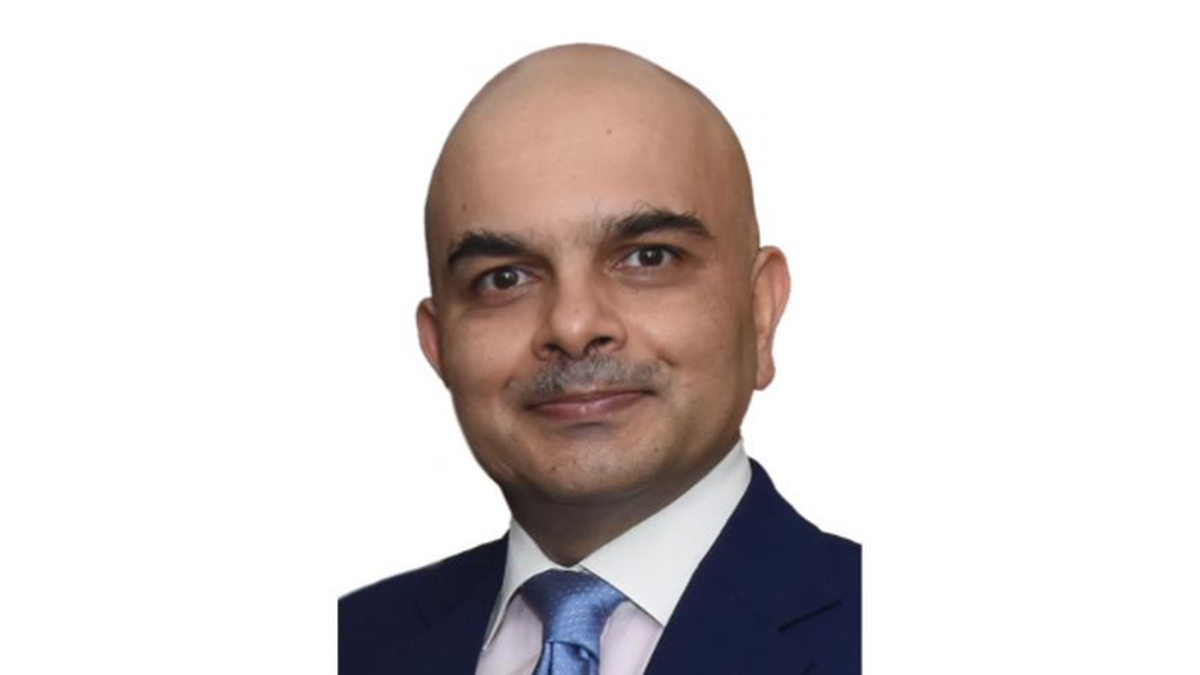
The appointment of Shantanu Srivastava to the inMorphis Advisory Board signals a strategic pivot for the firm as it looks to scale its Integrated Risk Management (IRM) and security practice. Srivastava, a veteran with over 30 years of experience at major financial institutions including HSBC, SBI Card, Standard Chartered, and ANZ Grindlays, joins the company to oversee go-to-market strategy and product development. For a firm like inMorphis, which operates as a pure-play ServiceNow partner, this move is less about a simple personnel addition and more about bridging the gap between technical implementation and high-level regulatory compliance in the banking, financial services, and insurance (BFSI) sectors.
The Shift Toward Operational Resilience
The core problem facing firms in the risk management space today is the convergence of cyber security and operational resilience. Historically, these functions operated in silos, with IT security managing digital threats while risk departments handled regulatory and operational exposure. Srivastava’s background, particularly his tenure as Chief Risk Officer at SBI Card and his work at HSBC, suggests that inMorphis is positioning itself to offer a unified framework that addresses these domains simultaneously. By embedding non-financial risk frameworks and leading resilience transformation programs, Srivastava provides the institutional credibility required to win enterprise-level contracts in the Asia-Pacific and Middle East regions.
Strategic Alignment with ServiceNow Ecosystem
As a ServiceNow partner, inMorphis relies heavily on the platform's ability to automate governance and risk processes. The firm, which is backed by ServiceNow Ecosystem Ventures and Capital Square Partners, has been recognized as the ServiceNow Partner of the Year 2026 for Risk and Security in the APAC region. The inclusion of an advisor with such deep domain expertise in credit, fraud, and third-party risk suggests that the firm intends to move beyond basic platform implementation. Instead, it is likely aiming to build proprietary, industry-aligned transformation frameworks that leverage GenAI-led innovation to solve complex, multi-layered risk challenges for global clients.
Navigating the VUCA Environment
Srivastava’s stated focus on the current VUCA (volatility, uncertainty, complexity, and ambiguity) environment highlights the shifting demand for risk management tools. Organizations are no longer viewing these systems as mere regulatory checkboxes; they are increasingly treating them as competitive advantages. For inMorphis, the challenge lies in execution. While the firm has the backing of major venture partners, it must now prove that it can scale its advisory and implementation services without diluting the quality of its specialized output. Investors and enterprise clients should monitor how the firm integrates Srivastava’s experience into its product roadmap, specifically regarding how it handles emerging risk domains that traditional software providers often overlook.
Market Positioning and Growth Trajectory
Founded in 2015, inMorphis has carved out a niche by focusing on deep specialization rather than broad-market service offerings. The appointment of a Founding Regional Director of the Professional Risk Managers’ International Association (PRMIA) provides the company with a significant intellectual asset. This is particularly relevant as stock market analysis continues to emphasize the importance of operational stability in the face of global economic fluctuations. By leveraging Srivastava’s academic and professional background—which includes lecturing at institutions like Columbia University and the National Institute of Securities Markets—inMorphis is attempting to elevate its brand from a technical service provider to a strategic partner for C-suite executives.
Evaluating the Advisory Impact
The success of this appointment will ultimately be measured by the firm's ability to secure larger, more complex contracts within the BFSI sector. If Srivastava’s guidance leads to the development of more sophisticated, adaptive risk frameworks, inMorphis could see a significant expansion in its global footprint. Conversely, if the advisory role remains purely symbolic, the firm may struggle to differentiate itself in an increasingly crowded market of ServiceNow partners. The firm’s ability to translate high-level risk strategy into measurable business outcomes will be the primary indicator of whether this strategic hire effectively bolsters its competitive position in the global IRM landscape.