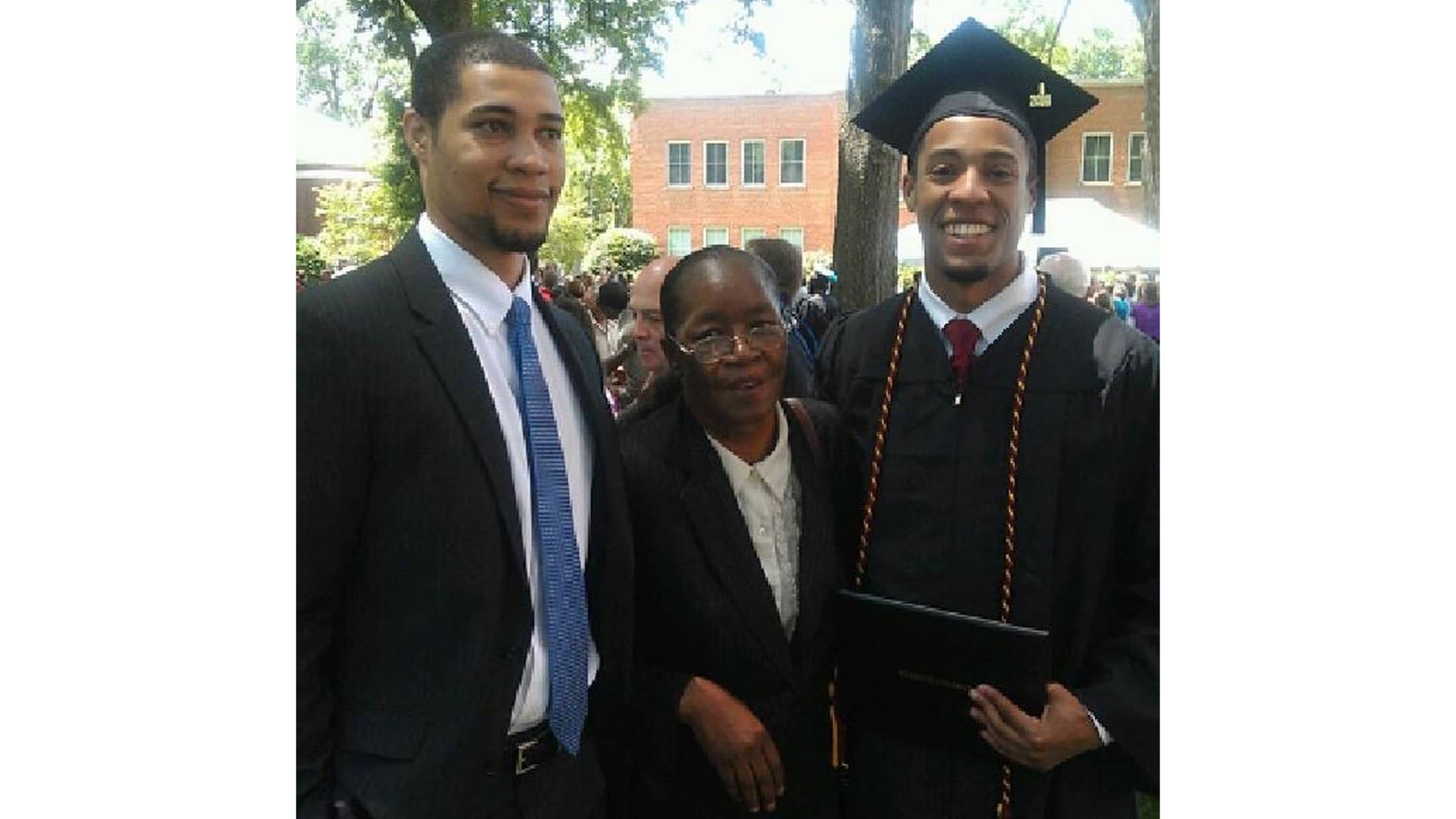
When Ashton and Adison Lawrence inherited their grandmother's South Carolina home earlier this summer, the brothers knew they weren't just getting a piece of real estate. They were inheriting a major financial responsibility.
"You're dealing with both the grief but also the management and some decision-making on what you'd like to do with the property," said Adison, 34, a senior manager at an advertising sales and media business in Raleigh, North Carolina.
Tens of trillions of dollars are expected to change hands between generations in the next couple of decades as baby boomers and members of the silent generation pass away. Estimates vary widely on the total. In an analysis published in July, Visa said baby boomers will leave $36 trillion to younger generations over the next 20 years. Cerulli Associates, a consulting and market research firm, puts the figure much higher – more than $100 trillion – through 2048, factoring in all older generations.
The gap stems partly from scope. Visa's report focused only on baby boomers and their heirs. Cerulli includes all generations. Visa's chief economist Wayne Best told CNBC his firm's analysis also excluded the wealth of the wealthiest 1%, estimated at $28 trillion.
Rising home values have made real estate an increasingly important part of that wealth shift. Inherited homes accounted for a record 8.85% of all U.S. single-family residential and rural property transfers in 2025, according to data from real estate data provider Cotality.
For many families, the home is the largest asset in an estate and often carries the greatest emotional weight, financial advisors said. Without clear instructions, enough cash and honest conversations, heirs can inherit difficult decisions and unexpected bills along with the memories.
"It is managing a business," said Lazetta Rainey Braxton, a certified financial planner and member of the CNBC Financial Advisor Council. "You have to be present to know what the home needs, and you have to have the cash flow to take care of it."
Siblings inheriting property together may have fundamentally different goals. One may want to keep the home as a rental to help meet cash-flow needs. Another may prefer a lump-sum payment from the sale.
Even with his professional expertise and years of conversations with his grandmother about her wishes, Ashton, the executor of her estate, said deciding what to do with the house isn't simply a financial calculation.
"There's two answers," he said. "One, the mathematical, the logical type of approach, and then there's the emotional piece."
"Regardless of whatever the house might yield to us personally, there's an emotional attachment to the actual property, and that'll be something we weigh along with the financial pieces," he said.
Braxton, founder and managing principal of The Real Wealth Coterie, said she has seen firsthand how those decisions can become complicated. After her grandparents died, her father and his three siblings inherited the family home. Her father hoped to buy out his siblings, who lived in different parts of the country and weren't interested in keeping the property. Family members couldn't reach a decision quickly enough.
"My dad had always expressed that he wanted to buy out the siblings," she said. "That conversation took some time. And the time that it took, we actually had to have the home demolished."
The costs of owning a home don't stop when the owner dies. Property taxes, insurance, maintenance and repairs continue while siblings work through decisions that can take months or even years.
"The home is an asset, and a lot of people want to put emotional ties to it," Braxton said. "It's a large asset that needs a conversation around it."
Another key financial consideration is when to sell. Under federal tax law, when a homeowner dies, the inherited home's cost basis resets to fair market value on the date of death. Cost basis is the property's value for tax purposes – the starting point used to calculate a taxable gain or loss when the property is sold.
Estate planning attorneys typically advise heirs to have the home appraised promptly after the owner's passing. Any appreciation after the date of death is subject to capital gains tax. Families that sell near fair market value can minimize that tax, advisors said.
Financial advisors say there's no universal answer to whether siblings should sell, rent or keep an inherited home. They recommend discussing expectations with the property owner well before they die. Creating a decision-making process among siblings or close family members is also a good idea.
Braxton often advises clients to consult with an estate planning attorney to create appropriate documents, such as a will or a trust, to avoid the public probate court process. Transferring the property's title to a trust through a properly prepared and recorded deed is another critical step, estate planning attorneys said.
"If your assets are not titled in the name of the trust, the trust isn't worth the paper it's written on," said Wayne Hassay, an attorney and managing partner at Maguire Schneider Hassay in Columbus, Ohio. "You want that house in the trust so that that house passes outside of probate, and pursuant to the terms and conditions that you decided."
Braxton also recommends building a timeline into the estate plan.
"Have a clause that says if we haven't decided in six months or a year, then that gives the trustee the right to sell the property," she said, adding that delaying decision-making could postpone necessary maintenance and negatively impact the property's value.
"Sometimes you kind of have to be forced to make a decision," she said, "and having the conversation early helps."
Ashton Lawrence offers that advice to clients as well. He said he now knows from experience this valuable lesson: The most important conversations about the family home need to happen before anyone inherits it.