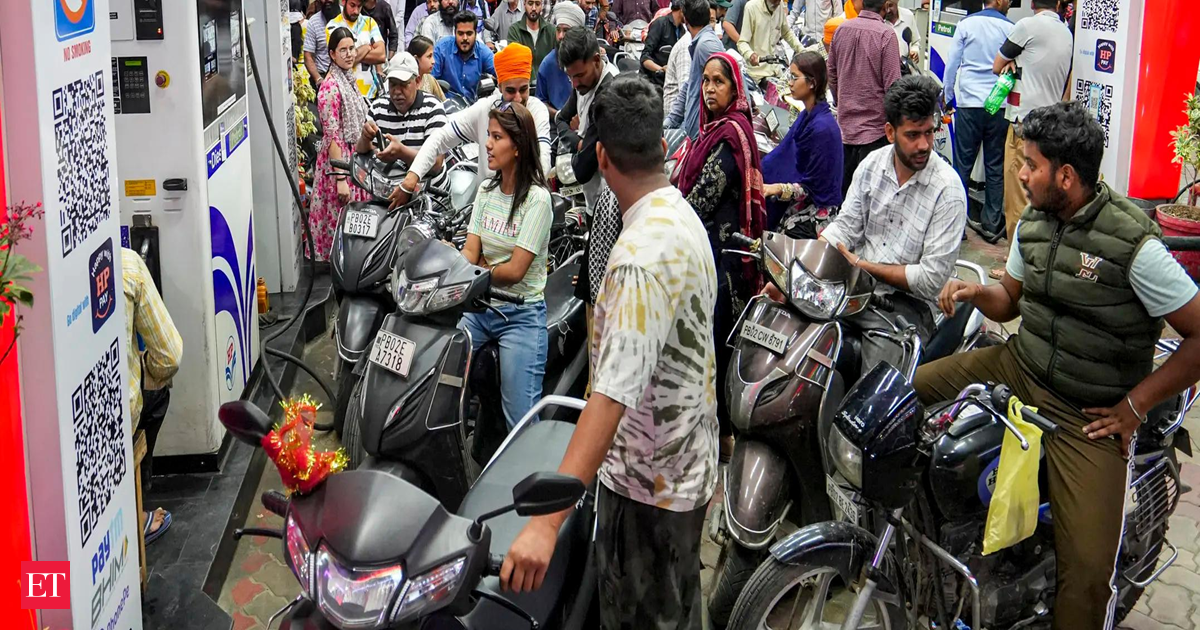
The domestic fuel market in India has entered a period of price stability, with petrol rates remaining unchanged across major metropolitan centers as of April 22, 2026. This pause in retail price adjustments occurs despite global crude oil benchmarks hovering near the $100 per barrel threshold. The lack of movement at the pump suggests a decoupling between international energy market volatility and domestic retail pricing mechanisms.
Retail Price Anchoring and Regional Disparities
Retail fuel costs continue to exhibit significant regional variance, reflecting state-level tax structures and logistics costs. While Delhi maintains a price point of ₹94.77 per litre, other major hubs face higher costs, with Hyderabad reaching ₹107.46 per litre and Kolkata at ₹105.41 per litre. Mumbai and Chennai also remain at elevated levels compared to the national capital. This pricing landscape highlights the ongoing reliance on administrative stability to manage the pass-through of global energy costs to the end consumer.
- New Delhi: ₹94.77 per litre
- Mumbai: ₹103.50 per litre
- Kolkata: ₹105.41 per litre
- Chennai: ₹100.90 per litre
- Hyderabad: ₹107.46 per litre
Energy Security and Inflationary Pressure
Maintaining static retail prices during periods of elevated crude oil costs serves as a buffer against broader inflationary pressures within the Indian economy. As energy security strategies take center stage, the government continues to balance the fiscal impact of retail subsidies against the need for stable consumer costs. This approach is consistent with broader efforts to scale India's energy infrastructure to mitigate the impact of external supply chain shocks. The current environment necessitates a close watch on whether state-owned oil marketing companies can sustain these margins if global crude prices maintain their current trajectory or escalate further.
AlphaScala data currently reflects a mixed outlook for various sectors, including consumer-facing and industrial equities. For instance, AS stock page shows an Alpha Score of 47/100, while RS stock page sits at 44/100. These scores underscore the broader market uncertainty that often accompanies energy price volatility.
The next concrete marker for this narrative will be the monthly review of retail fuel margins by oil marketing companies. Any shift in the global crude price floor will force a decision between absorbing further costs or adjusting retail rates to align with international benchmarks. Investors should monitor upcoming government energy policy updates for signals on how long this price-anchoring strategy will remain in effect. For broader stock market analysis, the persistence of these retail price levels remains a key indicator of domestic demand resilience.