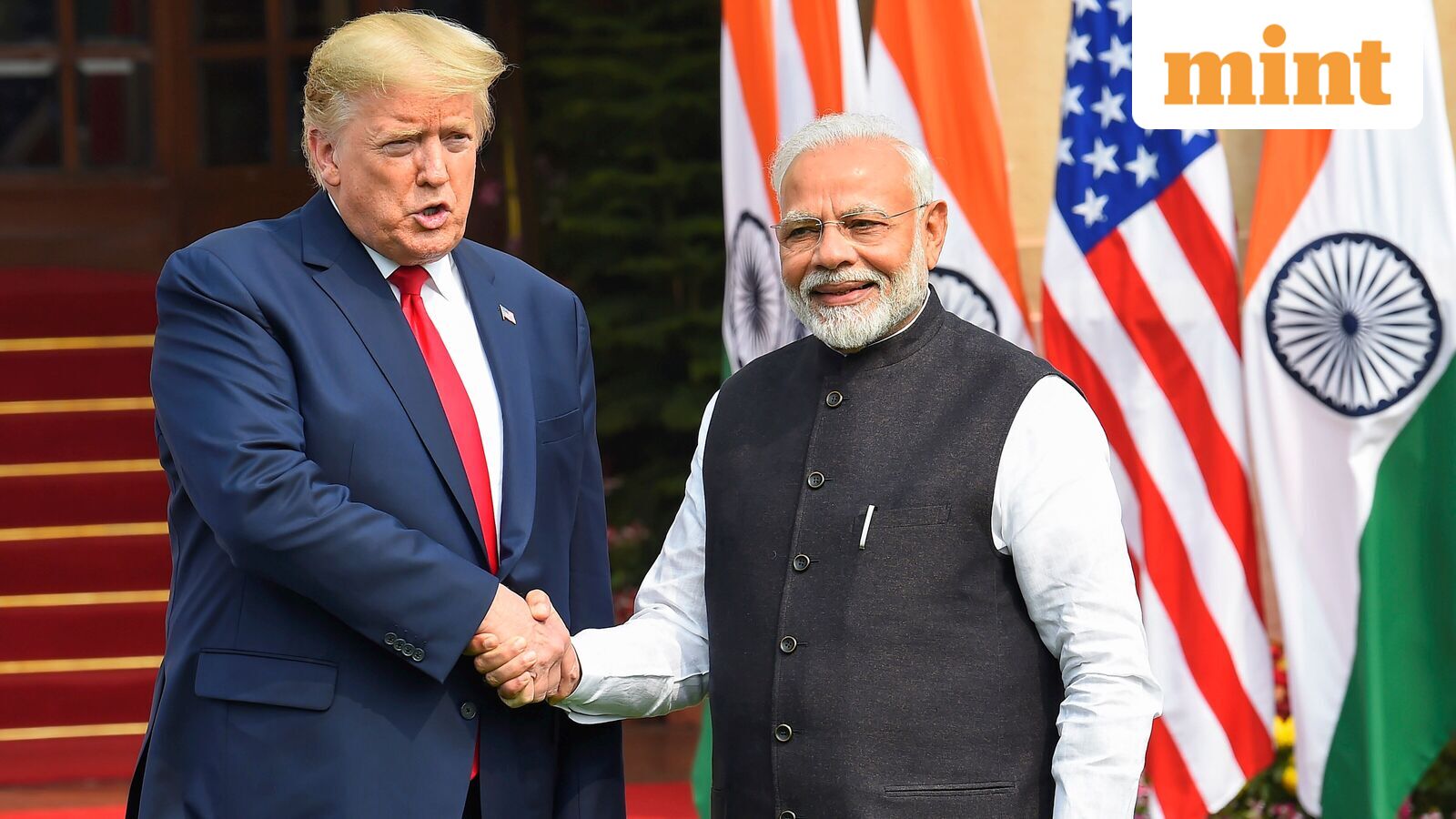
India and the US opened four days of trade negotiations in Delhi on June 1, with an interim bilateral deal on the line. US Ambassador to India Sergio Gor said last week that the talks had reached the final 1% of an agreement. The sector-by-sector stakes run from pharmaceuticals – where the US relies on India for 40% of its generic drugs – to critical minerals, semiconductors, and artificial intelligence.
The talks run through June 4. Gor told news agency PTI that he “fully expect[s] that the trade deal will be signed over the next few weeks and months.” Union Commerce Minister Piyush Goyal visited Washington last week to push cooperation in financial services, healthcare, manufacturing, AI, and digital payments.
The simple read is that a deal is near. The better read is that the final 1% often contains the hardest concessions – tariff reductions on politically sensitive goods, non-tariff barriers, and investment rules. Each sector carries different exposure for listed companies.
Pharmaceuticals: 40% of US generics at stake
Pharmaceuticals anchor the trade relationship. The US imports close to 40% of its generic medicines from India. “There is a reason the United States does that: it is because we trust India. These are critical life-saving ingredients that are needed in the United States,” Gor said.
Exposure for Indian pharma exporters
Indian generic drug makers – Sun Pharmaceutical Industries, Dr. Reddy's Laboratories, Cipla, and Aurobindo Pharma – sell a large share of their output into the US market. The interim deal could address tariff lines on active pharmaceutical ingredients (APIs) and finished formulations, as well as regulatory alignment on quality standards.
A positive outcome: lower duties or streamlined FDA inspections. A negative outcome: new non-tariff measures that raise compliance costs. The difference matters for margins in a sector where US pricing pressure is already intense.
US pharma import dependency
The 40% figure is a structural fact. No other country supplies that share of US generics. Any disruption to this trade – whether from tariff escalation or regulatory divergence – would raise US healthcare costs and create shortages. That gives India leverage in the talks.
Critical minerals and semiconductors: The strategic layer
India and the US last week finalized a framework for critical minerals cooperation. The move responds directly to China's export controls on rare earth elements, which are essential for defense equipment, electronics, and renewable energy.
India is also set to join a network of trusted supply chains in artificial intelligence, semiconductors, and quantum computing. These commitments extend beyond commerce into technology security.
Market impact for tech and materials stocks
US semiconductor firms with India exposure – Micron Technology, Qualcomm, and AMD – have manufacturing or design partnerships in India. A trade deal that includes semiconductor supply chain provisions would support investment certainty. Indian IT services companies – Tata Consultancy Services, Infosys, Wipro, HCL Technologies – could benefit from visa liberalization or digital trade rules.
US critical minerals producers may gain access to Indian processing capacity. India has significant rare earth reserves and is building downstream refining capability.
Market access and tariff concessions: Who gains
India maintains relatively high tariffs on several US imports: agricultural products (almonds, apples, pulses), automobiles, and medical devices. The US has pushed for reductions. India wants better access for its textiles, pharmaceuticals, and IT services.
Sector-by-sector winners
- US agricultural exporters: Archer-Daniels-Midland and Bunge could benefit from lower Indian tariffs on almonds and other crops.
- US medical device makers: Medtronic and Boston Scientific face Indian import duties of 7.5% to 15%. Reductions would improve margins.
- Indian IT services: H-1B visa liberalization would lower talent costs. The deal may include commitments on digital services taxation.
- Indian generic drug exporters: Tariff cuts on APIs and formulations would provide a direct earnings tailwind.
What remains hard to negotiate
The final 1% likely includes agricultural tariff lines that are politically sensitive in India – dairy, poultry, and wine. The US may also seek stronger intellectual property protections on biologics, which India has resisted historically.
Timeline and the risk of a delayed deal
The Delhi talks run from June 1 to June 4. Gor said the trade deal should be signed “over the next few weeks and months.” That language leaves room for slippage.
What would confirm progress
- A joint statement at the end of the Delhi talks that identifies specific tariff lines or regulatory commitments.
- Confirmation of a signing date or a ministerial-level meeting.
- Announcement of visa quota increases for Indian IT professionals.
What would signal breakdown
- Neither side issues a substantive statement after June 4.
- Retaliatory tariff actions or new non-tariff barriers are announced.
- The talks conclude with “more work needed” language and no firm next date.
Goyal emphasized during his US visit that “investor confidence, business stability, and a predictable regulatory environment remain top priorities for the Indian government.” That sentence acts as a risk factor: if the talks fail to produce a predictable framework, Indian and US companies with cross-border exposure face continued uncertainty.
What reduces the risk, what makes it worse
Risk-reducing outcomes
- A signed interim deal with concrete tariff reductions on pharmaceuticals and medical devices.
- Regulatory harmonization on pharmaceutical quality standards.
- A critical minerals and semiconductor cooperation framework with specific investment commitments.
- Visa liberalization for Indian IT professionals.
Risk-increasing outcomes
- No deal or a deal limited to agricultural tariffs only, leaving pharma and tech unresolved.
- Introduction of new non-tariff barriers on generic drugs or IT services.
- Extended negotiations beyond the next few months without a clear path.
- Retaliatory tariff increases on either side.
Practical framework for traders
Key insight: The $220 billion bilateral trade relationship has structural momentum. The US dependency on Indian generics and India's need for US technology and investment make a complete breakdown unlikely. The final 1% will determine which sectors gain most.
Risk to watch: The critical minerals and semiconductor frameworks signal a strategic alignment against China's supply chain dominance. This geopolitical dimension adds weight to the negotiations but also introduces complexity that could delay specific commitments.
Bottom line for traders: Indian pharma and IT stocks have the most direct exposure. A deal that includes visa liberalization and pharmaceutical regulatory harmonization would be a positive catalyst. A deal limited to agricultural tariffs and critical minerals would have narrower equity market impact.
For related analysis on Indian market dynamics, see our coverage of the midcap rotation and FPI selling and the RBI rate decision.