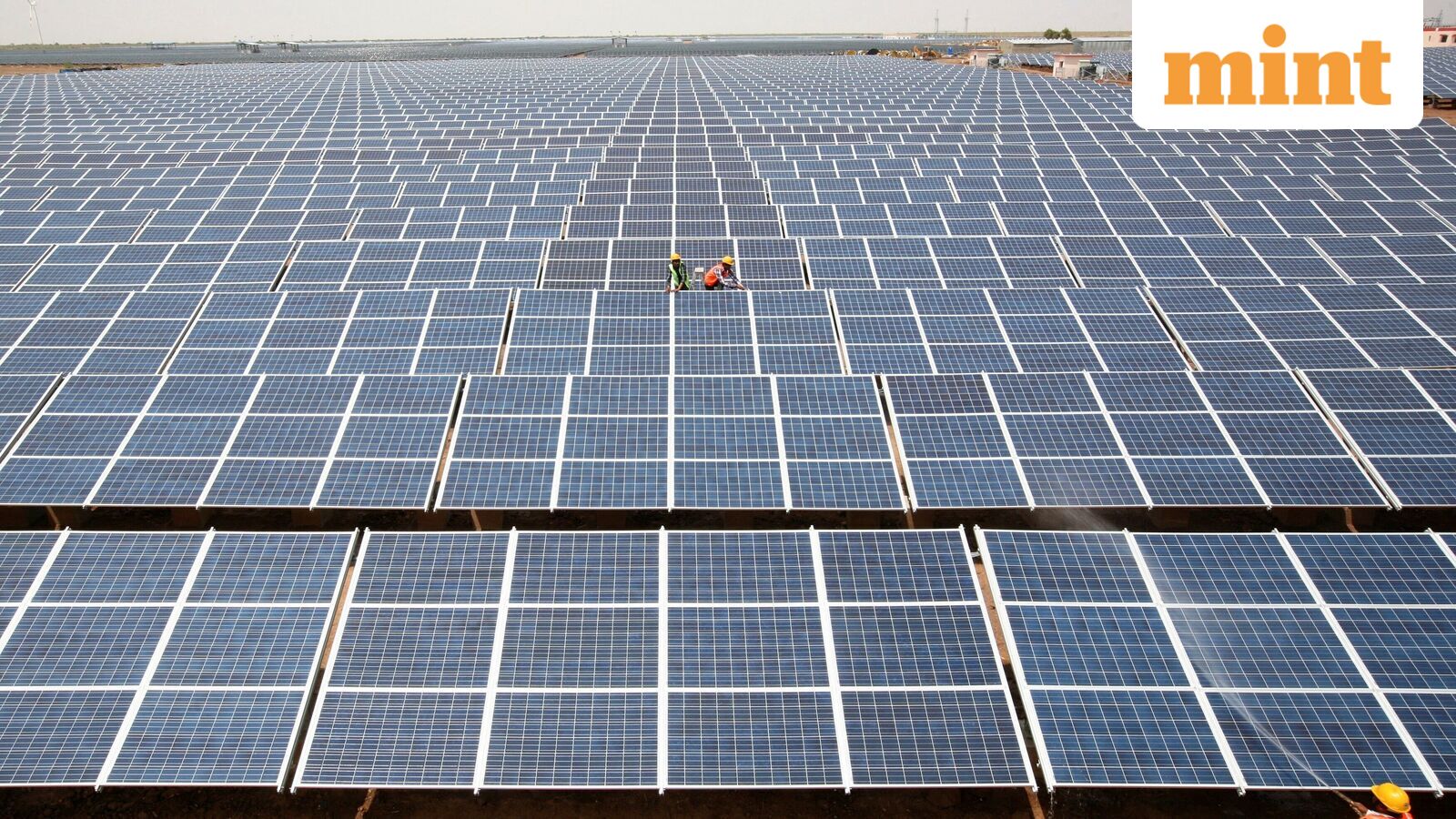
The PM Surya Ghar: Muft Bijli Yojana crossed 26.19 lakh rooftop solar installations as of March 19, 2026, with ₹17,967 crore in Central Financial Assistance (CFA) disbursed to beneficiaries, according to the Ministry of New and Renewable Energy (MNRE) and the Press Information Bureau (PIB). The scheme, launched in February 2024, targets one crore homes by the end of FY 2026-27, offering subsidies and a net metering mechanism that promises up to 300 units of free electricity per month for eligible households.
For investors tracking Indian renewable energy stocks – solar EPC companies, panel manufacturers, and DISCOM-linked utilities – this data point changes the forward-looking demand picture. The question is whether the current pace of adoption can sustain and accelerate, and which signals matter most for the sector thesis.
26.19 Lakh Systems and ₹17,967 Crore: What Changed for Solar Stocks
The raw numbers confirm that the scheme is past the pilot phase. 26.19 lakh installations in roughly two years (February 2024 to March 2026) implies a run rate of about 1.1 lakh systems per month. The ₹17,967 crore subsidy figure means the average CFA per installation is roughly ₹68,600. That level of government spending creates a direct revenue pipeline for vendors, installers, and equipment suppliers.
The Simple Read vs. The Better Market Read
The simple read: more installations means more demand for solar panels and inverters. The better market read: the subsidy structure through Direct Benefit Transfer (DBT) removes payment delay risk for vendors. Once DISCOM certifies, the money lands in the beneficiary’s account within 30 working days. For listed solar EPC companies, this shortens working capital cycles compared to older state-level schemes where disbursal lags were common. The DBT link makes the cash flow committed and predictable, a structural advantage for execution-heavy firms.
The Subsidy Mechanism and Net Metering: How They Shift Sector Economics
The core financial incentive is Central Financial Assistance (CFA), which covers a portion of the rooftop system’s upfront cost. The subsidy is credited after the DISCOM inspects and certifies the installation. This creates a three-step chain: consumer selects a registered vendor, vendor installs, DISCOM inspects, DBT triggers.
Net Metering Economics
Net metering allows households to feed surplus solar power back to the grid, offsetting future electricity bills. The government’s stated goal of 300 units of free electricity per month is achieved when the system’s generation exceeds the home’s consumption. For an average urban household consuming 250-400 units monthly, a 3 kW system can cover most usage plus earn credits during peak sunlight hours.
Practical rule: The net metering policy varies by state, and DISCOM cooperation is the single largest execution variable. States with strong feed-in terms will see faster adoption; states with restrictive caps will lag. Investors should track state-level DISCOM approvals as a leading indicator for order flow into solar installers.
Execution Risk: Scaling from 26 Lakh to 1 Crore
The gap between 26.19 lakh and 1 crore is 73.81 lakh installations. At the current average pace of about 1.1 lakh per month, reaching the target within the remaining period (roughly 21 months from March 2026 to end FY 2026-27) would require a 2.8x increase in monthly installations. That implies a radical scaling in vendor networks, DISCOM inspection capacity, and panel supply chains.
Three Key Risk Factors
- DISCOM inspection bandwidth – Each installation requires a site feasibility check and a final inspection. DISCOMs are already strained; rapid scaling risks bottleneck at the certification stage.
- Vendor quality control – As the scheme pushes for volume, substandard installations could lead to performance issues or safety hazards, potentially triggering tighter regulations that slow the process.
- Portal and payment glitches – The fully digital national portal is central to the process. Any technical failure in application submission or DBT linking could freeze the pipeline.
Confirmation Signals for the Solar Thesis
A credible bullish scenario requires evidence that the installation pace is accelerating, not stalling. The March 19, 2026 snapshot shows the cumulative figure. The next data release from MNRE will confirm whether the monthly rate has moved above 1.5 lakh systems or fallen below 1 lakh.
What Confirms the Setup
- Sustained monthly installations above 1.3 lakh for three consecutive months.
- Consistent DBT disbursal within 25-30 working days across major states.
- Policy continuity: no reduction in subsidy rates or net metering restrictions.
What Weakens the Setup
- Reports of inspection delays beyond 45 days at DISCOM level.
- A drop in monthly installations below 80,000 for a full quarter.
- A shift in government subsidy allocation toward utility-scale solar instead of rooftop.
Next Decision Point: Monthly Data and DISCOM Cooperation
The most actionable signal for investors is the monthly installation report from MNRE. The second is quarterly state-level execution data, which reveals which DISCOMs are clearing approvals efficiently and which are creating logjams. Companies with concentrated exposure to slow DISCOMs may underperform relative to the broader solar theme.
Risk to watch: The scheme’s success depends on state-level coordination. Any political friction over DISCOM financial health could slow subsidy flow. The next union budget will also clarify whether CFA rates remain unchanged.
Bottom line for traders: The 26.19 lakh installation milestone and ₹17,967 crore subsidy disbursal confirm the scheme is a real demand driver for India’s rooftop solar market. The execution challenge of scaling to 1 crore homes remains the critical variable. For now, the data supports a watchlist bias toward solar EPC stocks with diversified DISCOM exposure, with the next catalyst being sustained monthly installation growth above 1.3 lakh.