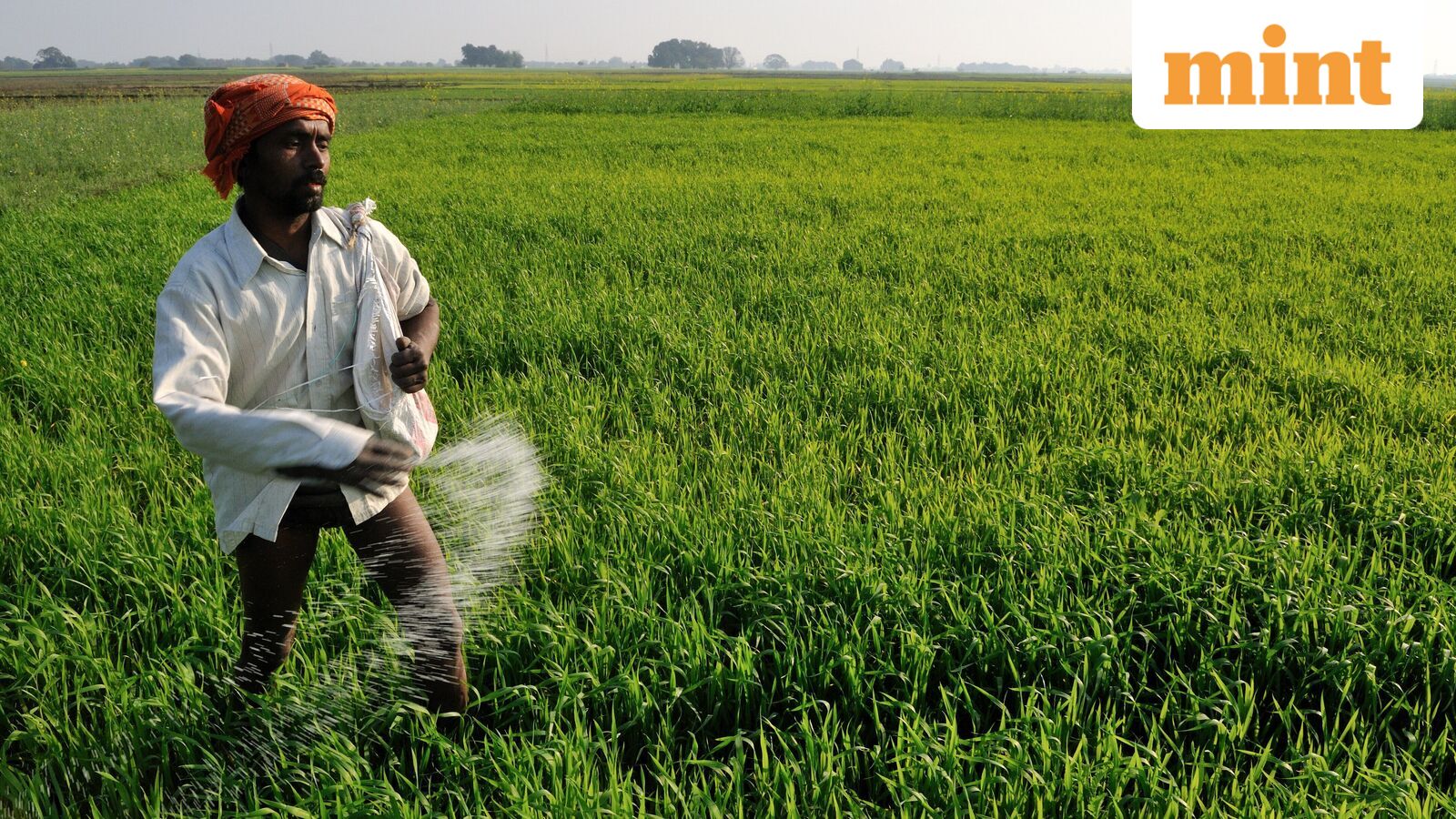
India is accelerating a decade-old potash investment in Canada. The West Asia war, which threatens shipments through the Strait of Hormuz, has given New Delhi a new reason to push the Karnalyte Resources Inc. project toward production. Two government officials told Mint that the central government is now moving to revive the Wynyard Carnallite Project in Saskatchewan, a move aimed at securing long-term supplies of muriate of potash (MOP) – a fertilizer nutrient for which India has no domestic source.
State-owned Gujarat State Fertilizers and Chemicals Ltd (GSFC) has held a 47.73% equity stake in Karnalyte since 2013. Total investment stands at CAD 49.68 million. Yet the project remains in the development stage, with no commercial production. The shift from passive holding to active push reflects a structural vulnerability: any disruption to India’s potash import routes directly risks the kharif season planting window.
India’s Potash Import Matrix: Four Countries, 90% Dependence
India’s direct MOP consumption was about 2.2 million tonnes in 2024-25, while imports reached 3.54 million tonnes. The balance feeds into complex fertilizers such as NP and NPK. The gap between domestic consumption and imports is structural: India has no potash reserves.
Four countries account for more than 90% of India’s potash imports:
| Country | Share of India’s Potash Imports |
|---|
| Russia | 51% |
| Canada | 25% |
| Israel | 8% |
| Jordan | 8% |
Any disruption to Russian exports – which pass through the Strait of Hormuz – or to West Asian shipping directly threatens supply. Canada, by contrast, offers a politically stable, logistically secure alternative.
Karnalyte’s Wynyard Project plans a phased ramp-up: Phase 1 production of 675,000 tonnes per annum of high-grade granular potash, followed by two additional phases of 750,000 tonnes each, taking total planned capacity to 2.175 million tonnes annually. According to the company’s public disclosures, all environmental permits are in place and preliminary detailed engineering has been completed. An updated feasibility study was completed in 2025.
Why the Karnalyte Project Stalled – and What Changed
The project has been on hold for over a decade. GSFC’s initial stake was taken in 2013, when potash prices were high and India’s subsidies were ballooning. Since then, global potash prices fluctuated, and the project required a price environment that could justify the capital expenditure. Further development depends on sustained potash prices and financing availability, Karnalyte itself said in its disclosures.
The West Asia war changes the risk calculus. India’s MOP imports for the kharif 2025 season reached only 383,000 tonnes as of 27 May 2025. The government’s own estimate for total demand in 2025-26 is 1.73 million tonnes, as stated by minister of state for chemicals and fertilizers Anupriya Patel in a Lok Sabha reply on 2 December 2025. The war threatens the Strait of Hormuz chokepoint, which affects shipments from Israel and Jordan – 16% of India’s total potash imports.
“The three-stage project is at a development stage now. Amid the ongoing West Asia crisis, the central government is now accelerating its investment plans in Canada to secure long-term access to potash supplies,” said the first government official.
The fertilizer subsidy burden compounds the urgency. The bill crossed ₹2.17 trillion in FY26, driven by volatile global nutrient prices and currency pressures. The FY27 budget allocation stands at ₹1.71 trillion, though officials and industry executives expect it to rise by around 20% if the West Asia war continues to disrupt supplies and global fertilizer prices jump.
Three Markers That Would Confirm the Project’s Trajectory
Moving from development to construction requires more than political will. Three concrete markers would signal that the accelerator is real.
First, a financing announcement. Karnalyte’s public disclosures cite “sustained potash prices and financing availability” as conditions for further development. A joint venture, debt facility, or additional equity injection from the Indian government – beyond the CAD 49.68 million already committed – would be the first tangible step.
Second, sustained potash prices above the project’s breakeven. The feasibility study, updated in 2025, assumes a certain price floor for Phase 1 to be viable. If the West Asia war pushes global MOP prices higher, the project economics improve. If prices weaken, the project may stall again. India’s own demand – 1.73 million tonnes for 2025-26 – will influence global pricing.
Third, no regulatory or political pushback from Canada. All environmental permits are in place. Yet any change in foreign investment policy toward state-owned entities, or local opposition, could delay progress. The Canadian High Commission did not respond to queries from Mint.
FY27 Subsidy Budget and Kharif Demand: The Next Decision Points
The FY27 budget will be a key test. The current allocation of ₹1.71 trillion is likely insufficient if global fertilizer prices spike. A supplementary demand for grants or a revised estimate would signal that the government is serious about securing long-term potash supplies, including via the Karnalyte project.
The kharif 2025 season (June–October) will provide a real-time stress test. India’s MOP imports for the season reached only 383,000 tonnes by late May 2025, against estimated demand of 1.73 million tonnes for the full year. If the West Asia war continues to disrupt shipments, the government may need to release additional subsidies or accelerate substitution with di-ammonium phosphate (DAP) . That would strengthen the case for Canada potash.
Sachchida Nand, former additional director general at the Fertilizer Association of India (FAI) , said: “The government is diversifying import sources for urea, LNG, raw materials and finished fertilizer products…We are already importing potash from Canada, and this will definitely help in meeting our requirements.”
The ICRIER policy brief published in March 2026 estimated that nearly 69% of India’s fertilizer value chain depends on foreign sources. For potash alone, the figure approaches 100% . That makes supply chain diversification a matter of food security, not just trade policy.
From a trading perspective, companies exposed to potash supply chains – including GSFC and other fertilizer producers – may see valuation adjustments as the project narrative firms. For the broader India fertilizer market, the Karnalyte push represents a multi-year de-risking play, not a near-term earnings catalyst.
LNG (Cheniere Energy) carries an Alpha Score 66 in our proprietary framework, reflecting its Moderate positioning in the energy sector. While not directly tied to potash, the same geopolitical risks – West Asia conflict, Strait of Hormuz – affect both LNG and fertilizer supply chains. Investors tracking India’s strategic shifts should keep an eye on energy-commodity correlations. For more on Cheniere, see our LNG stock page.
For now, India’s decision to revive the Karnalyte investment is a recognition that the status quo is fragile. Canada could become as critical to India’s potash security as Russia has been. The test lies in execution: financing, prices, and a clear path from permit to production.