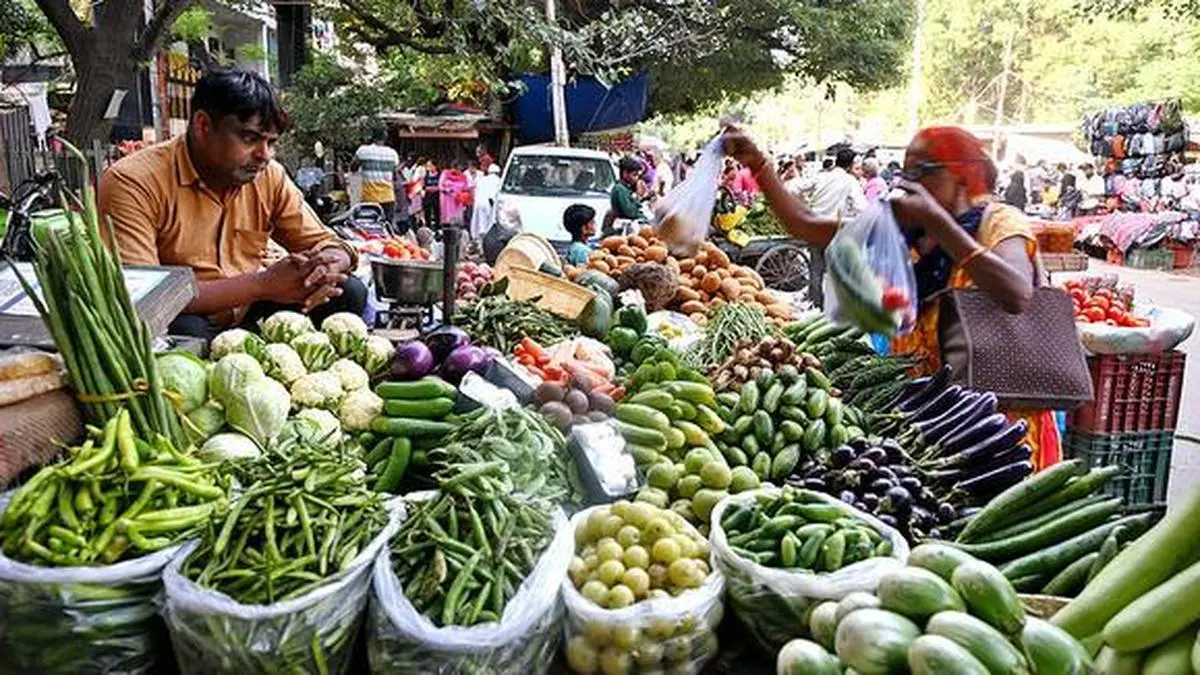
India’s Consumer Price Index is projected to settle at 4% for April 2026, a figure that masks significant underlying volatility in the food and commodity baskets. While the headline number appears contained, the Bank of Baroda’s Essential Commodities Index (BOB ECI) reveals a more complex reality, having climbed 1.1% on a year-on-year basis in April. The sequential increase of 0.3% represents the fastest pace of growth since August 2025, signaling that inflationary pressures are not merely lingering but are becoming increasingly entrenched across the domestic supply chain.
Supply Chain Contraction in TOP Commodities
The most immediate threat to price stability stems from the Tomato, Onion, and Potato (TOP) category. Arrival statistics for these staples declined by 12.8% in April 2026 compared to the same period last year. This contraction is not merely a seasonal anomaly but a structural supply issue exacerbated by environmental factors. The India Meteorological Department has issued heatwave warnings for May 2026 covering major producing states including Gujarat, Maharashtra, and the East Coast. These conditions threaten to further disrupt output, suggesting that the current supply deficit may persist or worsen in the coming months.
While the report notes that potato and onion prices remain in a state of favorable double-digit deflation, the broader index tells a different story. Out of 20 items tracked in the BOB ECI, 16 witnessed an increase in inflation rates during April. The divergence between the deflationary path of specific vegetables and the rising costs of pulses and edible oils creates a fragmented inflationary landscape that complicates policy responses.
Global Commodity Spillover and Imported Inflation
The mechanism of inflation has shifted from localized supply shocks to a broader spillover from global markets. World Bank data indicates that while previous inflationary episodes were largely concentrated in energy, the current environment shows a clear transmission into food prices, specifically cereals and edible oils. The Bank of Baroda report explicitly notes that global energy, metals, and food prices are becoming stickier due to the ongoing impact of war. With no formal peace deal in sight, the pass-through of higher input costs from global producers to domestic consumers remains a primary risk factor.
This imported inflation is particularly visible in edible oils, where domestic price increases are tracking international trends. Sunflower, mustard, and soya oil have seen some of the steepest climbs in the index. The lack of a clear resolution to geopolitical conflicts means that the risk of imported inflation has increased significantly compared to previous months, forcing a closer look at how domestic markets absorb these external shocks.
Core Inflation Dynamics and Sectoral Exposure
Core inflation, excluding food and fuel, is expected to hover around 3.5% for April 2026. However, when stripping out additional components such as pan, tobacco, gold, silver, and precious metals, the figure drops to a range of 1.8% to 1.9%. This suggests that the headline 4% target is heavily influenced by the volatility of essential commodities rather than a broad-based surge in core demand. For those tracking broader industrial impacts, commodities analysis remains essential to understanding how these input costs filter through to the wider economy.
Despite the relatively contained core forecast, upside risks remain. Transport inflation, alongside the restaurant and hospitality sectors, faces upward pressure driven by higher Aviation Turbine Fuel (ATF) and commercial cylinder prices. These inputs act as a multiplier, potentially pushing service-sector inflation higher even if food supply chains eventually stabilize. The interplay between these rising operational costs and consumer demand will be the next concrete marker for the Reserve Bank of India’s policy trajectory.
Strategic Positioning and Risk Assessment
For investors, the primary concern is the potential for these supply-side pressures to move from transitory to structural. The Bank of Baroda’s assessment of "entrenched" price increases suggests that the margin for error in the current inflation forecast is thin. If the heatwave conditions in May 2026 lead to a sustained decline in TOP arrivals, the 4% target will likely be breached to the upside.
In the industrial sector, companies with high exposure to logistics and energy-intensive operations are most vulnerable to the current price environment. For instance, firms like DAL stock page operate in an environment where fuel price volatility directly impacts bottom-line performance, mirroring the broader pressures seen in the domestic transport and hospitality sectors. The current Alpha Score for DAL sits at 55/100, reflecting a mixed outlook as the company navigates these shifting input costs. Ultimately, the ability of producers to pass on these rising costs without destroying demand will determine whether the current inflation cycle remains manageable or leads to a more significant tightening of financial conditions.