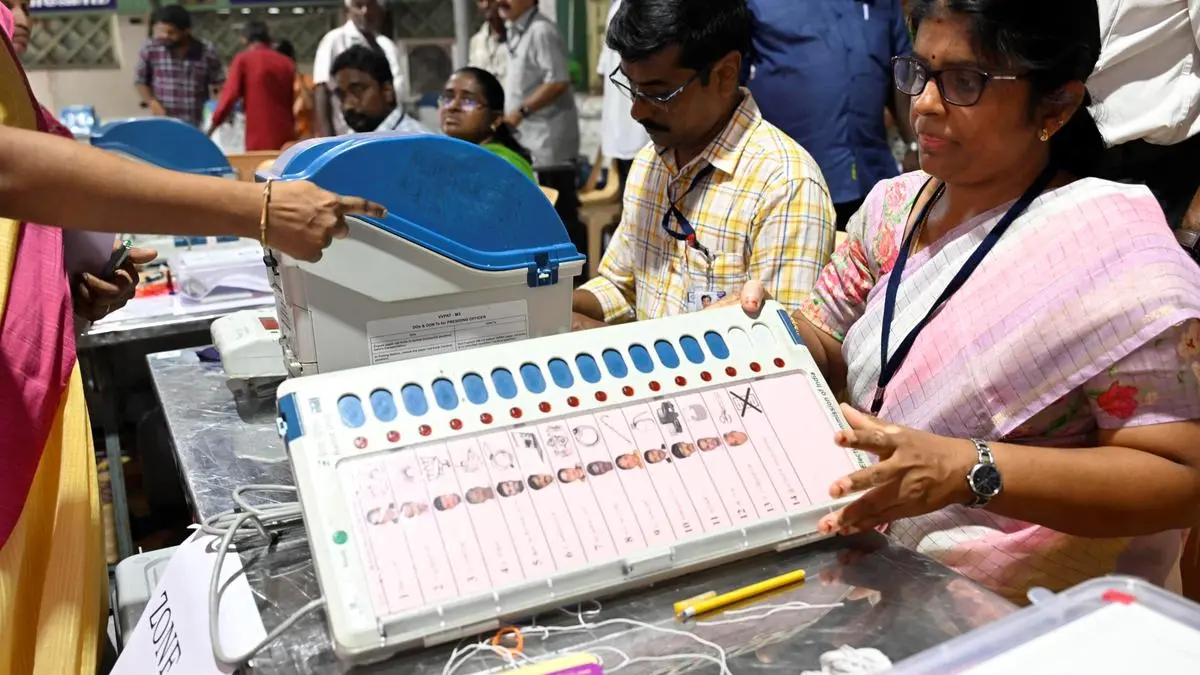
The electoral landscape across five key Indian regions faces a definitive shift this morning as vote counting commences at 8:00 am for the 2026 Assembly elections. The process covers West Bengal, Tamil Nadu, Assam, Kerala, and the Union Territory of Puducherry. This event serves as a critical barometer for regional governance and policy continuity, with the outcome set to influence local economic climates and infrastructure development priorities.
The Counting Mechanism and Timeline
The Election Commission of India has established a structured protocol for the release of results. The process begins at 8:00 am with the counting of postal ballots. This initial phase is often a bellwether for the broader trend, though it represents only a fraction of the total vote share. Following this, the counting of Electronic Voting Machines (EVMs) is scheduled to begin at 8:30 am.
Market participants tracking these results should note that the data will be disseminated in round-wise updates. These updates are channeled through the ECINET platform and the official Election Commission portal. Because these results are released in stages, the early morning hours will likely see high volatility in sentiment as initial leads are established. Traders and local stakeholders typically look for the first few rounds to confirm whether the incumbent parties maintain their strongholds or if there is a significant swing toward opposition coalitions.
Regional Impact and Policy Read-Throughs
For those analyzing the Tamil Nadu Election Results: 234 Seats Head to Count Today, the stakes are particularly high given the state's role as a manufacturing and industrial hub. Each of the five regions involved in today's count possesses unique economic drivers. West Bengal and Assam represent critical nodes in eastern trade corridors, while Kerala and Puducherry offer distinct insights into service-sector and tourism-dependent policy environments.
Investors often view these election results through the lens of potential regulatory shifts. A change in government or a significant shift in legislative majority can alter the pace of land acquisition, industrial subsidies, and state-level infrastructure spending. When evaluating the stock market analysis for companies with heavy exposure to these specific states, the primary concern is the stability of existing contracts and the potential for new, more restrictive, or more favorable regulatory frameworks.
Data Integrity and Real-Time Monitoring
Reliability of data is paramount during the counting process. The Election Commission's reliance on the ECINET platform ensures that the round-wise results are standardized. This transparency is intended to mitigate the risk of misinformation that often circulates during the hours between the start of counting and the final declaration of winners.
For those monitoring the situation, the transition from postal ballots to EVM counts at 8:30 am is the most critical juncture. Postal ballots are often cast by government employees and service members, which can occasionally skew differently than the general population's EVM votes. A divergence between the two counts can sometimes signal a closer race than initial exit polls might have suggested.
As the day progresses, the focus will shift from the raw vote count to the formation of government coalitions. In regions where no single party secures an absolute majority, the subsequent negotiations between parties will become the primary driver of political risk. This period of uncertainty can lead to temporary liquidity constraints in regional stocks, as institutional investors wait for a clear mandate before adjusting their positions. The final tally will determine not just the leadership, but the legislative agenda for the next five years, making today's results a foundational data point for long-term regional strategy.