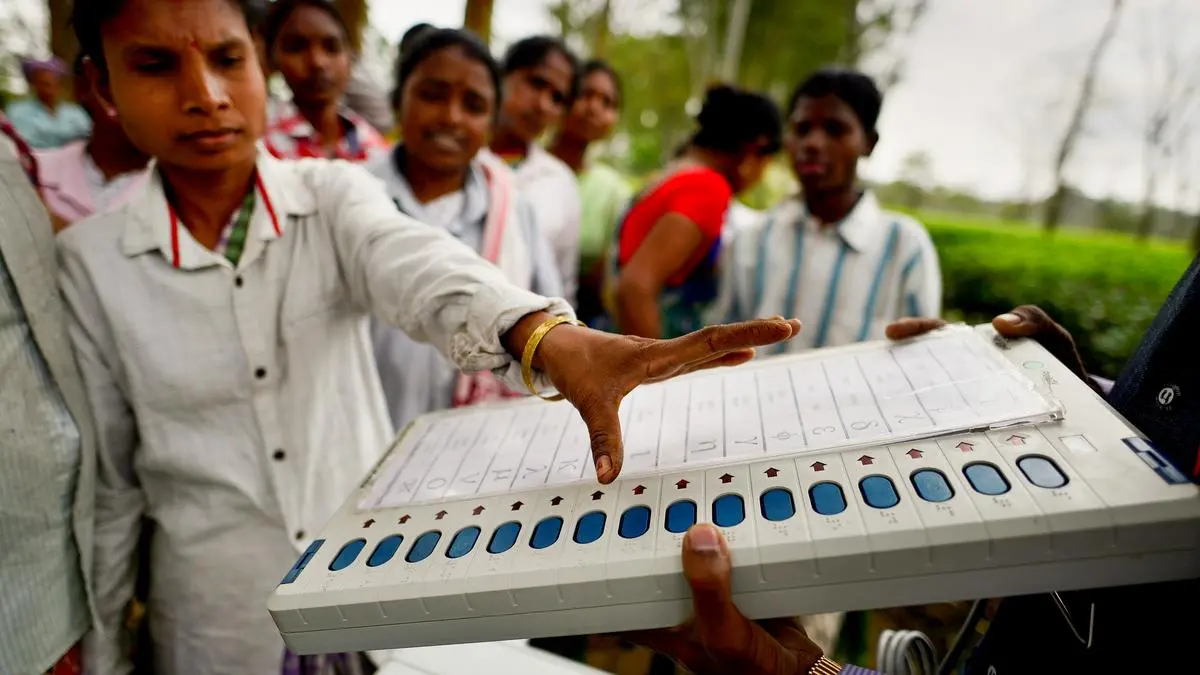
The counting of votes for the 2026 Tamil Nadu Assembly elections commences today, May 4, following a single-phase polling event held on April 23. With 234 total seats up for grabs, the threshold for a simple majority stands at 118. This electoral outcome serves as a critical barometer for regional political stability and fiscal policy direction in one of India's most industrialized states. The outcome will likely dictate the trajectory of state-level infrastructure spending and industrial incentive programs that impact local and national stock market analysis.
Voter Turnout and Demographic Participation
The Election Commission of India confirmed that total participation reached 85.10 percent, with 4,87,98,833 total votes cast. This high turnout reflects significant civic engagement, which often correlates with a clear mandate for the winning coalition. The demographic breakdown of the electorate is as follows:
| Voter Category | Total Votes Cast |
|---|
| Female Voters | 25,259,596 |
| Male Voters | 23,534,720 |
| Transgender Voters | 4,517 |
The data indicates a slight female-led turnout, a factor that political analysts frequently correlate with specific social welfare policy priorities. For market participants, the composition of the winning coalition matters more than the raw seat count, as the reliance on smaller alliance partners can often lead to legislative gridlock or the prioritization of populist spending over long-term capital expenditure.
Counting Infrastructure and Security Protocols
To ensure the integrity of the process, the Election Commission has established a multi-layered security framework at designated counting centers. Facilities such as Loyola College, Queen Mary’s College, and Anna University are currently housing the Electronic Voting Machines (EVMs). The deployment of heavy three-layer security and the use of vehicle checkpoints at these sites are standard procedures designed to prevent interference during the tabulation process.
While the physical security of the EVMs is a logistical necessity, the market focus remains on the early leads and seat-wise trends that will emerge throughout the day. The transition from polling to counting represents the primary risk window for volatility in regional sentiment. Any deviation from the exit poll predictions, which have largely favored a return of the DMK alliance, would likely trigger a sharp repricing of regional assets and sentiment regarding state-level policy continuity.
Regional Implications and Broader Context
Beyond Tamil Nadu, the counting process today also covers Assam, Kerala, Puducherry, and West Bengal. The simultaneous nature of these results provides a broader snapshot of the political climate across multiple Indian states. Investors should distinguish between state-specific policy shifts and the national implications of these results. In Tamil Nadu, the continuity of the current administration would suggest a maintenance of existing industrial policies, whereas a change in leadership could introduce uncertainty regarding ongoing projects and regulatory environments.
Market participants should monitor the speed at which the Election Commission releases confirmed seat tallies. Delays in reporting or contested results in high-profile constituencies often lead to localized uncertainty. The focus should remain on whether the winning party achieves a clear majority or if the formation of the government requires complex negotiations with coalition partners. A clear mandate typically allows for more predictable policy implementation, whereas a narrow victory or a hung assembly often leads to a period of legislative paralysis. As the counting progresses, the primary objective is to identify the stability of the incoming government and its likely fiscal stance for the remainder of the 2026 calendar year.