Stocks● Neutral
India and Japan Ink Quantum and Healthcare Tech Pacts
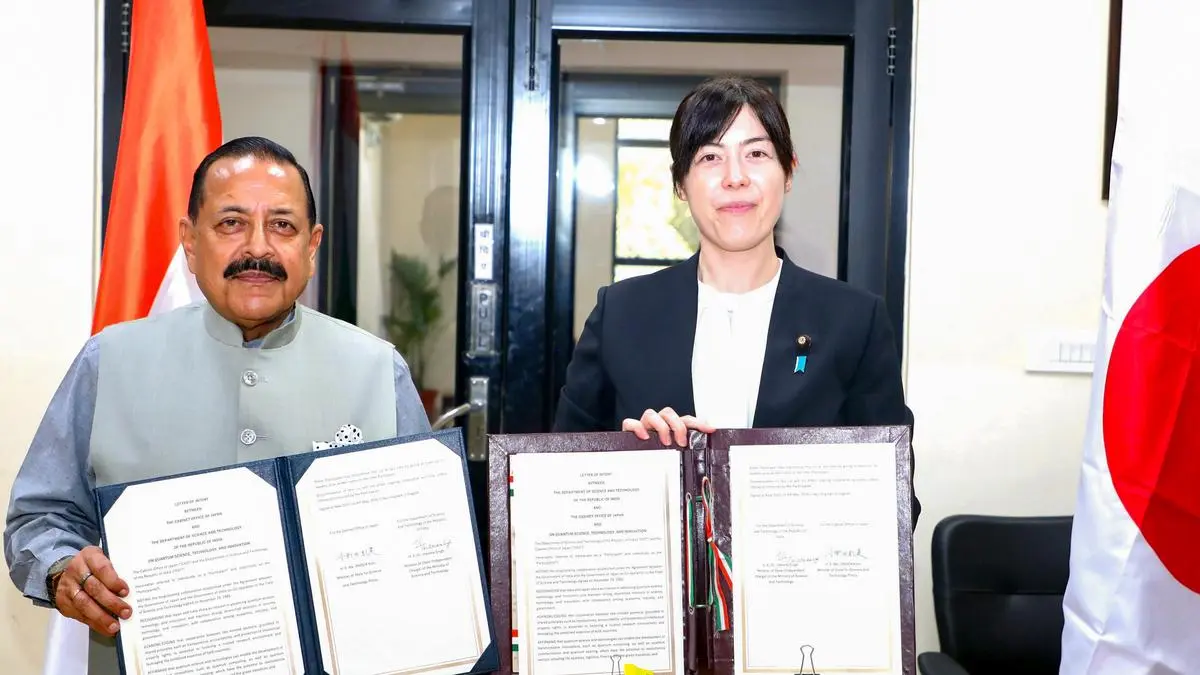
India and Japan have formalized agreements in quantum computing and healthcare, signaling a strategic shift toward deep-tech integration. Watch for funding.
Continue with
The strategic alignment between India and Japan reached a new inflection point on Wednesday, May 6, 2026, as both nations formalized cooperation agreements in quantum science and medical technology. This bilateral exchange, led by India’s Union Minister of State for Science and Technology Jitendra Singh and Japan’s Minister for Science and Technology Policy Kimi Onoda, shifts the focus from general diplomatic dialogue toward specific, high-barrier industrial sectors. For market observers, the significance lies in the transition from research-level cooperation to the integration of Japan’s advanced manufacturing base with India’s scaling innovation ecosystem.
Quantum Infrastructure and Strategic Computing
The most consequential development is the Letter of Intent signed between Japan’s Cabinet Office and India’s Department of Science and Technology. This agreement targets the core pillars of the National Quantum Mission, specifically quantum computing, communication, sensing, and materials research. While quantum technology remains in the pre-commercial phase for many global firms, the formalization of this partnership suggests a long-term roadmap for secure communication systems and high-performance computing infrastructure.
Investors should view this as a structural tailwind for firms operating within the quantum supply chain. The collaboration aims to standardize research platforms and create joint innovation channels, which effectively lowers the barrier for Japanese firms to deploy capital into Indian tech hubs. By aligning on quantum sensing and materials, the two nations are positioning themselves to capture early-stage intellectual property in next-generation hardware, a sector that is increasingly sensitive to regional geopolitical shifts in the Indo-Pacific.
Healthcare Innovation and Medical Device Integration
Beyond quantum, the Memorandum of Cooperation between the Japan Agency for Medical Research and Development, the Indian Council of Medical Research, and India’s Department of Science and Technology marks a shift in healthcare capital flows. The agreement focuses on joint research, capacity building, and funding mechanisms for medical devices. This is not merely a research initiative; it is a framework designed to accelerate the commercialization of medical technologies through shared manufacturing standards.