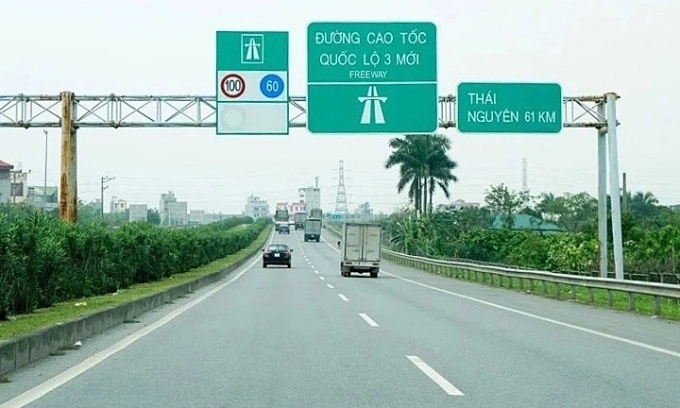
Hanoi plans a 7-km expressway shutdown to accelerate a $7.4B airport link. Success hinges on 2027 APEC deadlines and complex utility relocation efforts.
The Hanoi People's Committee has formally requested a temporary closure of a 7-kilometer stretch of the Hanoi-Thai Nguyen Expressway to facilitate the construction of a critical infrastructure artery. This proposal, filed on May 3, seeks approval from the Ministry of Construction and the Ministry of Public Security to expand the existing four-lane road into a 10-lane corridor. The expansion is a foundational requirement for the $7.4 billion Gia Binh International Airport project, which was approved by Vietnam's National Assembly in December 2025.
The Gia Binh project is designed to meet ICAO 4F standards, positioning it as a primary aviation hub for northern Vietnam. Current projections estimate the facility will handle 30 million passengers and 1.6 million metric tons of cargo annually by 2030, with long-term capacity scaling to 50 million passengers and 2.5 million tons by 2050. The government's ambition is to secure a top-10 ranking among Skytrax five-star airports, with the first phase of construction explicitly tied to the 2027 APEC Summit hosted by Vietnam.
The 41.3-kilometer link road connecting the airport to central Hanoi represents a $3.15 billion investment. The 13.55-kilometer segment within Hanoi is being executed through a public-private partnership, specifically a build-transfer contract awarded to a consortium comprising Cong Thanh Transport Investment and Construction Joint Stock Company and Cat Ba Sun Co. Ltd., a subsidiary of Sun Group. This specific section accounts for $1.09 billion of the total road investment and includes the development of 10 lanes alongside parallel service roads.
While the project is moving toward the construction phase, the complexity of the site presents significant logistical hurdles. Hanoi has allocated $329 million for site clearance between 2025 and 2026, successfully handing over 170.84 hectares to the investor. This represents approximately 84% of the 201 hectares required within the capital's jurisdiction. Bac Ninh Province, which shares the project footprint, has cleared an additional 17 hectares.
The technical complexity of the corridor is compounded by its intersection with existing and future infrastructure. The link road crosses the planned alignments for the Lao Cai-Hanoi-Hai Phong and Hanoi-Quang Ninh railways, as well as an existing 500-kV power transmission line. The alignment of these railways imposes strict technical requirements that complicate parallel construction efforts. Consequently, Hanoi has petitioned the prime minister to prioritize funding and expedite design approvals to ensure that structural work on the Lao Cai-Hanoi-Hai Phong railway aligns with the road construction timeline.
Beyond the physical construction, the project requires multi-agency coordination to resolve utility and environmental bottlenecks. The city is currently pushing for the accelerated relocation of 220-kV and 500-kV transmission lines and has requested formal guidance from the Ministry of Agriculture and Environment regarding the permitting of a bridge across the Duong River. The Department of Construction has finished the technical design appraisal for the Hanoi section, and the city is in the final stages of contract negotiations with the investor consortium.
For investors monitoring the broader industrial and construction landscape, the progress of this project serves as a proxy for the government's ability to execute large-scale infrastructure mandates under tight deadlines. While the stock market analysis often focuses on immediate earnings, the long-term viability of regional logistics hubs like Gia Binh depends on the successful resolution of these land-use and utility-relocation conflicts. The ability of the consortium to meet the 2027 APEC deadline will depend on the speed of the remaining 16% of land acquisition in Hanoi and the successful integration of the railway corridors into the master construction plan. The current status of the project reflects a high-intensity phase where regulatory speed is as critical as capital allocation.
AI-drafted from named sources and checked against AlphaScala publishing rules before release. Direct quotes must match source text, low-information tables are removed, and thinner or higher-risk stories can be held for manual review.