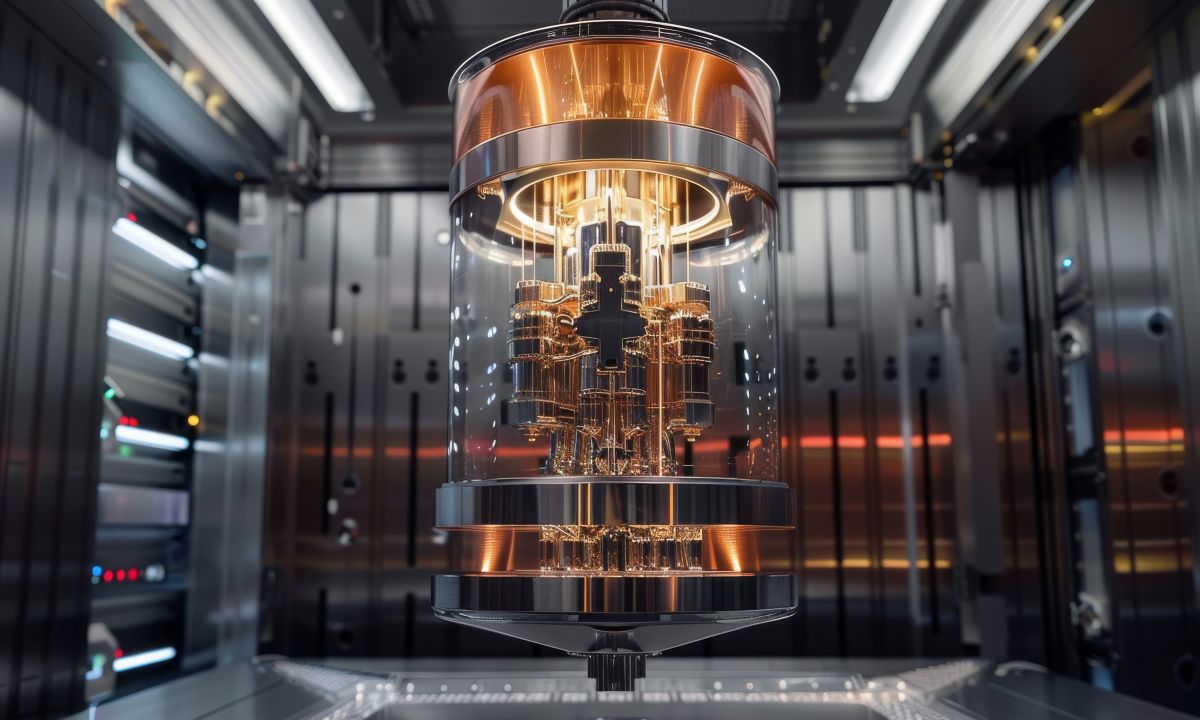
IBM CEO Arvind Krishna said quantum computing will start delivering measurable revenue within a few years.
"I think that in 2028 or 2029, you'll see it have a measurable impact on our top line and bottom line," Krishna told CNBC last week. By the end of the 2030s, he said, the technology could be worth "a trillion dollars of value."
The interview came the same day IBM and startup Algorithmiq released research they said demonstrated "quantum advantage." The companies said the quantum computers solved problems more efficiently and cheaply than classical computers, a milestone the field has long pursued.
Krishna said the quantum computer uncovered behaviors in materials that conventional machines could not capture. That could lead to better batteries and advances in medicine, he said.
"A quantum computer can do things better, faster, cheaper, in a way that normal classical computers cannot do at this time," Krishna said.
The CEO pushed back against skeptics who argue quantum computing remains years from commercial use due to hardware complexity and scalability. He said IBM had begun seeing movement toward real-world applications.
In April, IBM opened two new hubs for AI and quantum development, one in Illinois and another in partnership with MIT in Cambridge. Weeks later, the Commerce Department said it would provide $2.013 billion in federal incentives to nine companies to support quantum computing efforts. IBM received nearly half of that money.
The timeline for quantum commercialization runs parallel to a growing debate about quantum security. Google researchers published a study in March warning that quantum computers capable of breaking encryption could arrive by 2029, much faster than earlier estimates of up to a decade away.
"We want to raise awareness on this issue and are providing the cryptocurrency community with recommendations to improve security and stability before this is possible, including transitioning blockchains to post-quantum cryptography," the Google researchers said.
The Google report noted that traditional financial institutions can update their cryptographic infrastructure quietly, while public blockchains are bound by transparency, immutability, and social consensus.
AlphaScala's proprietary Alpha Score for IBM stands at 40 out of 100, labeled Mixed. The score reflects the gap between the long-term promise of quantum computing and the near-term uncertainty around its commercial adoption.