Stocks● Neutral
Hungary's 0.3% GDP Growth Masks 11,000 Corporate Deaths
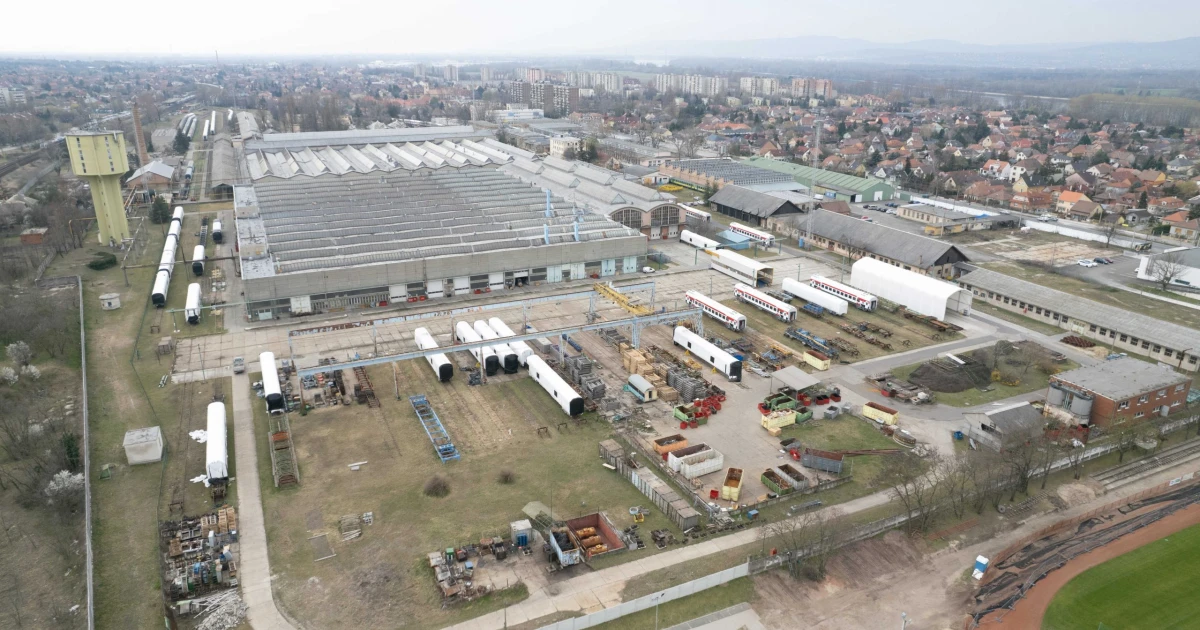
Hungary's economy grew just 0.3% in 2025. Meanwhile 11,000 companies vanished. Ten firms with billion-forint revenues entered liquidation. Here's what it means for Hungarian assets.
Continue with
Hungary's economy grew just 0.3% in 2025, well below the government's already downgraded 0.5–1% forecast. The real damage was not in household consumption. It was in the corporate sector. 11,000 companies vanished last year, and the total number of registered firms fell below half a million for the first time in years. More than 70% of court proceedings ended in liquidation or forced dissolution. The "flying start" the government promised turned into a runway that ran out for dozens of large firms – including ten that had posted billion-forint revenues in multiple recent years.
For investors tracking emerging Europe, this wave is not just a local statistic. The collapse of companies with state contracts, export pipelines, and dominant market positions suggests a structural fragility that goes beyond a standard cyclical downturn. When the biggest names fall, the ripple effects hit lenders, suppliers, and tax revenue – and eventually asset prices.
The 0.3% GDP Print That Tells Half the Story
The headline GDP figure of 0.3% hides a deeper problem. The government had promised a "flying start" with 3%+ growth. By mid-2025, forecasts were cut to 0.5–1%. Even that proved optimistic. The final print from the KSH (Hungarian Central Statistical Office) showed the economy barely expanded from 2024 levels.
Key insight: GDP captures output, not balance-sheet health. The corporate death toll reveals that many firms were already in distress before the slowdown fully hit. The 11,000 company closures represent a structural contraction, not a cyclical dip.
The Top-Ten Collapse: Size Offered No Protection
A list compiled by Opten ranks the ten largest Hungarian firms that entered liquidation or bankruptcy in 2025, measured by 2024 revenue. Every one had generated at least 1 billion forint in annual sales in three of the last five years. The table below shows the scale of the damage.
| Company | Peak Revenue (b Peak Revenue (billion HUF) | 2024 Profit/Loss (billion HUF) | Sector |
|---|---|---|---|
| Box Print – FSD Packaging Kft. | 3.0 | -0.418 | Packaging |
| Telimpex Hungária Zrt. | 3.0 | -0.625 | Building materials |
| Globe-Shield Kft. | 3.0 | +0.650 | Security services |
| Truplast-Hungária Kft. | 3.5 | -0.580 | Plastics manufacturing |
| Dunaferr Labor Nonprofit Kft. | 6.6 | -0.615 | Labour hire |
| S-System Service Kft. | 6.8 | -1.700 | Security (state contracts) |
| T-Trans Főép Kft. | 8.4 | -2.650 | Construction |
| Kápé Cargo Kft. | 11.9 | Not disclosed | Grain trading |
| Magyar Vagon Dunakeszi Kft. | 46.0 | Not disclosed | Railway rolling stock |
| Ganz-MaVag International Kft. | 105.0 | Not disclosed | Railway holding |
Box Print – FSD Packaging: From Pharma Ambition to Liquidation
The packaging firm in Kőrösladány had invested 685 million forint in virus-free packaging for pharma clients. It swung from a profit of 91 million forint in 2023 to a loss of 418 million forint in 2024. Liquidation started September 2025. Manufacturing equipment was advertised for sale shortly after.
Telimpex Hungária: Building Materials Mirror Sector Trend
Telimpex's loss of 625 million forint on 2.7 billion forint revenue in 2024 fits a broader pattern. More than 8,000 new court cases were opened in construction in 2025. Nearly 85% ended in liquidation or forced dissolution. A new entity, Telimpex Trade Zrt., was incorporated at the same address shortly before the collapse – a common restructuring, not a clean exit.
Globe-Shield: Profitable Before the Fall
Globe-Shield is an outlier. It posted a 650 million forint profit in 2024 with 341 employees. Liquidation started December 2025. The trigger appears to be a liquidity or contract-portfolio break, not a classic business decline. This case shows that even profitable firms can fail when cash flow or client concentration shifts.