Stocks● Neutral
Why Soaring US Debt Has Kept Bond Yields Low
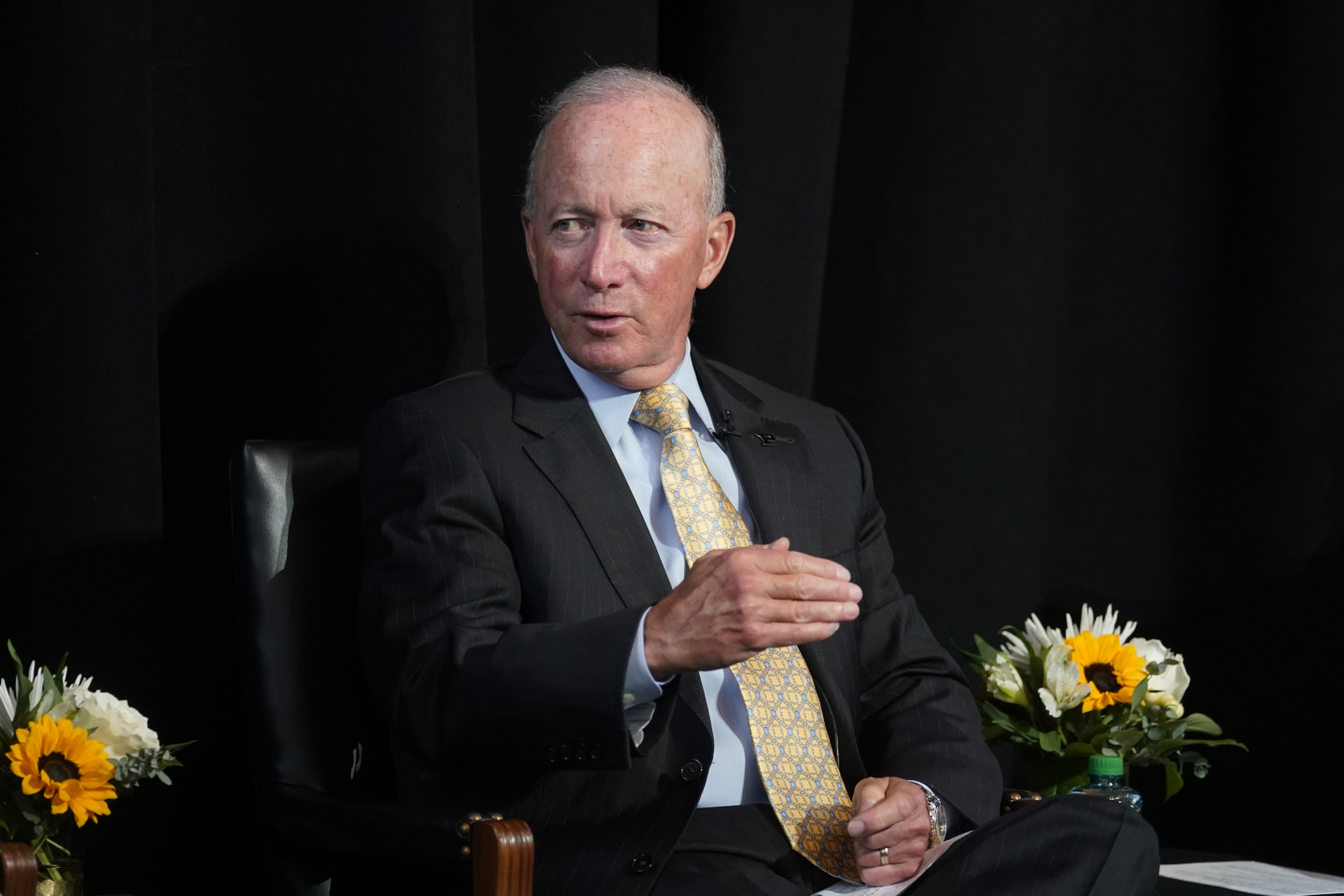
Mitch Daniels warns of the $39T national debt, but Treasury yields have fallen since the 1980s – signaling markets see no default risk. The better guide for investors: focus on tax revenue extraction, not debt headlines.
Continue with
Mitch Daniels looked in the mirror through his Washington Post op-ed and saw a nation in denial about the national debt. He wrote that “no impulse is more human than wishfulness, the tendency to grasp at any straw that enables us to avert our eyes from difficult realities and put off facing them.” Daniels positions himself as the sober voice in a room filled by libertarians at Cato, conservatives at AEI, and left-leaning Keynesians at Brookings – all united in a righteous stance against rising government debt.
What Daniels and his allies rarely ask is whether they are the ones in denial. For decades they have warned that the “inexorable arithmetic” of debt threatens “inexorable arithmetic” of “inexorable arithmetic” of Daniels sees himself as the only clear-eyed person in a room full of ideologues. Yet a different set of market participants – the so-called “debt denialists” – watch Treasury yields instead of debt headlines. Those yields tell a story that the former Indiana governor refuses to acknowledge: the real crisis is not the debt itself, the real crisis is the tax revenue that enables it enables.
The Yield Signal Daniels Ignores
The 45-Year Trend
Over the last 45 years, the national debt surged from roughly $900 billion to more than $39 trillion. During that same period, Treasury yields fell from double digits to near-zero and later settled in a range that remains low by historical standards. This is a market signal, not a political opinion.
Falling yields mean investors are willing to lend to the U.S. government at lower and lower interest rates despite the growing debt pile. If markets truly believed the debt was unsustainable, yields would rise to compensate for default risk. They have not.
What Falling Yields Actually Mean
Markets price future expectations. The reason Treasury can borrow trillions at low rates is that investors expect future expect future tax revenues to dwarf current levels. That expectation rests on the assumption that the economy will grow, that corporate profits will expand, and that the government will capture a large share of that growth through taxation.
Daniels wrote those words to describe Americans who ignore the debt. The same words describe his own refusal to accept what the bond market is saying: the debt is a symptom of a way-too-much-tax-revenue problem.
Why Low Yields Contradict the Debt Panic
The Naive Interpretation
The common view among debt worriers is that rising debt inevitably leads to a crisis. They point to arithmetic, to compounding interest, to the burden on future generations. These arguments ignore the price signal that matters in the market that chooses the price: Treasury yields.
If the debt were a crisis waiting to happen, the **30-year Treasury yield would have soared past 15% as it did in the early 1980s. Instead, the yield on the 10-year note sits near levels that prevailed before the pandemic, even as the debt has doubled in the last decade.
The Better Market Read
The mechanism is straightforward. When the government borrows, it issues bonds. If investors fear default, they demand higher yields. Yields have not risen. Therefore, investors do not fear default.
What they fear is something else: the government will continue to extract tax revenue at a rate that stifles private-sector growth. The debt is the mechanism by which that extraction is financed. Daniels and his allies want to reduce the debt by raising more tax revenue. That would only increase the extraction, making the problem worse.
Key insight: The market’s low yield is not a vote of confidence in fiscal discipline. It is a vote of confidence in the government’s ability to keep extracting capital through taxation.