Stocks● Neutral
Hundreds of Arms Makers Join Ukraine Battlefield Testing
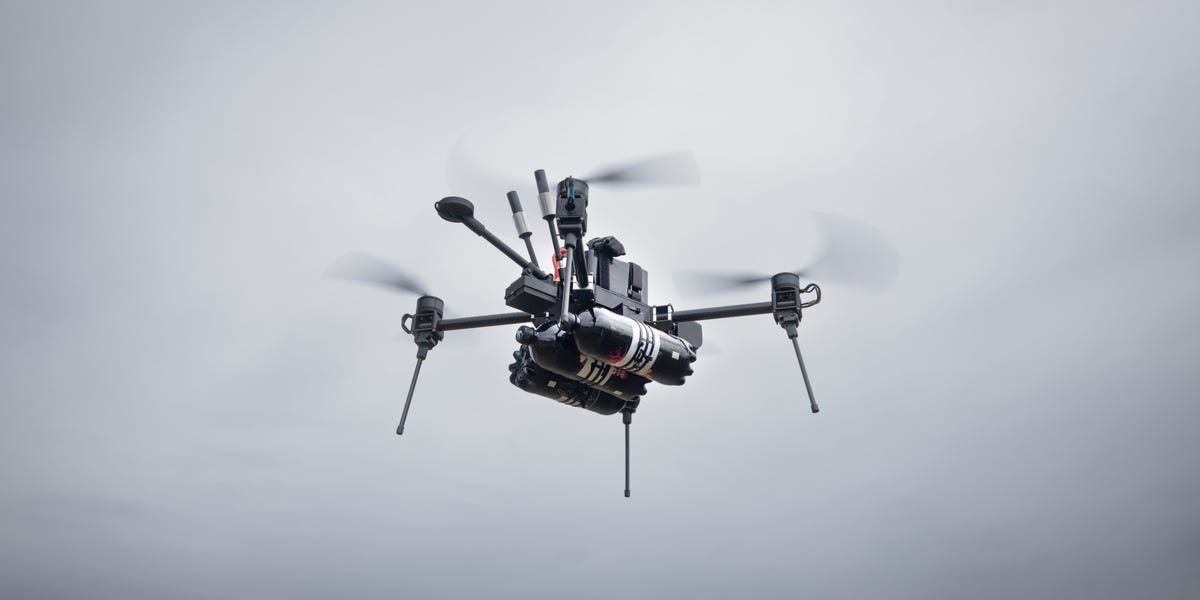
Hundreds of defense firms join Ukraine's 'Test in Ukraine' program for live combat validation of drones, robots, and EW systems, creating a new competitive filter for defense stocks.
Continue with
Ukraine's "Test in Ukraine" program has drawn interest from hundreds of Western defense companies, a top defense executive said, with the number of applicants continuing to grow. The initiative allows firms to field drones, robots, electronic warfare systems, and other hardware in live combat conditions – a sharp departure from traditional controlled-range testing.
Why Live Fire Testing Matters for Defense Investors
The program compresses the validation cycle for new military technology. A drone that survives six months on the front line in Ukraine carries more weight with procurement officials than years of laboratory trials. For investors tracking the defense industrial base, the question is which companies will win the opportunity to prove their systems under fire.
Simple read: More companies want to test in Ukraine, so defense contractors with novel tech could see faster adoption. Better market read: The program acts as a real-world filter – only systems that perform against Russian electronic warfare and drone countermeasures will advance. Companies that succeed gain an immediate competitive moat against rivals still waiting on peacetime testing schedules. Those that fail risk costly redesigns or lost market share.
Competitive Advantage Through Battlefield Validation
A platform that demonstrates survivability and kill-chain integration in Ukraine becomes a near-guarantee for future NATO procurement and allied export orders. The program also creates a feedback loop: developers can iterate based on real-time kill data, shortening the development cycle seen in programs like the US Army’s Next Generation Combat Vehicle. For defense primes and smaller specialty firms alike, a successful Ukraine test run can unlock multi-year production contracts.