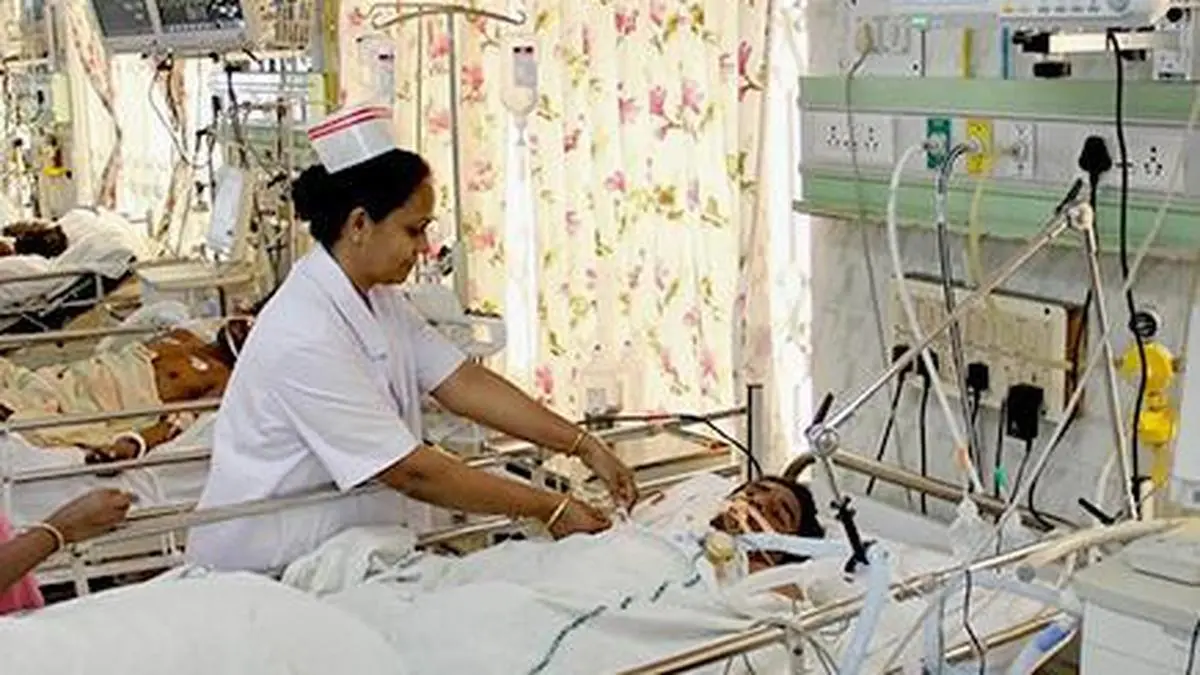
Tirumala Tirupati Devasthanams (TTD) launched the Srivari Vaidya Seva programme on a pilot basis Friday. The initiative offers medical experts worldwide a way to volunteer at TTD-affiliated hospitals through a dedicated online platform. Executive Officer M Ravichandra launched the IT application, stating the programme aims to make medical experts' services available to devotees of Lord Venkateswara. Super-speciality doctors can serve for three days; MBBS doctors for seven days. Food and accommodation are provided in Tirumala and Tirupati. The programme covers Ashwini Hospital, SVIMS, BIRRD Hospital, Ayurvedic Hospital, Sri Padmavathi Children's Heart Centre, SV Gosala, and other TTD-affiliated institutions.
The Concept: Platform-Mediated Volunteer Service
What the IT Application Does
The specially designed IT application handles registration, slot booking, and scheduling for volunteer doctors. Interested medical professionals belonging to the Hindu religion can book slots through the TTD website. The key operational detail: the platform abstracts logistics (food, accommodation, hospital assignment) so the volunteer only needs to pick dates and specialties.
Why This Mechanism Matters
Most hospital volunteer programmes fail on coordination cost. A doctor with a free Tuesday does not want to call five hospitals to check availability. TTD's approach centralises supply (doctor time) and demand (hospital slots) through a single queue. By capping service duration – three days for super-specialists, seven for general MBBS – the programme prevents volunteer burnout while ensuring predictable staffing.
The Common Mistake: Assuming Scale Is Automatic
The naive read is that a registration portal alone will attract volunteers. TTD already has a captive devotional base: millions of pilgrims visit Tirumala annually. The platform does not solve demand generation; it solves allocation. For any hospital chain considering a similar programme, the bottleneck is not the IT build – it is building a pool of willing volunteers who trust the organiser. TTD's brand trust is a structural advantage that a generic app cannot replicate.
A Better Framework: The Three-Layer Volunteer Stack
Layer 1: Registration and Verification
The IT application handles credential checks (MBBS vs super-speciality), religious eligibility, and date selection. The source does not mention verification cost, any scaled roll-out requires automated degree confirmation – a step that, if manual, caps throughput.
Layer 2: Matching and Logistics
Ravichandra confirmed that TTD provides accommodation. This absorbs the volunteer's variable cost, making the service truly zero-marginal-cost for the doctor. Matching is straightforward when the hospital list is fixed. The harder problem – assigning a cardiologist to a cardiac ward on the day they arrive – is not described in the release, the three-day minimum window suggests block scheduling rather than on-demand matching.
Layer 3: Scale Path
Ravichandra stated that steps will be taken to implement the programme on a larger scale to utilise more experts. The question is whether the platform can expand beyond TTD's current seven institutions without a centralised scheduling algorithm. A simple calendar booking works for single-digit hospitals; at 20+ hospitals, slot conflicts require dynamic resourcing.
Read-Through for Hospital Stocks and Platform Plays
How a Public Hospital Chain Would Approach This
A listed hospital operator considering a similar programme would face two constraints that TTD does not:
-
Shareholder cost scrutiny – Food and accommodation are an operating expense. TTD is a temple trust with no profit motive. A public hospital's board would demand a measurable ROI, either as brand goodwill or tax-deductible CSR.
-
Regulatory compliance – Volunteer doctors in a for-profit hospital may trigger liability questions absent the religious-trust context. Credentialing and malpractice insurance are non-trivial.
The Valuation Implication
For stock market investors, a volunteer doctor programme is a sentiment signal, not a revenue driver. It signals management's confidence in occupancy rates (if volunteer doctors handle overflow) or a long-term brand investment. No direct line item moves, consistent patient inflow from volunteer care could reduce marketing spend over time.
Confirming Factors
- Hospital chains announce similar platform-based volunteer programmes with transparent cost disclosures.
- TTD publishes registration numbers showing high uptake (e.g., 500+ doctor registrations within 90 days).
- Public hospital stocks show rising patient volumes coinciding with volunteer programme launches.
Invalidating Factors
- Volunteer doctors report scheduling inefficiencies (e.g., idle days because matching fails).
- TTD's programme remains limited to the pilot institutions without expansion.
- A hospital operator's volunteer programme incurs higher-than-expected liability insurance premiums, signalling it is not scalable.
Practical Watch Item
The TTD Registration Data Point
The single most concrete metric to track is the number of doctors who register in the first month versus the available slots. If registrations exceed capacity, the platform has solved the supply problem. If slots go unfilled, the proposition – free accommodation in Tirumala for a short stint – may not be enough to attract volunteers. For a trader looking at healthcare platforms, that data point separates a genuine operational innovation from a PR launch.
The AlphaScala Lens
TTD (Trade Desk Inc.) carries an Alpha Score of 42/100, labelled Mixed, in the Technology sector. While Trade Desk's business model is ad-tech, not hospital services, the platform mechanism is analogous: both connect supply (doctor time / ad inventory) with demand (hospital slots / advertiser budgets) through a centralised booking system. The difference is pricing: TTD the stock operates on real-time auctions, the temple platform uses free allocation. For a trader comparing platform economics, the volunteer programme illustrates how non-monetary incentives (faith, accommodation) can substitute for price signals in a coordination marketplace.
The broader takeaway for stock market analysis: watch for any hospital chain that announces a similar volunteer platform. If the chain has a best stock brokers-recommended rating for growth, the volunteer programme could be a catalyst for patient volume expansion without capital expenditure.
TTD's stock page provides further detail on the company's platform metrics, the core comparison remains: TTD the trust proves that platform-based volunteer matching works with low transaction costs; TTD the stock proves that platform economics can generate high-margin revenue. Investors should not conflate the two, the operational blueprint is portable.