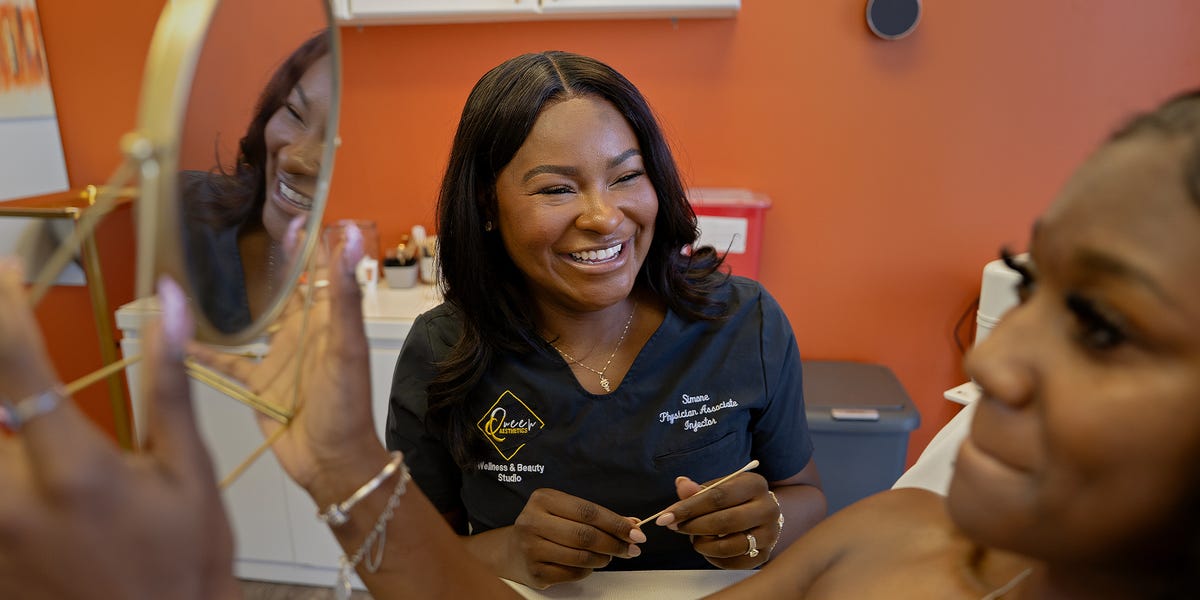
Simone Steele turned Botox treatments into social events. Her approach at Queen Aesthetics Wellness and Beauty Clinic generated enough recurring revenue to hit six figures and later fund an inclusive mineral sunscreen line called Simp. The story, told in a Business Insider as-told-to essay, offers a tactical case study for anyone tracking customer acquisition costs in medical aesthetics.
The Botox Party as Customer Acquisition Model
Steele hosted private gatherings where potential clients could try injectables in a low-pressure setting. Each event let attendees watch peers undergo the same procedure. This peer-effect mechanism lowered the traditional cost of acquiring a new patient. Industry estimates put per-client acquisition for med-spa chains at $200 or more in some markets. Steele’s model effectively cut that figure by relying on organic social proof instead of paid advertising or influencer deals.
The event format also built trust. Steele personally administered the treatments, which reinforced her brand and created a direct feedback loop. Clients who attended one party often booked follow-up appointments. The repeat rate appears high enough to support a private clinic with a six-figure revenue stream.
The Inclusive Sunscreen as Vertical Integration
Steele launched Simp, a mineral sunscreen designed for skin tones that traditional brands often ignore. Major sunscreen lines such as Supergoop and Neutrogena have faced criticism for limited shade ranges. By launching her own product, Steele added a product revenue stream to her service income. This vertical integration mirrors what larger aesthetics companies have attempted. Allergan, now part of AbbVie (ABBV), rolled out its own skincare line to capture post-procedure product sales. Steele’s version avoids retail distribution costs by selling directly through her clinic’s customer base, a channel already warmed by the party events.
Scalability Constraints for Public Competitors
The key question the story raises is whether the Botox-party model can scale beyond a single clinic. Steele’s success required her personal presence and a local network of early adopters. Replicating that across multiple locations would demand a standardized operating procedure for event logistics and a training program for practitioners. Larger players have the capital to copy the model. They lack the organic community roots that Steele built from scratch.
Publicly traded aesthetics providers have not yet adopted event-based marketing at scale. MediClinics (private) and Utopia Medical (unlisted) are potential test cases. If one of them reports lower customer-acquisition costs after launching events, the read-through for the sector would be positive. Private equity firms evaluating aesthetics assets should watch for that signal.
Steele’s journey from Botox parties to a six-figure clinic provides a concrete benchmark for customer acquisition innovation. The inclusive sunscreen line adds a second revenue stream that diversifies away from pure service income. Investors tracking the aesthetics space should monitor whether larger players integrate event models or launch inclusive product lines of their own.