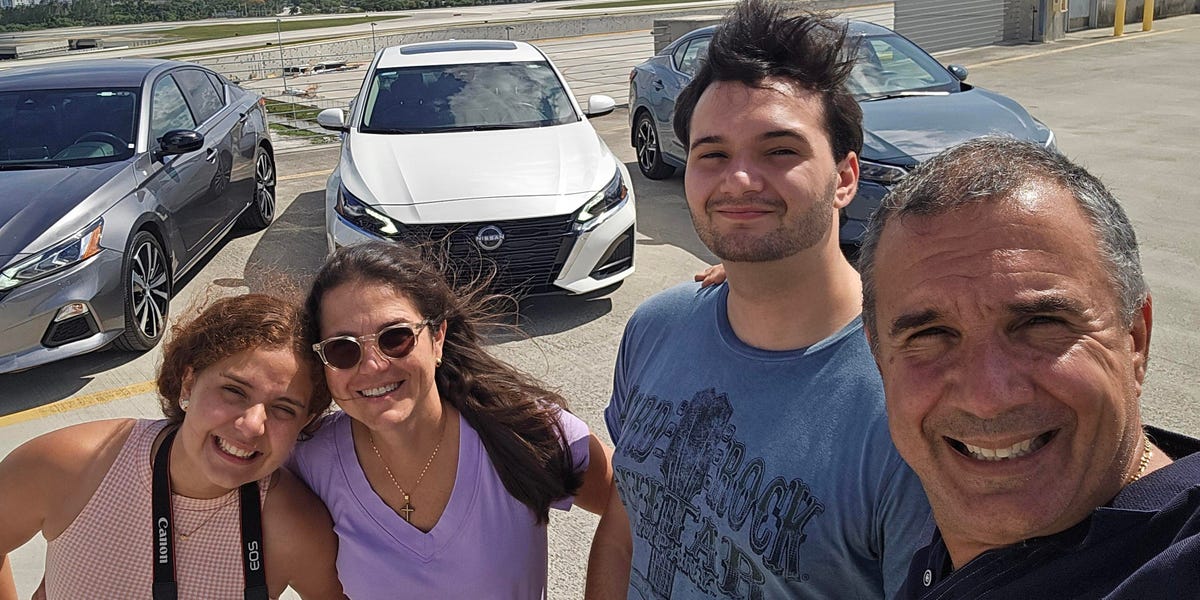
A married couple in Miami turned a single Nissan Infiniti into a fleet of more than 60 cars that generated $500,000 in revenue last year.
Gerardo Aletti and Sofia Escarra bought the Infiniti in 2020 with the idea of renting it out on Turo, the peer-to-peer car-sharing platform. The experiment worked. They kept adding vehicles, financing each new purchase with cash flow from the existing fleet.
By 2024, the operation had grown to 63 cars. Revenue hit $500,000, the couple said. The business now covers everything from economy sedans to luxury SUVs, with vehicles parked at Miami International Airport and several city lots.
Turo takes a cut of each booking – typically 10% to 40% depending on the protection plan the host selects. Aletti and Escarra said they aim for the higher end of that range by offering cars at competitive daily rates and keeping utilization above 70%.
The couple handles maintenance, cleaning, and customer service themselves, with occasional help from a part-time employee. They said the biggest operational challenge is managing damage claims and coordinating repairs between bookings.
Miami is one of Turo's strongest markets, driven by tourism and a population that skews younger and more transient. The city's airport sees heavy demand for short-term rentals, which suits the Turo model better than traditional rental agencies that favor weekly or monthly bookings.
Aletti and Escarra said they plan to expand the fleet to 100 cars by the end of 2026. They are also looking at adding a second location, possibly in Fort Lauderdale or Orlando.
The couple's story mirrors a broader shift in car rental. Traditional agencies like Hertz and Enterprise rely on corporate contracts and airport concessions. Turo and similar platforms let individuals compete on price and vehicle selection, often offering newer or more specialized cars than the big chains carry.
For now, the business remains a two-person operation with a single part-time helper. The couple said they have no plans to raise outside capital or franchise the model. They prefer to grow at a pace that keeps the fleet fully utilized and the cars well maintained.
"We know every car in the fleet," Escarra said. "That matters when a guest calls at midnight with a flat tire."