The May 25 Border Crush
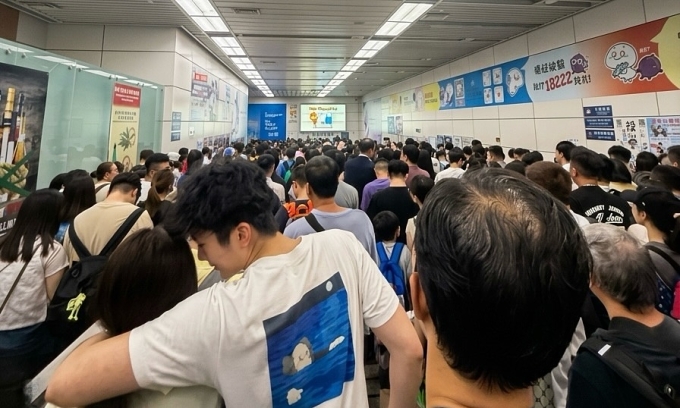
Hong Kong's land border crossings seized up on May 25 as roughly 740,000 residents returned from mainland China after the Buddha's Birthday long weekend. About 90% of those entries came through land checkpoints, according to figures from the city's Immigration Department cited by the South China Morning Post. The crush was concentrated at three crossings linking Hong Kong with Shenzhen: Lo Wu handled more than 165,000 returning residents, Lok Ma Chau Spur Line recorded 129,000, and Shenzhen Bay processed 124,000.
By 6 p.m., crowd-control measures were already in force on the approach to Shenzhen Bay immigration, according to Hong Kong news site Dim Sum Daily. Travelers described temporary gate closures mid-queue and movement reduced to a shuffle. One social media user posted videos of the packed checkpoint around 8 p.m., saying multiple buses were stuck in a jam on the road outside as travelers lugging suitcases pressed through on foot.
A separate clip showed a mainland police officer trying to redirect an angry crowd as the Shenzhen Bay checkpoint neared closing time. "The Hong Kong side is full of people ... You can return [on May 26] at 6:30 a.m.," the officer told travelers, according to SCMP. Members of the public were heard arguing back, demanding to know how long they would have to wait or how else they could get home.
Why the Congestion Matters for Stocks
The border gridlock is not a one-off operational hiccup. Immigration figures cited by Dim Sum Daily showed 615,000 residents left Hong Kong on May 23, of whom about 490,000 headed north to Shenzhen and other mainland destinations – a 32.7% week-on-week jump. A further 500,000 departed on May 24, the Buddha's Birthday holiday itself, with around 400,000 traveling north. Over the long weekend, Hongkongers logged a total of 2.91 million border crossings from May 23 to May 25, SCMP reported.
The Infrastructure Bottleneck
Wait times stretched to two to three hours at Lo Wu around 11 p.m., with returning residents then queuing again to enter the MTR station as trains arrived only every 10 minutes, SCMP reported. The Shenzhen Bay and Lo Wu crossings close at midnight, while Lok Ma Chau/Huanggang operates 24 hours – the only round-the-clock passenger checkpoint between Hong Kong and Shenzhen.
Hong Kong's Transport Department said on the afternoon of May 25 that the Zhuhai Port of the Hong Kong-Zhuhai-Macao Bridge was "very busy" and urged motorists to plan carefully. The Zhuhai Port's website said the queue to enter Hong Kong stretched more than 500 meters in the afternoon, with inspection waits exceeding 40 minutes – an "extreme peak" period, SCMP reported. Some motorists told Dim Sum Daily they had spent an hour inching toward the crossing before reaching the tunnel, with a roughly 7-kilometer approach taking 85 minutes.
The Liantang/Heung Yuen Wai checkpoint in the northeastern New Territories was also saturated, with queues forming in the forecourt and on the departure level. Individual travelers reported roughly two-hour transits from the Shenzhen side before boarding onward transport, Dim Sum Daily reported.
MTR Corporation and Transport Infrastructure
The MTR Corporation is directly exposed to this congestion. The Lo Wu and Lok Ma Chau stations are key revenue drivers for the MTR's cross-border rail services. Extended wait times and overcrowding could pressure the MTR to invest in capacity upgrades, raising capital expenditure. Conversely, the congestion reinforces the value of the MTR's property development model around stations, a long-term thesis.
Airport Authority Hong Kong and the Hong Kong-Zhuhai-Macao Bridge operators also face scrutiny. The bridge's Zhuhai Port saw 40-minute inspection waits, which could deter motorists and reduce traffic growth. For investors tracking transport stocks, the immediate question is whether the government will respond with new infrastructure spending or operational changes.
Hong Kong Retail Under Pressure
The outbound surge – 615,000 departures on May 23 alone – suggests that cross-border consumption is accelerating. Hong Kong residents are increasingly shopping and dining in Shenzhen, where prices are lower. That is a headwind for Hong Kong-based retailers, especially those in beauty, apparel, and F&B that compete directly with Shenzhen alternatives. If the trend persists, Hong Kong retail sales data could weaken further.
Key insight: The border congestion is a symptom of a structural shift in consumption patterns. Hong Kong retailers that rely on local spending face a growing competitive disadvantage, while Shenzhen consumption plays benefit.
The Next Catalyst: Dragon Boat Festival
The real test for the border thesis comes during the next long weekend. The Dragon Boat Festival in June will provide a second data point. If similar congestion repeats, the market will price in a structural change. If it clears, the event fades as a one-off.
Confirmation Signals
- Further border congestion during upcoming holidays would confirm that demand is structurally exceeding capacity.
- A sustained rise in outbound departures week-over-week, beyond holiday effects, would signal a permanent shift in consumption patterns.
- Retail sales data showing a decline in Hong Kong same-store sales for categories exposed to cross-border competition would validate the bear case for Hong Kong retail stocks.
Risk Factors
- Government intervention to expand checkpoint capacity or improve MTR frequency could alleviate the bottleneck, reducing the negative read-through.
- A slowdown in mainland tourism or a shift in consumer sentiment could reverse the outbound trend.
- The congestion may be a one-off due to the specific holiday timing and weather, not a structural issue.
Risk to watch: If the Hong Kong government announces new border crossing hours or infrastructure spending, the bear thesis on retail stocks weakens. If no action follows, the congestion becomes a recurring catalyst.
Trading Implications: What to Watch Next
The border gridlock is a concrete data point for anyone tracking Hong Kong's consumption shift. The 2.91 million crossings over three days is a record that demands a response from policymakers. For traders, the immediate read is negative for Hong Kong retail and positive for Shenzhen consumption plays. The real test comes in the next holiday period. If the same congestion repeats, the market will price in a structural change. If it clears, the event fades as a one-off.
Practical rule: When infrastructure hits a capacity ceiling during a demand surge, the first reaction is noise. The second occurrence is a signal. Watch the next long weekend for confirmation.
For broader context on how infrastructure bottlenecks affect equity markets, see our stock market analysis. For tools to track cross-border consumption trends, review the best stock brokers for Hong Kong-listed ETFs.