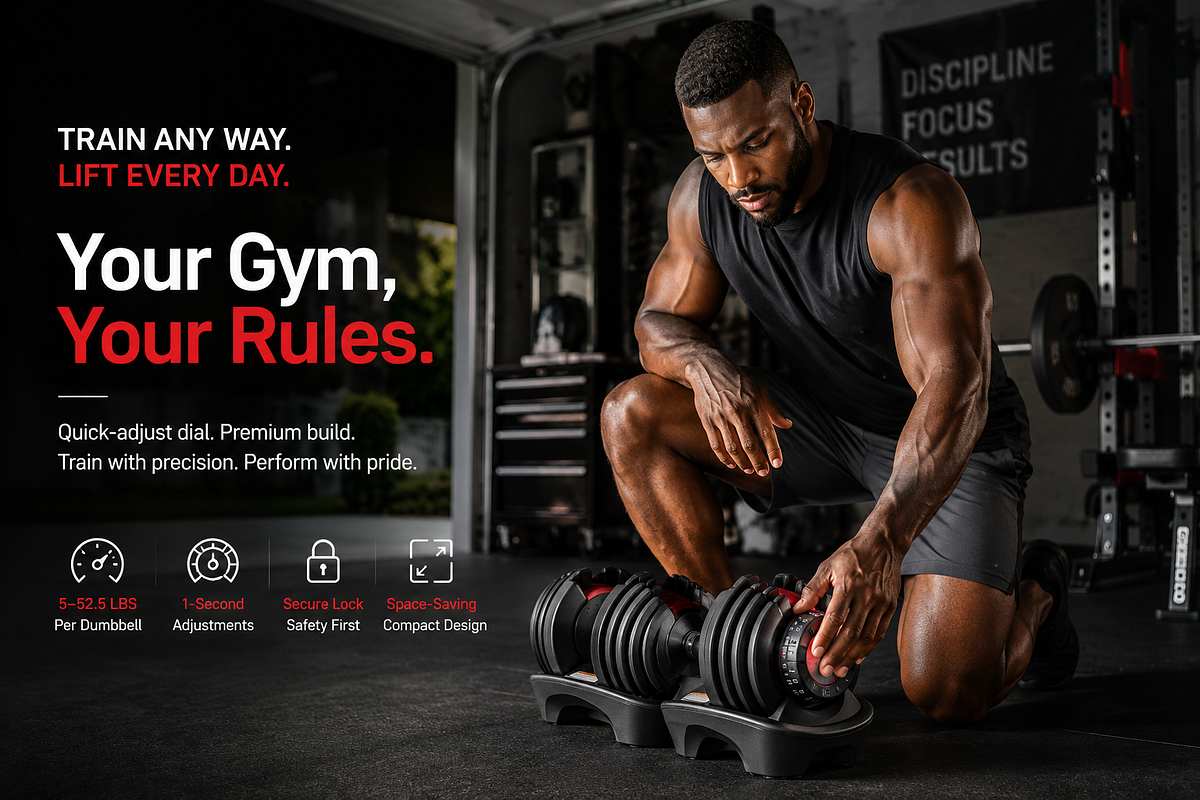
The adjustable dumbbell market is splitting into two camps. Core Home Fitness and MX Select have emerged as the most discussed alternatives to the Bowflex SelectTech line, according to customer reviews and expert roundups published over the past year. The question for buyers is not which brand is better in the abstract, but which design philosophy fits the way they train.
Core Home Fitness sells a dial-based weight selector. Users twist the handle to the desired load, and the plates lock into place. The mechanism is fast – a few seconds to go from 10 to 50 pounds – and requires no pins or trays. Customer reviews on Amazon and fitness forums consistently praise the speed of transitions, particularly for drop sets and circuit training. The trade-off is that the maximum weight tops out at 50 pounds per dumbbell, which limits heavy compound lifts. Expert reviews call the Core Home Fitness set a strong choice for general fitness and light strength work, but note that serious lifters may outgrow the weight range within a year.
MX Select takes a different approach. Its pin-based system slides into a stack of weight plates, similar to the Bowflex design but with a locking mechanism that reviewers say feels more secure. The MX Select dumbbells go up to 75 pounds per hand, matching the Bowflex 552 at the top end. The pin mechanism is slower than a dial – about 10 seconds to change weight – but users report fewer instances of plates coming loose during explosive movements. The expert reviews used in the original analysis note that the MX Select handles are wider and offer a more natural grip for rows and presses, reducing forearm fatigue.
The durability question comes up in nearly every comparison. Bowflex has been the market leader for years, but recent customer reviews flag issues with the weight selector slipping over time. The Core Home Fitness dial mechanism has fewer moving parts, which may explain the lower failure rate in the first two years of ownership. MX Select users report that the pin mechanism requires occasional cleaning to prevent jams, but that the components themselves hold up under heavy use. Expert reviews cited in the source text state that the most wear-resistant sets are those with a minimum number of independent components, which favors the dial design in theory. In practice, both brands have enough positive reviews from owners who report years of problem-free use in home gyms and rehabilitation facilities.
Space efficiency is a selling point for both. A single pair of adjustable dumbbells replaces a rack of individual weights, freeing up floor space for a bench, rack, or mat. The footprint is roughly the same across the two brands: about two feet of floor space per dumbbell when stored on the included tray. The MX Select tray is slightly larger because of the pin mechanism, but the difference is small enough that few buyers cite it as a deciding factor.
Price is where the two brands diverge. Core Home Fitness typically sells for $200 to $300 less than MX Select, depending on the retailer and seasonal sales. The lower price reflects the lower maximum weight and the simpler manufacturing process. MX Select positions itself as a premium alternative, with a price that often matches or exceeds Bowflex. Expert reviews say the higher cost is justified by the 75-pound capacity and the handle ergonomics, but only if the buyer expects to need that weight range.
Warranty terms matter for a product that will see daily use. Core Home Fitness offers a two-year warranty on the mechanism and a lifetime warranty on the frame. MX Select provides a five-year warranty on the mechanism and a lifetime warranty on the frame. The longer warranty on the moving parts gives MX Select an edge for buyers who plan to keep the dumbbells for a decade or more.
The final choice depends on the workout style. A lifter who does drop sets, supersets, and circuit training will benefit from the faster dial changes of Core Home Fitness, even with the lower weight ceiling. A lifter who focuses on progressive overload with heavy compound movements will want the 75-pound capacity of MX Select, and the slower pin changes are a minor trade-off. The market is big enough for both approaches, and the reviews suggest that neither brand has a clear quality advantage that would disqualify it from a recommendation. Buyers should look at their own training history and decide which compromise they can live with.