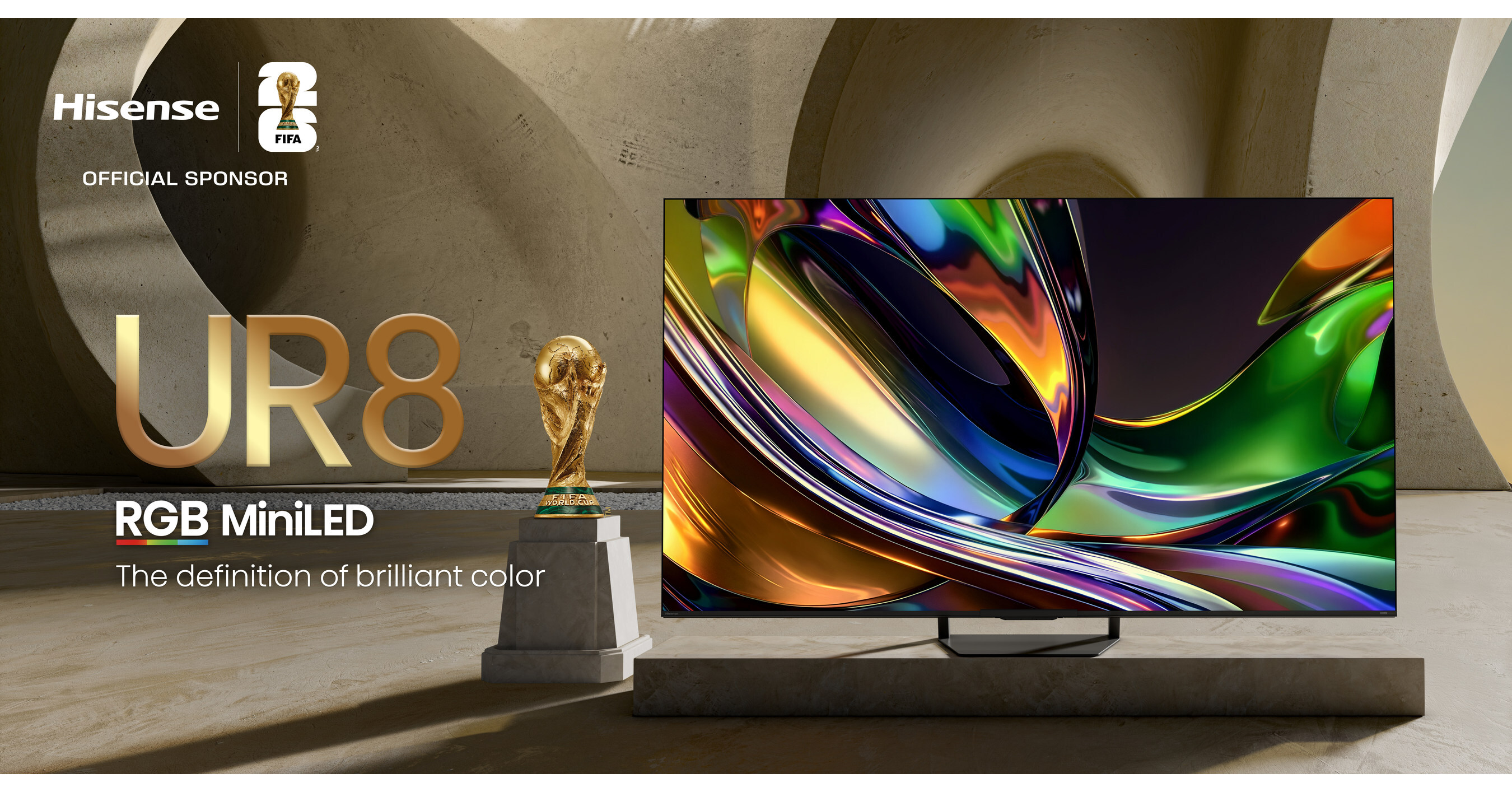
Hisense's UR8 TV aims for a 100% BT.2020 color gamut using RGB MiniLED, challenging premium OLED and QLED. The launch tests demand for a new display standard.
Hisense has launched the UR8 television series, built on its proprietary RGB MiniLED technology. The company claims 100% BT.2020 color gamut coverage, a figure that matches professional reference monitors at consumer prices. The launch follows the Consumer Technology Association’s (CTA) formal recognition of “RGB LED” as a new display category earlier this year. Hisense pushed for that standard.
The UR8 is not a typical mid-cycle refresh. Hisense is shifting from white-LED backlights to a full RGB architecture. Each subpixel draws light from a dedicated red, green, or blue MiniLED source. This design produces purer primaries and wider color volume without the burn-in risk of OLED or the luminance limits of QLED. Hisense calls the underlying optics system Chromagic, built around a custom RGB chip, an advanced optical design, and a color management engine driven by the Hi-View AI Engine RGB processor. The 180Hz native game mode and Devialet-tuned 2.1.2 multi-channel surround audio target gamers and home theater enthusiasts.
For investors, the UR8 reshapes the narrative around Hisense Electric (600060.SH) and Hisense Home Appliances (000921.SZ). The company has often been viewed as a volume player in mid-tier LCD. A credible push into RGB MiniLED positions Hisense as a technology innovator rather than a fast follower. That distinction matters for valuation multiples, especially as the Chinese consumer electronics sector moves up the value chain. The global TV market has faced weak demand and inventory gluts. A product with a genuine technology differentiator can command higher average selling prices and help offset volume declines. Hisense did not disclose pricing or availability dates for the UR8.
The critical question is whether consumers will pay a premium for RGB MiniLED over the mature OLED and QLED alternatives. Samsung and LG have deep channel relationships and brand loyalty in the premium segment. Hisense needs to win retail placement and comparative reviews. The 180Hz refresh rate and Devialet audio are strong hooks for the gaming audience. A second risk is execution. Scaling MiniLED production with tight color uniformity yields is difficult. If early production units show variance in white balance or brightness, the “natural realism” claim will lose credibility. Investors should track third-party reviews and Omdia shipment data for the RGB MiniLED category over the next two quarters.
Hisense is effectively betting that RGB MiniLED becomes the next standard, not a niche. The UR8 is the proof-of-concept. The follow-up – broader availability, pricing, and competitive reaction – will determine whether the thesis holds. For a broader view on how display technology shifts affect stock market analysis, see our coverage. For retail investors looking to trade companies like Hisense, review our guide to the best stock brokers.
Prepared with AlphaScala editorial tooling from the source reporting linked above. Indexable analysis may include a cited Alpha Score value. Publishing checks screen each story before release. Educational coverage, not personalized advice.