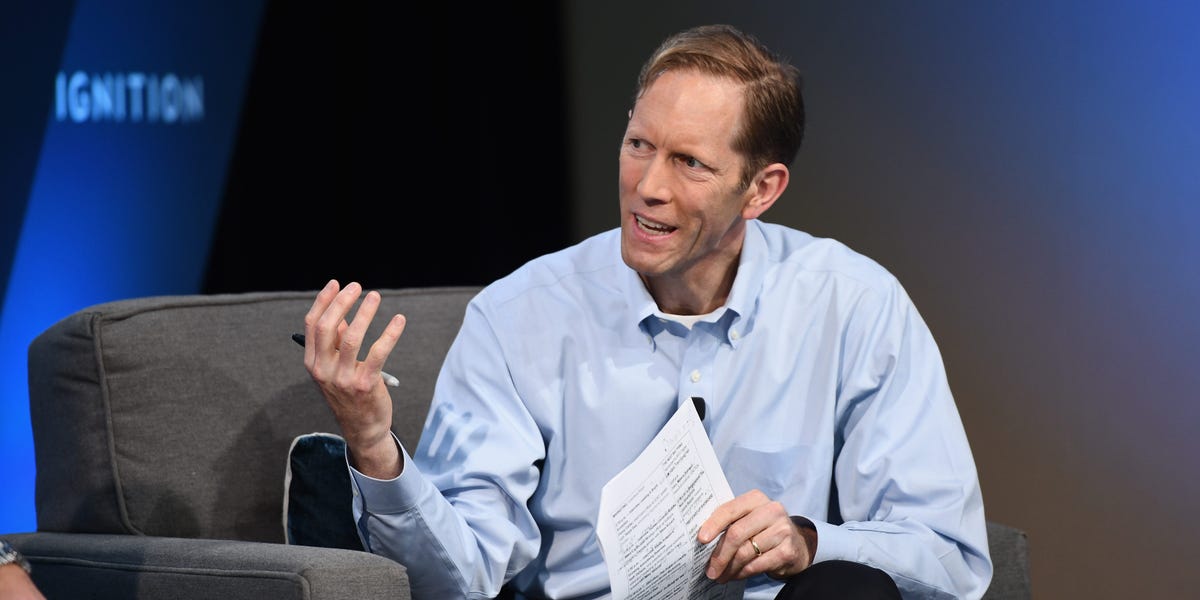
Henry Blodget wrote his new novel by hand. He used Claude, the AI assistant from Anthropic, to edit it. The cover of the book carries a review written by Claude.
Blodget, the former internet analyst who now runs Business Insider, told the publication why he chose that approach. He wanted the book to be his own work. He also saw value in using AI as an editor. The result is a story about Victor Leetum, a tech billionaire who plans to "clone himself with AI so he can live forever and take over the world."
The book is a cultural artifact. It captures a moment in AI development – the promise, the fear, the hype. For investors, it also signals something practical: AI tools are moving into creative workflows. That has implications for the companies building those tools.
Apple (AAPL) is one of them. The company has been expanding its AI capabilities, from on-device processing to cloud-based models. Tools like Claude compete in the same space. The acceptance of AI in editing, writing, and other creative tasks broadens the potential market for these platforms. It also raises questions about copyright, attribution, and value.
Blodget's choice to include Claude's review on the cover is a first. No major publisher has done that before. It suggests that AI-generated content is becoming part of the product, not just the production process. That shift could affect how publishers, authors, and tech companies negotiate rights and royalties.
The book's plot – a billionaire using AI to achieve immortality and world domination – is a familiar sci-fi trope. It resonates because the technology is real. AI clones, digital twins, and autonomous agents are already in development. The line between fiction and product roadmap is thin.
For traders watching Apple, the read-through is indirect but real. The cultural acceptance of AI in creative work supports the thesis that AI will be a major revenue driver for tech companies. Apple's services segment, which includes AI features, is growing. The company's focus on privacy and on-device AI could differentiate it as creative professionals adopt these tools.
The market is not pricing in a sudden shift. Apple's stock has moved on earnings and product cycles, not on cultural signals. The Blodget book is a data point, not a catalyst. It adds to the narrative that AI is embedding itself into everyday work.
The book is scheduled for release later this year. Blodget said he wrote it by hand to prove that human creativity still matters. The AI helped polish it. That balance – human plus machine – is the model many companies are chasing.
For now, the story is about a novel. The mechanism behind it – AI as editor, AI as critic, AI as cover blurb – is the same mechanism that will power future products. Apple's investment in AI positions it to capture some of that value, though the timeline is uncertain.
The book's publication date is not yet set. Blodget's experiment will be watched by publishers and tech executives alike.