Demis Hassabis stepped back as chief executive of Google DeepMind on Wednesday, taking the roles of chair of the unit and chief scientist of parent Alphabet. Koray Kavukcuoglu, a DeepMind veteran, now runs day-to-day operations as senior vice president. Alphabet shares slipped after the announcement.
Hassabis founded DeepMind in 2010, four years before Google acquired the London-based lab. Under his leadership, the unit produced AlphaGo, a computer system that beat the world's best Go player, and AlphaFold, software that predicts protein structure folding. Hassabis told CNBC he spent his whole career on AI because it will eventually become "the ultimate tool for science." AlphaFold is already used for understanding diseases and drug discovery.
The co-founder will hand daily control to Kavukcuoglu and focus on strategic AGI work. He also plans to devote time to Isomorphic Labs, the AI drug-discovery company he co-founded. In a blog post on Wednesday, Hassabis said artificial general intelligence, or AGI, is "close at hand." AGI, in his framing, is AI that can match human capabilities across most cognitive tasks.
Sebastian Mallaby, who wrote "The Infinity Machine" about Hassabis and DeepMind, said the move isn't out of character. "Demis cared about safety enough that he sold DeepMind to Google, not to Facebook, even though Facebook offered more money. He cared enough about safety that he fought a three-year battle with Alphabet to get external oversight over DeepMind's AI deployment," Mallaby wrote on X. "This next chapter of his career is a return to that side of his work."
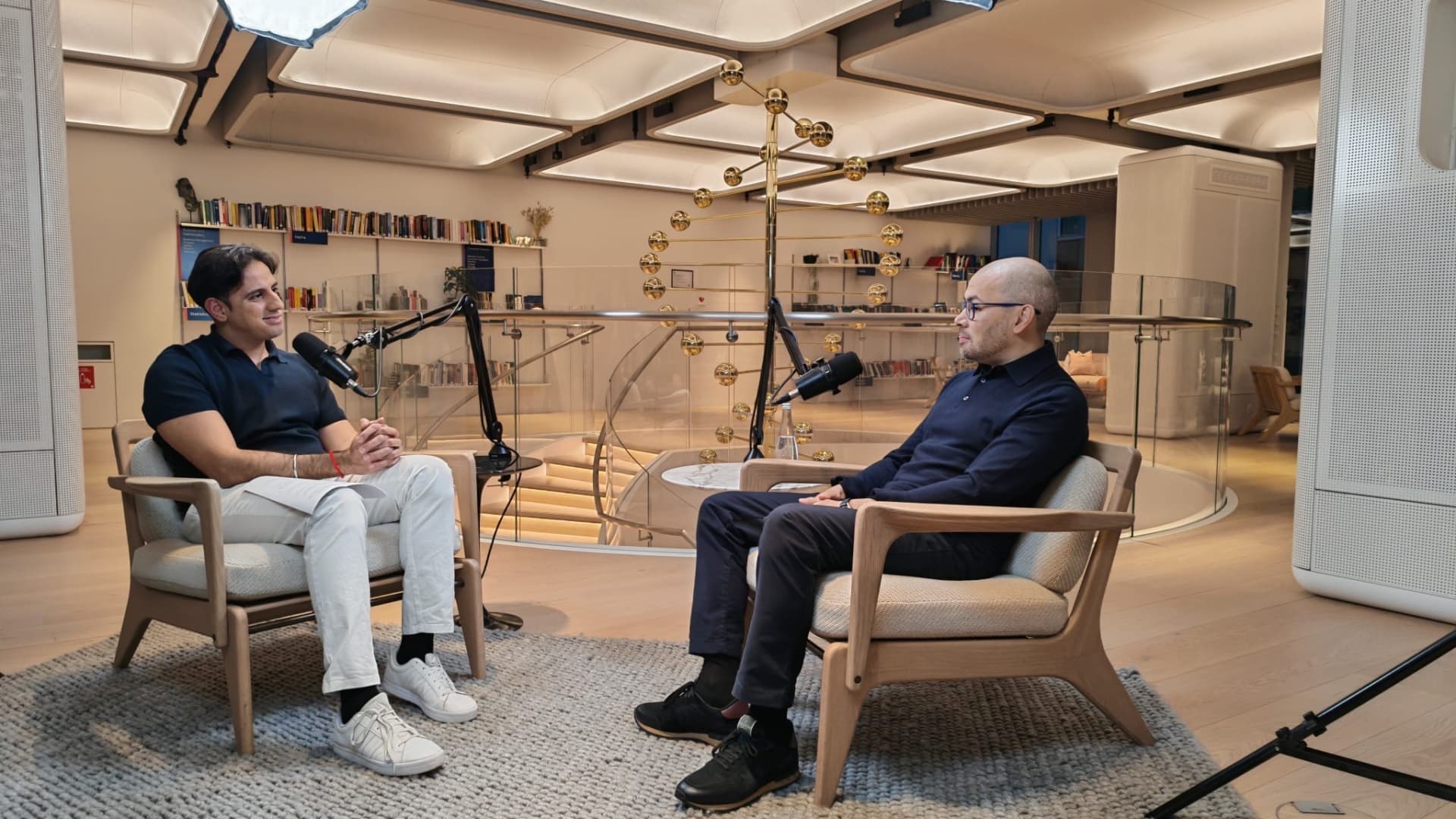
A CNBC column noted the change feels like a natural progression for someone who has long mixed scientific ambition with safety concerns. Hassabis credited Google's computing power for DeepMind's breakthroughs. None of it would have been possible without the "amount of compute that they could bring to play," he said in an interview recorded for CNBC's "The Tech Download" podcast in December. That computing power comes in part from Google's in-house chips.
Alphabet's $205 Billion AI Bet
The leadership change coincides with a step-up in Alphabet's AI investment. The company plans to spend up to $205 billion this year, and investors are scrutinizing Big Tech's capital expenditure. Hassabis called the competitive environment "ferocious" in that same December interview. Google faces OpenAI and Anthropic, plus pressure from Chinese AI labs and hyperscalers.
The move, as described in the CNBC column, exposes the tension at the center of Google's AI strategy. Hassabis wants to use AI to transform science. Alphabet needs to commercialize and scale the technology fast enough to justify the billions it is spending.
Hassabis said the new structure will deepen integration between DeepMind and Alphabet's product teams. He told CNBC he spoke with Google CEO Sundar Pichai nearly every day about "strategic things," which let Google ship product faster than competitors. The CNBC column said the new organizational structure will continue that division of operations, with deeper integration.
In the December interview, Hassabis acknowledged the race dynamic in AI. "There are many companies trying to build this," he said. "There are also many nations trying to build it. And there's a sort of race dynamic, which ideally wouldn't be there." An ideal case, he said, would be a scientific endeavor with each step carefully considered. The real world is not like that, and the company has to be pragmatic about where it is.
Hassabis said DeepMind will try to "be as responsible as possible" as it pushes toward more advanced AI.