The Outbreak and Its Market Mechanism
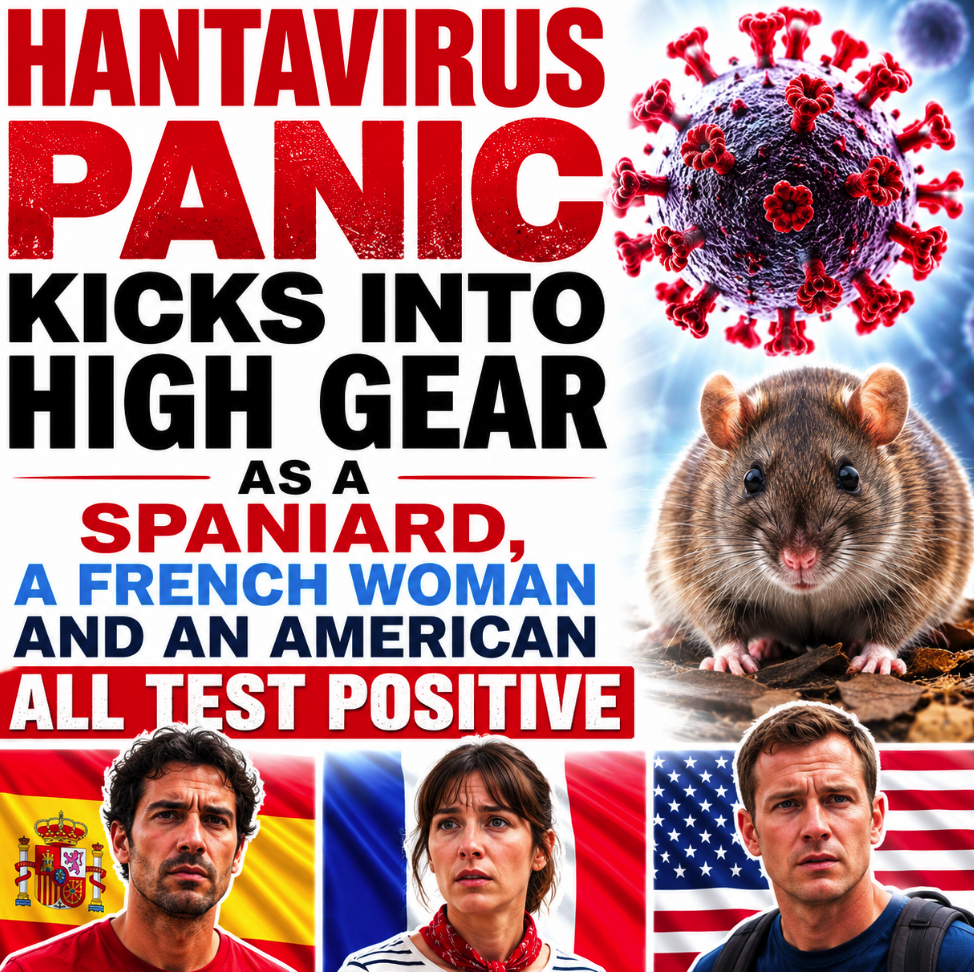
On Monday, health authorities confirmed that a Spanish citizen, a French woman, and an American passenger from the MV Hondius cruise ship tested positive for hantavirus, specifically the Andes strain. The outbreak has already claimed three lives: a Dutch couple and a German woman. The Andes strain is the only hantavirus known to transmit between humans, and the cluster aboard the ship suggests the pathogen may be spreading more efficiently than past cases indicated. For markets, the event introduces a low-probability, high-impact tail risk that consumer discretionary and healthcare real estate sectors are not pricing in.
The naive market take is that a contained cruise ship outbreak with fewer than a dozen cases poses no systemic threat. The better read accounts for the virus's incubation period of up to eight weeks, according to the CDC. Thirty-two passengers disembarked at St. Helena on April 24, before any alert was raised. Those individuals returned to their home countries and normal activities. One, a YouTuber, attended a crowded wedding in Istanbul on May 3. If the virus is transmitting human-to-human more readily than the historical Andes strain, undetected chains of infection could already be spreading. The market's benign reaction–Amazon.com Inc. (AMZN) shares fell 1.35% to $268.99 on Monday, a modest decline–suggests investors are not yet discounting a wider outbreak.
AMZN: Consumer Discretionary at the Epicenter
Amazon sits at the intersection of consumer spending and logistics. A pandemic scare that keeps people at home could, in theory, boost e-commerce. The more immediate risk is a demand shock if fear curtails discretionary purchases. The stock's 1.35% drop on Monday underperformed the broader market, hinting that traders are beginning to price in a consumer pullback. AMZN carries an Alpha Score of 62, a Moderate reading that indicates no strong directional edge. The score reflects balanced technical and fundamental signals, leaving the stock vulnerable to an exogenous shock.
The mechanism is straightforward. Hantavirus carries a case fatality rate of up to 40% for the Andes strain, according to health agencies. If cases multiply and the public grows fearful, spending on non-essential goods could contract sharply. Amazon's first-party sales and third-party marketplace would feel the pinch. The company's cloud computing arm, AWS, is less directly exposed. A broad economic slowdown would eventually weigh on enterprise IT budgets. The stock's valuation, at roughly 60 times trailing earnings, leaves little room for a growth scare. A sustained outbreak would force analysts to cut revenue estimates, and the multiple would compress.
WELL: Senior Housing and Healthcare Real Estate Exposure
Welltower Inc. (WELL) owns and operates senior housing, post-acute care facilities, and outpatient medical properties. A virus with a 40% mortality rate that spreads in the community would be a direct threat to its residents and a financial risk to its operators. Occupancy rates, already sensitive to health crises, could drop if families pull residents out of facilities. Operating costs would rise with infection control measures and staffing shortages. WELL's Alpha Score of 50, a Mixed signal, captures the uncertainty. The stock has not yet reacted dramatically to the hantavirus news. The real estate investment trust is a high-beta play on pandemic risk.
The 32 passengers who left the ship on April 24 include individuals from multiple countries. If any of them develop symptoms and test positive, the perception of containment will shatter. Senior housing facilities in the U.S. and Europe would face immediate scrutiny. Welltower's portfolio is concentrated in the U.S., U.K., and Canada. A single case traced to a facility could trigger a sector-wide sell-off. The market is not pricing this scenario. WELL's dividend yield, around 2.5%, offers little cushion if the share price falls 10% or more on a risk-off move.
Confirmation Signals and Invalidation Triggers
Traders need a clear framework to distinguish between a fleeting scare and a genuine pandemic threat. The confirmation signals are specific. First, any new cases among the 32 passengers who disembarked at St. Helena, or among their contacts, would indicate that the virus has already spread beyond the ship. Second, evidence of efficient human-to-human transmission in a community setting–such as a cluster in Istanbul linked to the wedding–would be a game-changer. Third, a WHO emergency committee meeting or a travel advisory would signal that official concern has escalated. Fourth, a rise in hospitalizations for unexplained respiratory illness in countries that received passengers would be a late but definitive signal.
The invalidation triggers are equally concrete. If two full incubation periods pass–roughly 16 weeks from the April 24 disembarkation–with no new cases, the outbreak will be deemed contained. A negative final test result for the Spanish citizen, who is asymptomatic, and stabilization of the French woman's condition would reduce immediate fear. Statements from the CDC and WHO that the strain is genetically identical to known Andes virus and shows no enhanced transmissibility would also deflate the risk premium.
President Trump on Monday dismissed concerns, saying, "It seems like it's not easy to spread, in fact it's in certain ways very hard to spread. We've lived with it for many years and we think we're in very great shape." HHS Secretary Robert F. Kennedy Jr. added, "We have this under control, and we're not worried about it." These reassurances, if borne out by data, would invalidate the bear case. The market's reaction to official statements will be a real-time gauge of sentiment.
The Next Catalyst: WHO Assessment and Passenger Tracing
The World Health Organization is monitoring the situation. The next concrete catalyst is the WHO's risk assessment, expected within days. If the agency upgrades the threat level or notes unusual transmission patterns, consumer discretionary and healthcare real estate stocks will face a sharp repricing. The French health minister described the infected woman's condition as "deteriorating" and she is in strict isolation. Her outcome will shape the narrative. A fatality would amplify fear, while recovery would ease it.
The 17 Americans repatriated to the U.S. are under observation at the University of Nebraska Medical Center. One tested mildly positive but is asymptomatic. The CDC is assessing two passengers in Atlanta. Any symptomatic case among this group would be a near-term negative catalyst. The market will also watch for reports from Turkey, where the YouTuber's wedding attendance created a potential super-spreader event. Local health authorities have not reported any linked cases yet.
For AMZN and WELL, the setup is binary. A containment scenario would likely see AMZN recover to $275 or higher as the fear discount evaporates. WELL would retrace any initial dip. A spread scenario would push AMZN below $260 and WELL into a sharp decline as investors price in a prolonged disruption. The Alpha Scores, both in neutral territory, underscore the absence of a pre-existing trend. The catalyst will create the trend. Traders should size positions accordingly, with tight risk limits, because the event path is uncertain and the data will arrive in fragments.
The hantavirus outbreak is not yet a pandemic. The market is treating it as a curiosity. The long incubation period and the early disembarkation of passengers make that complacency dangerous. The next two weeks of case data will determine whether this is a footnote or a chapter in the 2025 market narrative.