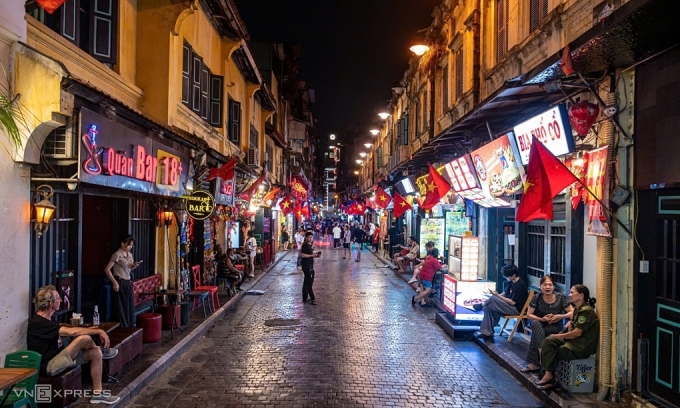
Hanoi Nighttime Blueprint Aims to Unlock Tourism Spend
The Hanoi city government has published a draft resolution on nighttime economy regulations for public feedback. The policy targets a coordinated shift from a handful of weekend exceptions to a structured, zone-based framework that encourages core business activity between 6 p.m. and midnight, with select zones eligible for extension to 2 a.m. and limited venues allowed to operate until 6 a.m.
Authorities are framing the plan as a catch-up move. Existing pilots – including weekend pedestrian streets, night food districts, and late-night bar allowances around Sword Lake – have failed to produce a cohesive ecosystem that can compete with regional destinations. The draft resolution is an attempt to scale those experiments into a formal regulatory category.
The immediate read-through for investors and local operators is about operating license thresholds, real estate values in designated zones, and the concentration of tourism spending. The naive take is that later hours always mean more revenue. The better market read is that profitability depends on district-level infrastructure compliance, security cost absorption, and whether the 2 a.m. versus 6 a.m. tier creates a viable late-night margin structure.
The Zone-Based Licensing Shift
The resolution proposes three operating tiers with escalating infrastructure requirements:
First Tier: Core Period (6 p.m. – midnight)
This applies to tourism-related activities and services in areas that meet base-level requirements for infrastructure, environment, security, and public order. It is the default permission level and covers the broadest geography.
Second Tier: Extended Period (6 p.m. – 2 a.m.)
This covers commercial and cultural districts, walking-only streets, tourism zones, and areas specifically designated for nighttime economy development. The qualifying condition is a higher standard of traffic planning, parking, public transport connectivity, waste handling, and emergency services.
Third Tier: Full Overnight (6 p.m. – 6 a.m.)
Limited to selected areas, streets, and standalone venues that meet the highest thresholds for infrastructure, security, public order, and urban management. This tier is the most restrictive in geography and the most capital-intensive for operators to qualify for.
Key insight: The tier system creates a regulatory moat around prime locations. Venues in the Sword Lake, Old Quarter, and Imperial Citadel zones are natural candidates for extended hours. Operators outside those boundaries face a higher hurdle in demonstrating compliance with parking, lighting, waste, and medical-service standards.
Six Designated Economic Models
The draft identifies six distinct nighttime economy models, each with a different risk profile for investors, tenants, and franchise operators:
The Red River corridor is explicitly positioned as the future anchor development. It has the highest upside in property values but requires the most upfront capital for grading, transport, and utility connections. Investors with land holdings along that corridor should watch for zoning resolution milestones.
What Changed in the Regulatory Framework
Hanoi previously allowed three-star and above hotels citywide plus selected restaurants and bars around Sword Lake to remain open until 2 a.m. on weekends. The 2020 pilot program that proposed removing operating-hour limits for certain services was drafted but never implemented.
What this draft changes:
- It replaces ad-hoc weekend allowances with permanent, zone-based operating permissions.
- It formalizes the 6 a.m. close tier, which did not exist in prior regulations.
- It introduces explicit compliance requirements – traffic, parking, public transport, lighting, restrooms, waste collection, security, medical, rescue, and firefighting – as licensing conditions rather than advisory guidelines.
- It broadens geographic coverage from the Sword Lake core to six distinct model zones including peripheral districts and rural craft villages.
Risk to watch: The 2020 pilot was never implemented. The current draft is open for public feedback, and local opposition based on noise, congestion, or community-wellbeing concerns could delay or dilute the resolution. Authorities have explicitly stated that nighttime economy projects must not affect community well-being and should prioritize local employment and protect quality of life. That language gives local residents a standing objection mechanism.
The Tourism Spending Thesis
The draft resolution's stated goal is to increase tourist spending and encourage longer stays, particularly by foreign visitors. The mechanism is straightforward: longer operating hours mean more consumption windows per visitor per day.
Consider the baseline. A tourist in the Old Quarter currently faces a hard stop at 2 a.m. on weekends and earlier on weekdays. The extended 2 a.m. tier and the full 6 a.m. tier each add revenue hours for F&B, entertainment, retail, and transport operators. The effect scales with visitor density – the Old Quarter and Sword Lake zones benefit most because they already concentrate foot traffic.
Practical rule: Zone density determines margin leverage. A nightclub or restaurant in the Old Quarter that shifts from a 2 a.m. weekend curfew to a 6 a.m. permanent license gains roughly 28 additional operating hours per week. Fixed costs (rent, security, basic staffing) stay nearly constant, so the incremental revenue falls mostly to gross margin. The same license in a low-foot-traffic suburban zone may not generate enough incremental visits to cover the added security and waste-management costs that the higher tier requires.
Sector Read-Throughs
Hospitality and F&B
Hotels with late-night F&B operations are the clearest beneficiaries. Properties in or near the Sword Lake, Old Quarter, and West Lake zones can extend bar and restaurant revenue without changing physical footprints. The previous 2 a.m. weekend cap was the binding constraint for in-house bars and room service.
Standalone restaurants and bars face a more complex calculus. The 6 a.m. tier requires meeting higher standards for security, medical, and waste services. Smaller operators may lack the capital to retrofit. Larger chains and franchises with existing compliance infrastructure have a competitive advantage.
Travel and Tour Operators
Night tours and immersive heritage experiences are explicitly encouraged in the historic districts. Operators that hold heritage-tourism licenses near the Imperial Citadel, Temple of Literature, and Four Sacred Temples can add evening slots. The constraint is lighting and audio restrictions in heritage-conservation zones.
Real Estate and Development
Land values in designated nighttime economy zones are likely to re-rate, especially along the Red River corridor and around West Lake. The draft positions these areas for integrated commercial-retail-entertainment complexes. Developers with land banks in these zones should track the resolution's passage date and the subsequent zoning application window.
Transportation and Logistics
Ride-hailing, taxi, and bus operators benefit from the mandatory transport-connectivity requirement. Zones must demonstrate public transport links or traffic and parking plans. The 6 a.m. tier creates demand for late-night transit services that currently do not exist at scale.
Waste management and security services become mandatory cost lines for operators in extended-hour zones. Companies providing these services to hospitality venues should see demand growth proportionate to the number of venues that upgrade their tier.
Confirmation Timeline and Risk Factors
The draft resolution is in public feedback phase. Confirmation requires city council approval and publication. The 2020 precedent – a drafted but unimplemented pilot – means investors should treat the current draft as a credible signal rather than a near-term catalyst.
Factors that confirm the policy is moving forward:
- City council schedules a formal vote with a date.
- Public feedback deadline passes without large-scale community opposition.
- Pilot zones are announced before the resolution's effective date.
- Infrastructure spending on lighting, waste, and transport in designated zones appears in the city budget.
Factors that weaken the thesis:
- Community opposition in the Old Quarter or Sword Lake districts shifts the city toward stricter curfews.
- The resolution is approved but the 6 a.m. tier is removed or made conditional on a second approval round.
- Operating costs for security and waste compliance push smaller operators out, reducing zone density and foot traffic.
Foreign tourists currently staying an average of 3-4 days in Hanoi have limited late-night options outside weekend zones. The draft resolution, if implemented, would add roughly 28-36 additional operating hours per week in prime zones. That is the mechanism that changes tourist spending patterns. The resolution's passage, not its drafting, is the catalyst that matters for watchlist decisions on hospitality, real estate, and F&B equities exposed to Vietnam's tourism recovery.