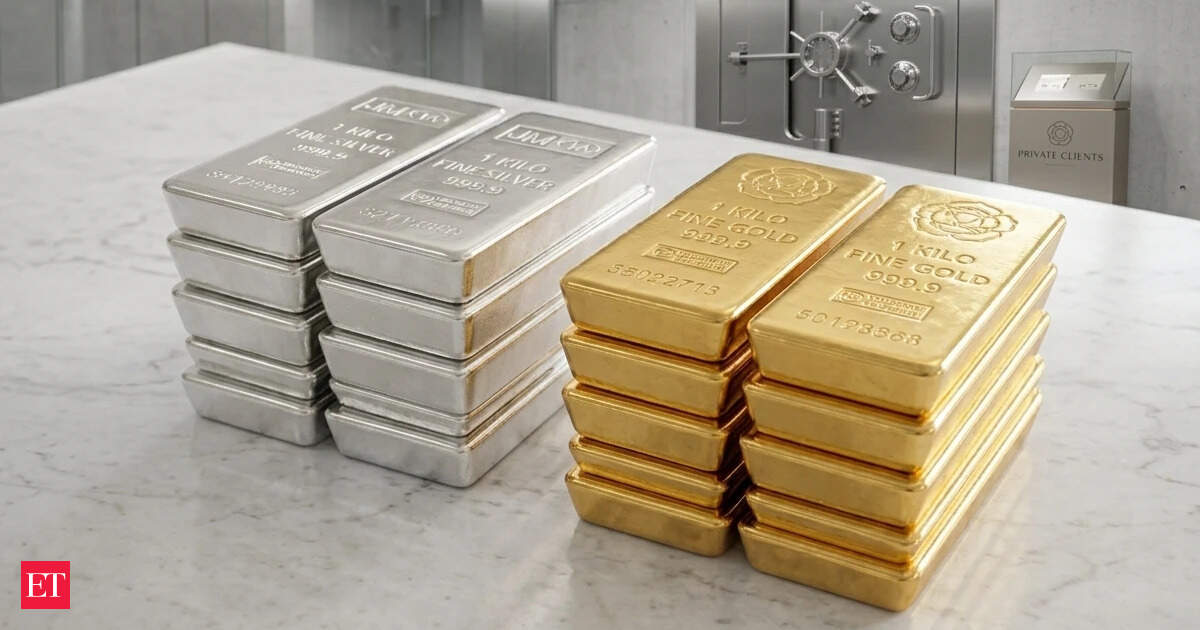
Gold and silver prices fell on Friday, extending weekly losses as the market repriced U.S. interest rate expectations. The decline reflects a shift in the dominant narrative: Federal Reserve rate-cut hopes have faded, and the geopolitical risk premium from the Middle East conflict has not been sufficient to hold prices. With the market now focused on the upcoming U.S. jobs data, the immediate question is whether this selloff accelerates or reverses.
The Rate–Geopolitical Trade-Off Breaks Gold's Support
The simple read is straightforward: higher rate expectations push the dollar and real yields higher, increasing the opportunity cost of holding non-yielding assets like gold. That mechanism is textbook. The better market read involves the fading geopolitical premium. Since the Middle East escalation did not disrupt oil supply or trigger a broader safe-asset flight, the marginal buyer of gold as a crisis hedge stepped back. That left the metal exposed to macro repricing ahead of nonfarm payrolls.
The mechanism is in the positioning. Hedge funds and speculators had built long exposure on a dual narrative: Federal Reserve rate cuts later this year, plus geopolitical risk. When Fed speakers pushed back on the rate-cut timeline and real yields rose, the first narrative cracked. The second narrative offered no support because a sustained geopolitical premium requires fresh escalation, not ongoing tension. Without a new catalyst, gold was left to follow the rate path.
The Jobs Report Resets the Probabilities
The U.S. jobs data due next week is the single most consequential near-term risk event for precious metals. A strong print would reinforce the Fed's higher-for-longer stance and lift real yields further, likely driving gold and silver lower. A weak print would re-ignite rate-cut speculation and bring back demand for gold as a macro hedge.
The better read is not about the direction of the number alone. It is about gold's reaction function. If the data is weak and gold rallies only modestly, that would suggest the market is still pricing in some residual rate-hike risk or that geopolitical demand is no longer scaling. If gold falls even on weak data, that would be a clear structural shift in sentiment. Either outcome tells traders more than the headline job gain.
Affected Assets: Gold, Silver, and the Transmission Belt
The direct exposure is to gold (e.g., GLD), silver (SLV), and miners such as the GDX ETF. Silver tends to amplify gold's moves because of its higher beta and sensitivity to industrial demand expectations. A stronger dollar would also weigh on commodity currencies like the Australian dollar and South African rand, while a weaker dollar would lift them.
Second-order effects run through the Dollar Index and the 2-year Treasury yield. Real yields are the transmission belt. If the 2-year yield pushes above 5% on a strong NFP print, gold could test the $1,900 area. A break below that level would open a path to $1,850, where the metal last traded in October. For traders looking to express a view on gold and silver over the coming weeks, the choice is between direct exposure via ETFs or futures, or using the best commodities brokers to access specialised products. The gold profile page tracks the metal's macro drivers in real time.
What Would Confirm the Selloff – or Reverse It
Three factors would make this selloff worse:
- A strong nonfarm payrolls print that locks in a hawkish Fed stance.
- A ceasefire or de-escalation in the Middle East that vaporizes the remaining risk premium entirely.
- A sustained move in the dollar above recent highs.
Three factors would support a rebound:
- A weak jobs print that revives rate-cut bets.
- A fresh escalation in the Middle East, such as direct involvement by a major regional power.
- A sharp drop in oil that lowers inflation expectations and gives the Fed room to ease.
The next concrete marker is the nonfarm payrolls release. Before that, traders should watch how gold trades during the pre-data unwind of positioning. A quiet drift lower suggests the market has already priced a strong number. A sharp drop signals active liquidation. Either way, the rate-mechanism – not the headline – is what matters for the next leg. The recent Gold Drops 0.5% as Rate-Hike Fears Override Geopolitical Risk article captured a similar dynamic, and the same forces are now driving the weekly decline.