General Motors spent $898 million on Canadian research and development in 2024, quadruple the amount it invested a decade earlier. The ramp reflects a broader push by the automaker to compete with Tesla and other software-focused rivals by developing features that can be updated remotely and scaled globally.
“Canadian engineering talent is absolutely world-class,” Jack Uppal, GM Canada president and managing director, told Betakit. He pointed to the country’s technical depth and ability to move ideas from lab to production. More than 1,100 engineers work across GM Canada’s three Ontario campuses: the Canadian Technical Centres in Markham and Oshawa, and the McLaughlin Advanced Technology Track for real-vehicle testing.
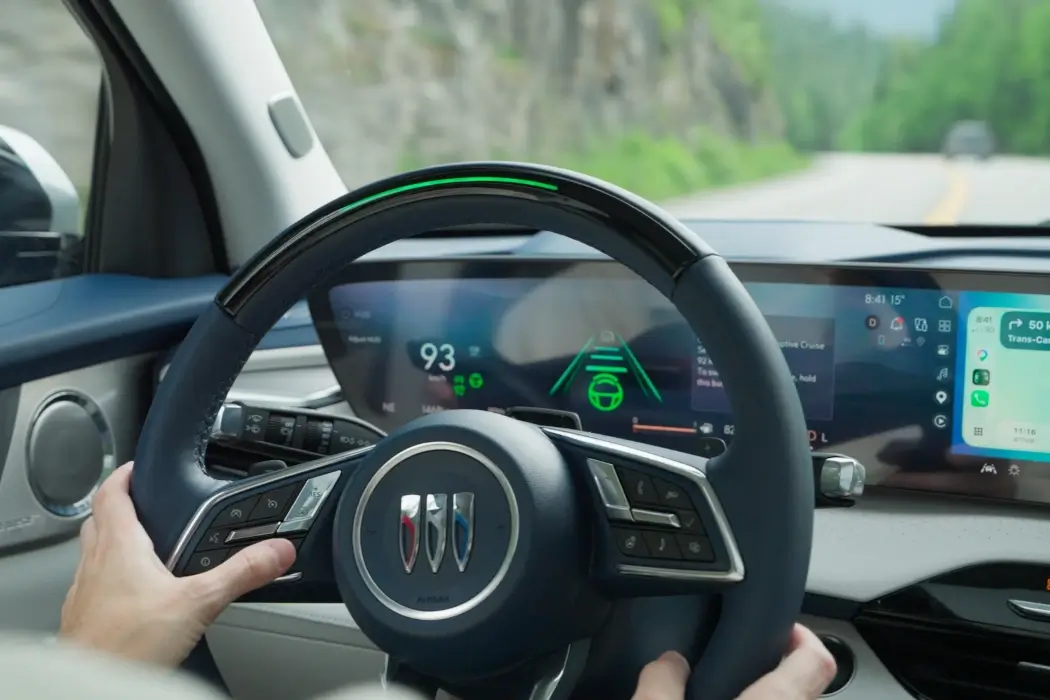
A flagship result of that work is Super Cruise, the hands-free driving system pioneered in Markham. The technology, which uses cameras, radar, GPS, and LiDAR-scanned maps, has logged more than 1.6 billion kilometres across Canada and the U.S. GM is now adapting the same mapping approach for Europe, the Middle East, and South Korea, tailoring it to each market’s regulatory and customer needs, Uppal said.
Canadian engineers also developed a hands-free towing capability after identifying demand from drivers pulling boats and trailers. The feature went from concept to code to deployment across millions of vehicles in North America. While Uppal described trailering as “perhaps more of a North American-relevant question,” he said the solution has been “very well received in many other parts of the world.”
Over-the-air updates now reach 4.5 million GM vehicles, a number growing by roughly two million each year. That allows the company to add or improve features after a vehicle is on the road, reducing service-centre visits and opening the door to recurring software revenue. Uppal said GM is moving beyond real-time computing toward predictive modeling using AI, including Gemini, to anticipate driving conditions and improve performance in snow, stop faster, and manage complex traffic. GM plans to introduce new technology in the next Chevrolet Silverado and GMC Sierra.
The strategy covers both electric and internal-combustion vehicles. “We’ll be able to meet the customer and meet their needs where they are, and deliver what they need,” Uppal said. Canada, he added, remains a “big anchor” in GM’s North American software operations.
For competitors, the R&D ramp signals that GM is investing to close the gap in software-defined vehicles. The $898 million figure, four times the 2014 level, represents a deliberate bet on Canadian talent and a shift in how the company generates revenue, with features like Super Cruise and hands-free towing serving as potential subscription drivers. The expansion of Super Cruise mapping to Europe, the Middle East, and South Korea also opens new markets where local competitors like Volkswagen and Hyundai are building their own driver-assistance systems.
What could weaken the strategy is slow adoption of over-the-air updates or regulatory hurdles in new regions. The towing feature, while popular in North America, may face different trailer regulations abroad. GM also needs to retain the engineering talent it has invested in, especially as other automakers and tech companies compete for the same skills.
“Moving billions of people around the world is what we’ve done for the last 100 years,” Uppal said. “It makes me very confident that we’re going to be a company that’s going to move people for another 100 years.”