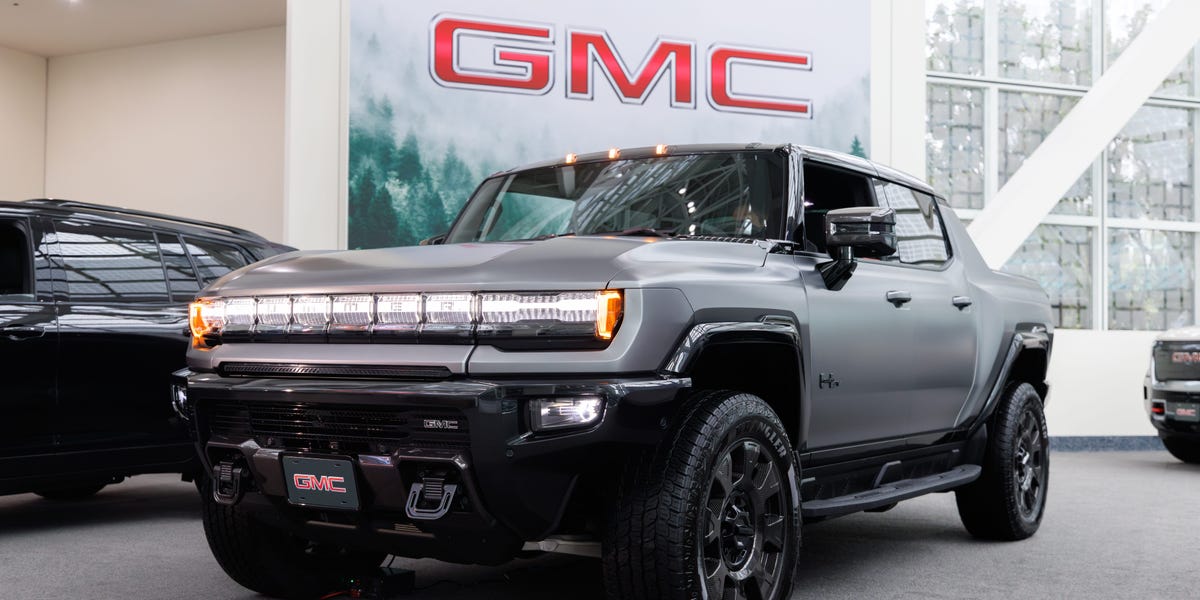
General Motors developed its Hummer EV in 20 months. Chief product designer Sterling Anderson told Business Insider that the automaker now sees a two-year development cycle as the new standard. That pace cuts the conventional 4–5 year timeline by more than half. If GM scales this speed across its portfolio, the implications extend beyond one model: the entire automotive supply chain and competitive landscape will need to adapt.
GM's Virtual Prototyping Cuts Time and Capital
The speed gain came from shifting more design work into virtual prototyping and simulation. GM caught design flaws – the "uh-oh" moments Anderson described – earlier in the process, slashing the number of physical prototypes needed. Fewer prototypes meant fewer iterative test cycles, collapsing years of pre-production work into months. The practical result is lower capital intensity per new model. Less money tied up in development before a vehicle reaches the lot allows GM to pivot faster to shifting consumer tastes or regulatory changes. The market has not yet fully priced this shift: GM's Alpha Score 54/100 (Mixed, sector Consumer Discretionary) suggests the opportunity remains underappreciated. See the GM stock page for the full profile.
Supply Chain Read-Through: Faster Cycles, Higher Stakes
Parts suppliers currently build tooling and components to a fixed schedule tied to a 4–5 year product timeline. A GM shift to a two-year cycle would force suppliers to compress their own lead times. They would need to invest in flexible manufacturing systems and absorb more design changes per generation. That compression cuts both ways:
- Suppliers that adapt can lock in higher per-vehicle revenue and longer program lives if GM runs more frequent refreshes.
- Those that cannot keep pace risk losing contracts to nimbler competitors.
The net effect is a redistribution of capital expenditure within the supply chain – more spent on automation and simulation, less on tooling for long-static designs. The read-through is clearest for tier-one suppliers with high exposure to GM's EV programs, though the source does not name specific peers.
Execution Risk Rises With the Tempo
A faster development clock makes execution risk more acute. With fewer physical prototypes, a mistake that slips through simulation becomes more expensive to fix post-launch. GM must show it can replicate the Hummer EV's pace across a broad lineup – not just a flagship halo vehicle – before investors fully trust the new model. The competitive advantage is material if GM succeeds: companies still working on 4–5 year timelines will face a choice – accelerate their own programs or accept a permanent lag in product freshness, especially in high-turnover segments such as EVs and software-defined vehicles.
The next test is GM's capital expenditure guidance and supplier contract terms in upcoming earnings. Watch for signals that the two-year target is embedded in financial planning, not just product design. If GM commits budget to scaling the simulation infrastructure across all divisions, the sector read-through becomes a real competitive shift. Until then, the 20-month Hummer EV stands as a proof of concept that rivals cannot ignore.