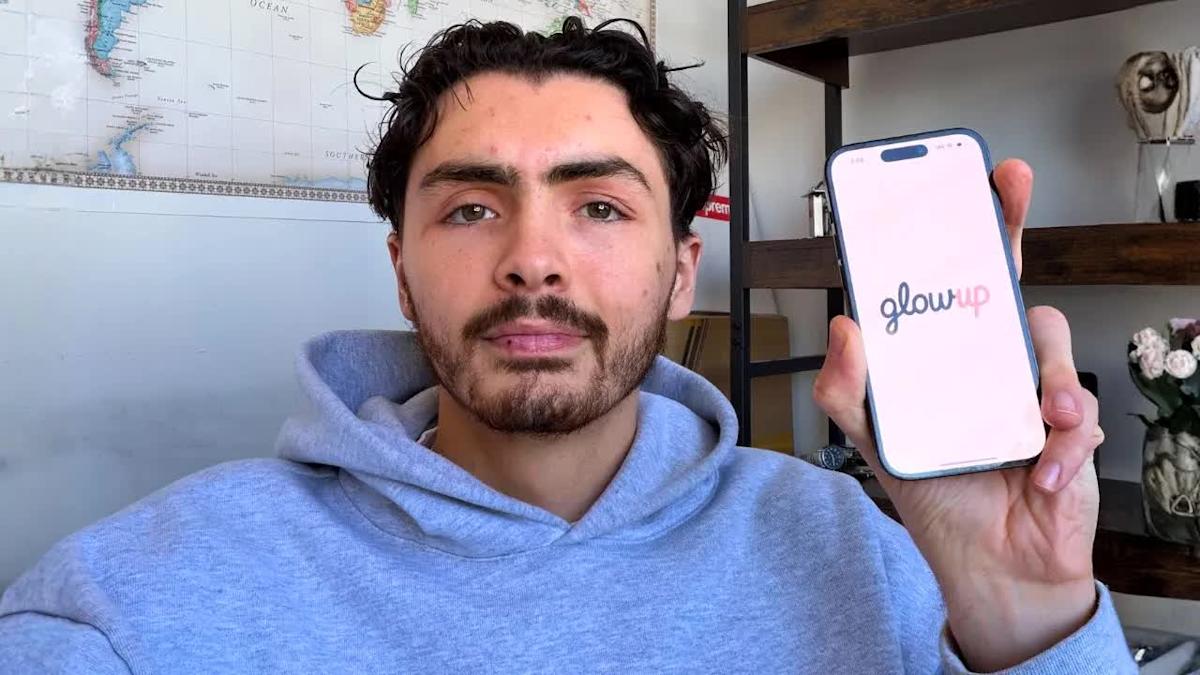
Louis built a mobile app called GlowUp that generated $800,000 in revenue within 365 days. The detail that changes the narrative for anyone tracking app economics: he spent exactly $0 on paid acquisition. The entire customer base came from organic TikTok posts.
This case study arrives at a time when consumer app companies face rising customer acquisition costs on Meta and Google platforms. A founder proving that zero-cost distribution can reach $800K in top-line revenue forces investors and analysts to reassess the formula for capital-efficient app startups.
GlowUp's Revenue and Cost Structure
GlowUp is a mobile app that relies on in-app purchases or subscriptions. The $800,000 figure is the headline, the cost side provides the real signal. Without any paid ad budget, the primary expenses become server infrastructure, developer time, and the App Store's 15-30% commission.
A business producing $800K revenue with near-zero customer acquisition cost (CAC) has a fundamentally different margin profile than a competitor spending 30-50% of revenue on ads. The risk shifts from unit economics to retention and churn. If GlowUp depends on a single viral TikTok for most downloads, revenue could drop sharply if the next video does not perform.
TikTok as a Distribution Channel: Replicable or One-Off?
Louis posted on TikTok for free and built an audience that converted into installs. The mechanism is short-form video content that demonstrates the app's value, hooks viewers in the first three seconds, and includes a clear call to action. This approach bypasses Apple Search Ads and App Store paid search entirely.
The better market read is that this strategy works only when the founder – or a hired creator – can consistently produce content the algorithm amplifies. TikTok's recommendation engine rewards retention and engagement, not production budget. That makes the model theoretically replicable but hard to scale. Most app companies cannot hire a founder who also functions as a viral content creator.
What App Economy Analysts Should Watch
For investors tracking consumer app startups, the GlowUp case study offers a benchmark for capital efficiency. A company reaching $800K with zero ad spend has a path to profitability that most venture-backed apps lack. The concentration risk is real: one distribution channel and one content creator.
If the app sustains revenue through repeat purchases or subscriptions without requiring new viral videos each month, the unit economics become attractive. If revenue drops when TikTok views decline, the business model is fragile. For context on how distribution shifts affect app valuations, see our broader stock market analysis.
The next data point to watch is month-over-month revenue after the initial viral wave fades. Louis may attempt to replicate the playbook for a second app or scale GlowUp past $1 million. The answer will tell investors whether zero-cost TikTok distribution is a repeatable skill or a founder-specific outlier.