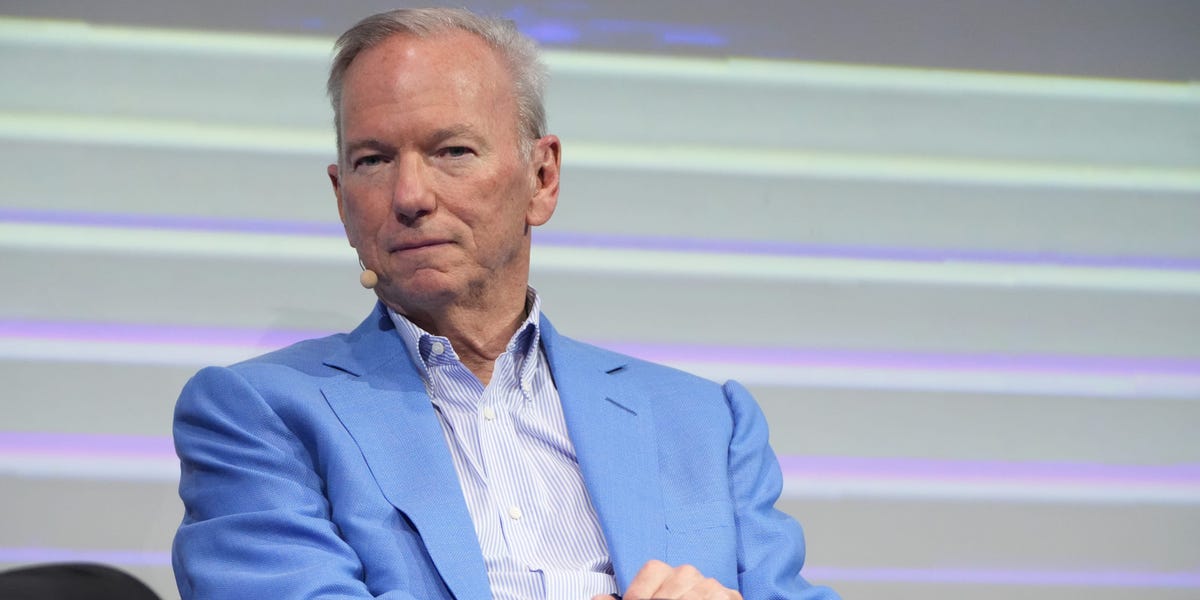
Former Google CEO Eric Schmidt was met with jeers and boos during his commencement address at the University of Arizona graduation ceremony on Friday. The crowd’s reaction came as Schmidt spoke about artificial intelligence, a topic he has championed for years. For investors tracking the AI trade, the moment is more than a viral clip. It is a public signal that the narrative around AI is shifting from pure enthusiasm to something more complicated.
The simple read is that a few hundred students disliked a tech billionaire’s speech. The better market read is that public sentiment toward AI leaders is becoming a tangible risk factor. When a former CEO of one of the world’s most powerful AI companies cannot deliver a graduation address without being shouted down, it suggests that the broader population is growing skeptical of AI’s promises and its architects. That skepticism can translate into regulatory pressure, slower consumer adoption, and higher execution risk for companies betting on AI-driven growth.
Why the Booing Matters for Alphabet (GOOGL)
Alphabet owns Google, the company Schmidt led from 2001 to 2011. Google is now at the center of multiple antitrust investigations and AI policy debates. The booing at Arizona is not a direct threat to earnings. It is a cultural temperature check. If the public mood turns against AI leaders, politicians face less resistance when proposing stricter AI regulations. Alphabet already faces a U.S. Department of Justice antitrust case over its search monopoly and a separate probe into its AI partnerships. A hostile public mood makes it easier for regulators to act.
Investors should also watch how this sentiment affects talent acquisition. Google competes with startups and rivals like NVIDIA for AI engineers. If working for a big tech AI leader becomes socially less attractive, the talent pipeline could narrow. That would slow product development and increase costs.
The AI Sentiment Shift and Market Positioning
The booing event is one data point in a larger pattern. Surveys show growing public concern about AI job displacement, privacy, and bias. The European Union’s AI Act is already law. The U.S. has no federal AI legislation yet. State-level bills are multiplying. A shift in public sentiment accelerates that legislative timeline.
For traders, the immediate question is whether this sentiment shift is priced into AI-exposed equities. The Invesco QQQ Trust and the Global X Robotics & AI ETF have rallied hard in 2024 on AI hype. Any catalyst that threatens that narrative could trigger rotation out of high-multiple AI names into defensive sectors. The booing itself is minor. It joins a series of events – from Hollywood strikes over AI to teacher protests against AI grading tools – that collectively form a headwind.
Next Catalyst for AI Investors
The next concrete catalyst is Alphabet’s second-quarter earnings, expected in late July. Investors will look for commentary on AI regulation, advertising revenue trends, and cloud growth. If management acknowledges rising public skepticism or regulatory risk, the stock could face pressure. If they dismiss it, the market may view the booing as noise.
A second decision point is the U.S. presidential election. Both candidates have taken positions on AI regulation. A shift in polling or policy proposals could amplify or mute the sentiment risk. For now, the booing at Arizona is a reminder that the AI trade is not just about technology. It is about public trust. Trust can change faster than a model can retrain.
For a broader view of how sentiment shifts affect markets, see our stock market analysis. For a look at the AI hardware side, check the NVIDIA profile.