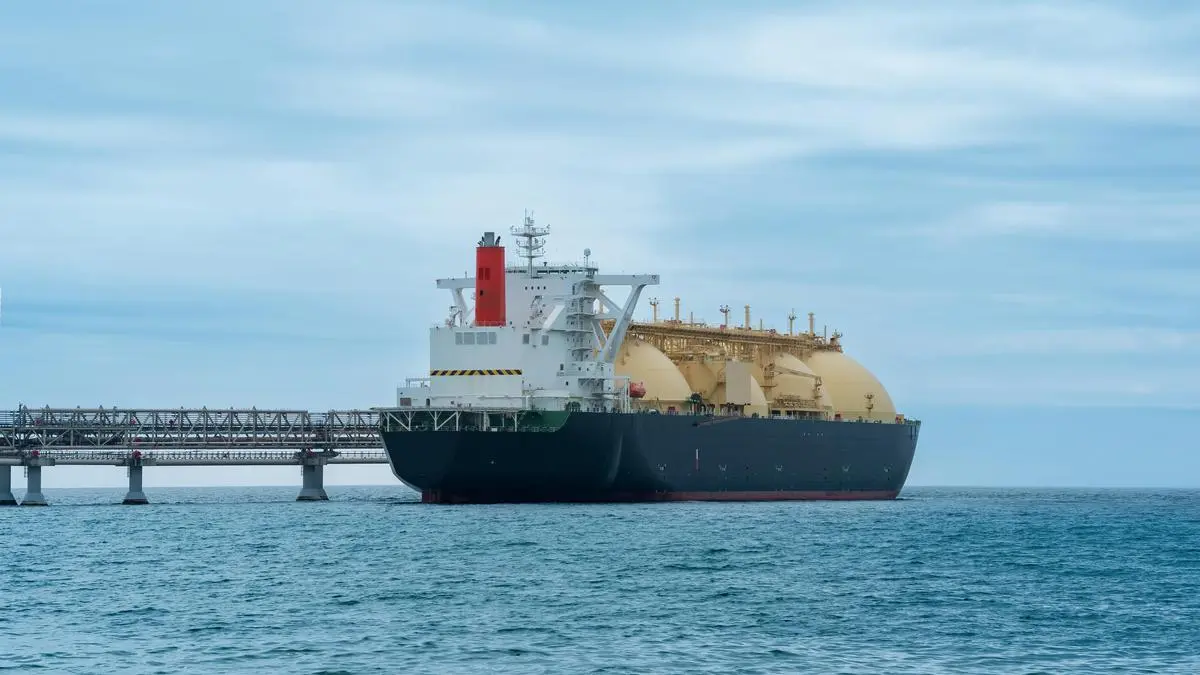
Global liquefied natural gas trade hit a record last year. The International Gas Union said Wednesday that shipments rose 6.3% to 436.98 million metric tons, the fastest pace since 2022.
Europe drove the increase. Imports jumped 26.1 million tons to 126.2 million tons as the region rebuilt storage and replaced lower Russian pipeline flows.
Asia Pacific remained the biggest importing region at 168.7 million tons. Total imports there fell 9.2 million tons from the previous year. China, the world's largest LNG buyer at 69.77 million tons, cut imports by 8.9 million tons. Stronger domestic gas production and more pipeline supply from Russia accounted for much of the drop. Japan imported 67.37 million tons. South Korea added 1.7 million tons to reach 48.67 million tons.
The U.S. stayed the top exporter, shipping 110.74 million tons. Cheniere Energy led American shipments. Qatar exported 81.51 million tons. Australia sent 80.32 million tons.
The IGU pointed to the Middle East as the dominant risk for 2026. Conflict in the Gulf has damaged LNG infrastructure, the group's president Andrea Stegher said. It has clouded the outlook for regional expansion projects. Asian buyers now face flow uncertainty and higher prices.
"The conflict in the Gulf has damaged LNG infrastructure, clouded the outlook for the region's expansion projects, and exposed Asian buyers to flow uncertainty and higher prices," Stegher said.
That warning carries weight for emerging Asian economies. The IGU said prolonged periods of elevated LNG prices could weigh on demand growth in South and Southeast Asia. Chinese LNG re-exports rose 45.8% to 0.67 million tons, a sign that some contract holders are selling cargoes into the spot market rather than using them domestically.
The IGU has more than 130 members representing over 90% of the global gas market. Its next update will track whether the Gulf disruptions translate into supply cuts.