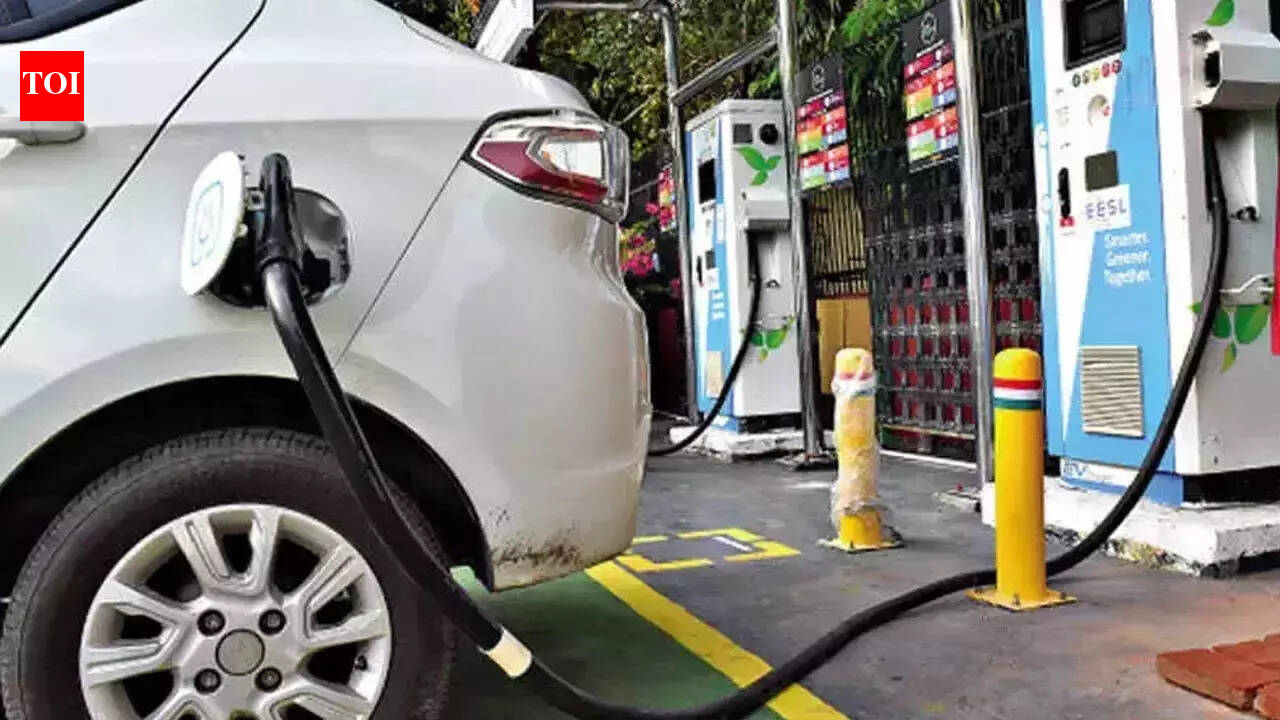
Indian car buyers bought fewer petrol and diesel cars in June, pushing the share of CNG, hybrid and electric vehicles to a record 40% of new sales, according to industry data. CNG vehicles alone accounted for roughly half of that share, reflecting the rapid expansion of the country’s natural gas refueling network. Hybrids and full battery-electric models split the rest. Petrol and diesel cars, which still dominate the overall fleet, now account for a shrinking piece of monthly registrations.
The shift carries direct consequences for India’s oil demand. The country imports about 85% of its crude oil needs. Gasoline and diesel make up more than half of its petroleum consumption. Every percentage point of market share lost to CNG or electricity reduces demand growth for refined products. The June data suggests substitution is accelerating faster than most forecasters modeled at the start of the year.
Refiners face the most immediate pressure. Indian processors have been adding gasoline and diesel capacity on the assumption that vehicle growth would keep pulling new barrels. A sustained move away from petrol and diesel could erode domestic demand margins, forcing companies to export more into an increasingly competitive Asian market. Reliance Industries and Indian Oil Corp, the country’s largest refiners, have not yet commented on the June numbers. The trend is visible in their mid-year operating data, which showed lower diesel sales volumes.
For crude oil traders, the Indian shift matters because it changes the demand-side calculus for the second half of the decade. The International Energy Agency has long projected India as the main engine of global oil demand growth through 2030. If CNG and electric vehicles continue to gain share at the current rate, the IEA’s baseline may prove too high. Several analysts have already trimmed their India demand forecasts for 2027 onward, citing exactly the adoption curve visible in the June sales figures.
The commodity angle extends beyond oil. CNG vehicles consume natural gas, which India also imports – about half of its gas needs come from overseas in the form of LNG. A sustained shift from diesel trucks to CNG trucks would lift gas demand directly, tightening the global LNG market. India has been a swing buyer of spot LNG cargoes. A structural increase in domestic gas consumption would reduce that flexibility.
One risk that receives less attention is infrastructure. CNG vehicles need refueling stations. EV adoption depends on charging points. India’s network of both is still thin relative to the vehicle count. The June sales surge suggests demand is outpacing infrastructure buildout, which could create bottlenecks later this year. A mismatch between vehicle registrations and available refueling capacity would slow the adoption rate, giving petrol and diesel demand a temporary reprieve.
Car makers are adjusting their product plans. Maruti Suzuki, the country’s largest automaker, now offers CNG variants on most of its popular models and plans to launch two new hybrids by year-end. Tata Motors continues to expand its EV lineup. Both companies cited the sales data in recent investor presentations as evidence that the market is shifting faster than they anticipated two years ago.
The June data does not show whether the trend is seasonal. Consumers often prefer cheaper fuel options during the monsoon months when driving distances shorten. The test will come in October and November, the peak festival season when Indian car sales typically spike. If the 40% share holds through that period, the shift is structural. If it retreats, the petrol-diesel base remains intact for another year.
The record is a signal that India’s demand profile is changing in ways that affect everything from refinery margins to LNG trade flows. Traders watching the Indian crude bid will need to account for a growing slice of the market that simply does not burn oil-based fuel.