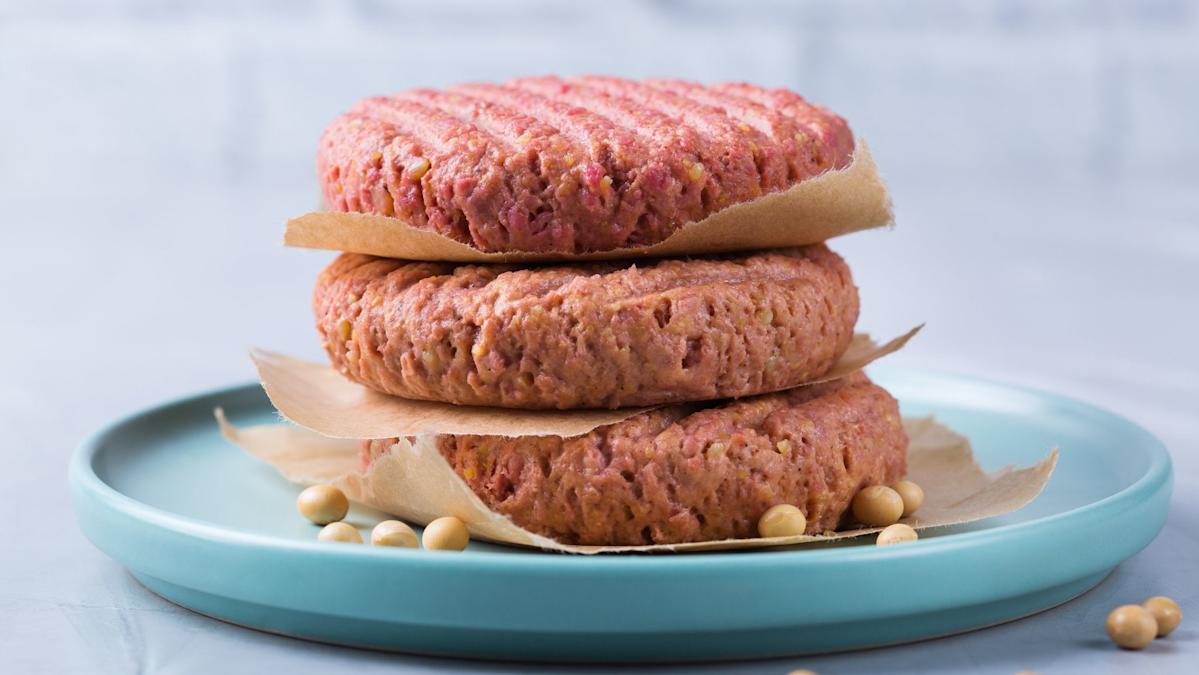
Germany's production of vegetarian and vegan meat alternatives slipped in 2025, breaking a multi-year expansion streak. The Federal Statistical Office (Destatis) reported 124,900 tonnes of meat substitute products, down 1.2% from 126,500 tonnes in 2024. Output value fell 2.2% to €632.6m. The decline comes after production more than doubled since 2019, when it stood at 60,400 tonnes.
The naive read is that plant-based demand is fading. The better market read is more nuanced. Production data measures what factories shipped, not what consumers bought. GFI Europe's June 2025 report shows retail sales of plant-based meat in Germany reached €759m in 2024, up 3.9% versus 2023 and 7.8% versus 2022. Volume share of plant-based meat in pre-packaged meat products edged up to 3.1% in 2024 from 3.0% in 2022. The divergence between falling production and rising sales suggests inventory destocking, not demand destruction.
Production Dip vs. Sales Growth: The Divergence
Destatis Production Data
Destatis data show the first annual decline in meat-alternative production since at least 2019. Volume dropped 1.2%, value dropped 2.2%. The category had grown steadily from 60,400 tonnes in 2019 to a peak of 126,500 tonnes in 2024. The 2025 dip is small in percentage terms, yet it stands out after years of uninterrupted expansion.
GFI Europe Sales Data
GFI Europe's report, published in June 2025, covers retail sales through 2024. Sales value increased 3.9% year-on-year to €759m. Volume share of plant-based meat across all pre-packaged meat products rose from 3.0% to 3.1%. Sausage and salami products led with 34.7% of sales volume, followed by meatballs (13.8%) and schnitzel/medallions (13.6%). The steak/fillet category grew its share from 2.5% in 2022 to 4.2% in 2024, indicating premiumisation within the category.
The timing mismatch matters. Production data for 2025 shows a decline. The most recent sales data (2024) shows growth. If 2025 retail sales data eventually confirm a slowdown, the production dip will prove prescient. If sales continue rising, the production decline will look like a temporary inventory correction.
The 70x Gap: Meat Still Dominates While the Ratio Narrows
Meat Consumption Edges Higher
Destatis data show conventional meat and meat products worth €45.2bn were produced in Germany in 2025, up 2% from €44.3bn in 2024. By value, meat production was more than 70 times larger than meat alternatives. Per-capita meat consumption averaged 54.9kg in 2025, above 53.5kg in 2024 and 52.9kg in 2023. The uptick is a headwind for the plant-based thesis, though the level remains below pre-pandemic norms.
Share Gains Persist
Despite the absolute gap, the ratio has narrowed. In 2019, meat production value was roughly 150 times that of meat alternatives (€40.1bn vs. under €300m). By 2025, the multiple fell to 70x. That represents structural share gains for plant-based products, even if the pace slowed. The production decline in 2025 does not reverse the longer-term trend. It interrupts it.
Which Companies Are Exposed?
Beyond Meat (BYND)
Beyond Meat generates a significant portion of its revenue from international markets, with Europe as a key region. Germany is Europe's largest plant-based market. The divergence between production and sales data means Beyond Meat's reported volumes may not reflect end-consumer demand. Investors should watch for inventory commentary on the next earnings call. If the company reports destocking in its European channel, that would align with the production dip. If it reports flat or declining sell-through, the thesis weakens.
Unilever and Nestle
Unilever owns The Vegetarian Butcher, a major brand in German retail. Nestle's Garden Gourmet also competes. Both companies report plant-based sales within broader segments, making it hard to isolate Germany. The production data provides a macro check. If Unilever's next quarterly report shows European plant-based sales growth, that would support the inventory-correction narrative. If sales decline, the production dip would look more structural.
Local Producers
Private-label manufacturers and regional players like Rügenwalder Mühle (owned by Pfeifer & Langen) are directly exposed. Rügenwalder Mühle is one of Germany's largest meat-alternative producers. Its performance is a bellwether for the category. The company does not publicly report standalone financials, so trade data and shelf-space trends offer clues.
The Next Catalyst: Earnings and Import Data
Inventory Commentary on Q1 2026 Calls
Companies reporting in early 2026 will provide the clearest signal. If management teams cite inventory destocking as a reason for lower production, the dip is a one-off. If they cite slowing consumer demand, the thesis changes. Beyond Meat's Q4 2025 earnings call (expected February 2026) is the most transparent data point for the US-listed player.
German Trade Flows
Destatis also publishes import and export data for meat alternatives. If production fell, imports rose, that would indicate that domestic producers lost share to foreign competitors. If exports fell, that would suggest weaker demand from other European markets. Trade data for 2025 will be released in early 2026 and will clarify whether the production decline is a Germany-specific issue or a broader European trend.
For a broader view of sector trends, see our stock market analysis page.
Practical rule: the production decline is a lagging indicator that conflicts with the leading indicator of retail sales. The divergence creates an opportunity for investors who can distinguish between inventory noise and demand reality. The next two data releases – Q1 2026 earnings calls and German trade data – will resolve the ambiguity. Until then, treating the 1.2% production dip as a demand signal is premature.