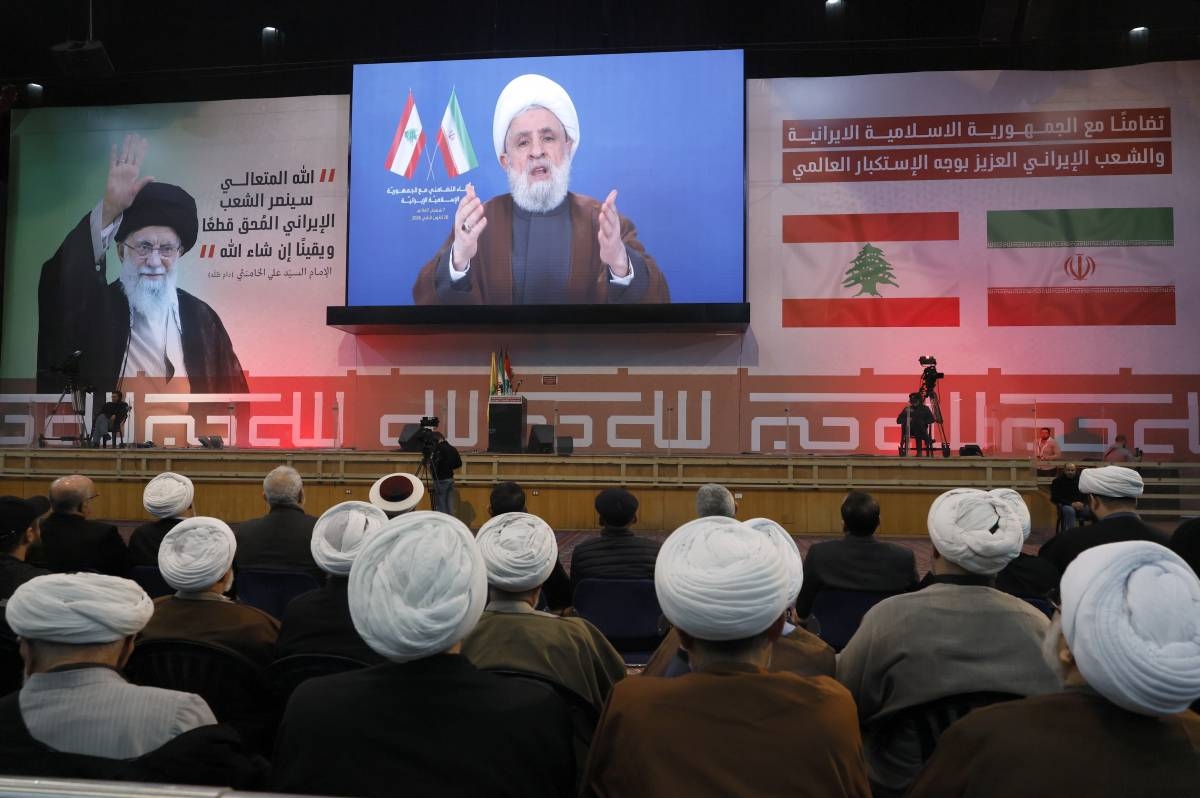
Geopolitical Strains Persist as Hezbollah Rejects Unilateral Truce Terms

Hezbollah leader Naim Qassem has rejected a one-sided truce, vowing to respond to Israeli military actions and casting doubt on the sustainability of the current 10-day ceasefire.
Alpha Score of 47 reflects weak overall profile with moderate momentum, poor value, moderate quality. Based on 3 of 4 signals — score is capped at 90 until remaining data ingests.
Alpha Score of 55 reflects moderate overall profile with moderate momentum, moderate value, moderate quality. Based on 3 of 4 signals — score is capped at 90 until remaining data ingests.
Alpha Score of 40 reflects weak overall profile with strong momentum, poor value, poor quality. Based on 3 of 4 signals — score is capped at 90 until remaining data ingests.
Alpha Score of 46 reflects weak overall profile with strong momentum, poor value, poor quality, moderate sentiment.
The fragile cessation of hostilities between Hezbollah and Israel faces renewed uncertainty following statements from Hezbollah leader Naim Qassem. Qassem asserted that the current 10-day truce cannot function as a one-sided arrangement, signaling that his organization reserves the right to retaliate against ongoing military actions within Lebanese territory. This rejection of a passive truce framework shifts the focus back to the durability of current de-escalation efforts and the potential for a return to active cross-border conflict.
The Fragility of Regional De-escalation
The insistence that a truce must be reciprocal highlights the limitations of the current diplomatic pause. For regional markets, the primary concern remains the potential for a sudden resumption of hostilities that could disrupt supply chains or impact energy security. The rhetoric from Hezbollah suggests that the group is prioritizing its operational autonomy over the maintenance of the current ceasefire, provided it perceives continued Israeli military activity. This stance complicates the efforts of international mediators who have sought to stabilize the border region through the current 10-day window.
Investors are currently navigating a landscape where geopolitical risk premiums are sensitive to any breakdown in regional stability. While the broader stock market analysis often discounts localized conflicts, the persistence of these tensions forces a recalibration of risk for assets tied to regional infrastructure and energy production. The market reaction to such statements is typically characterized by a flight to safety, as the uncertainty regarding the duration of the truce prevents a clear assessment of long-term risk.
Operational Constraints and Market Sensitivity
The current situation underscores the difficulty of maintaining a ceasefire when both parties maintain divergent definitions of compliance. If the truce fails to hold, the resulting volatility could ripple through sectors sensitive to geopolitical instability. Companies with significant exposure to the Middle East must now account for the possibility of a prolonged period of insecurity rather than a definitive resolution to the current standoff.
AlphaScala data currently reflects a diverse range of sentiment across industrial and technology sectors, with BE stock page holding an Alpha Score of 46/100, T stock page at 61/100, and ON stock page at 40/100. These scores illustrate the varying degrees of resilience companies exhibit when faced with macroeconomic and geopolitical headwinds. The divergence in these scores suggests that market participants are selectively pricing in risk based on individual company exposure and sector-specific sensitivity to global disruptions.
The next concrete marker for this situation will be the expiration of the 10-day truce window. If no formal extension or revised agreement is reached, the likelihood of renewed military engagement increases significantly. Observers will be looking for evidence of continued adherence to the ceasefire or a formal breakdown that would necessitate a reassessment of regional risk profiles. The absence of a clear diplomatic path forward beyond the current window remains the primary variable for those monitoring the stability of the Levant.
AI-drafted from named sources and checked against AlphaScala publishing rules before release. Direct quotes must match source text, low-information tables are removed, and thinner or higher-risk stories can be held for manual review.